
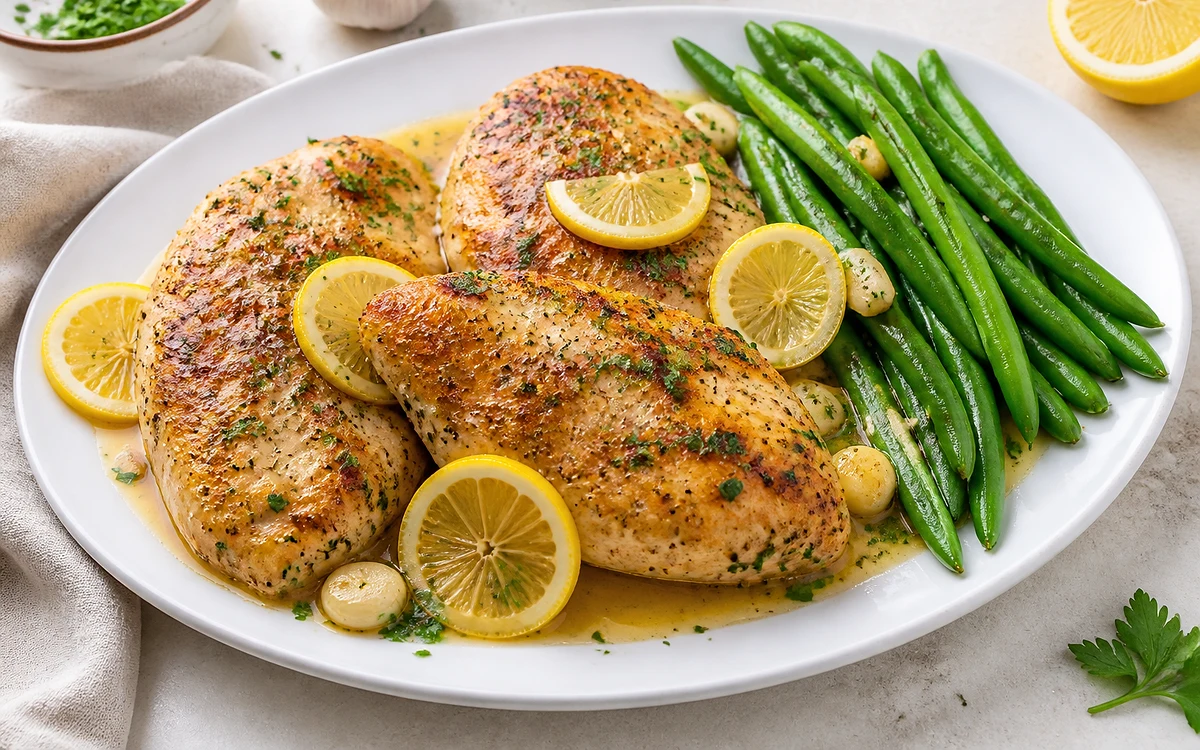
This lemon garlic chicken recipe is exactly what a weeknight dinner should be: golden chicken, a glossy lemon garlic butter sauce, and clear steps that help the chicken stay juicy instead of dry. The flavor is bright from fresh lemon, savory from garlic and browned pan bits, and balanced with just enough butter to make the sauce feel special without turning the meal heavy.
RECIPE CARD
Lemon Garlic Chicken Recipe
Ingredients
- 4 boneless, skinless chicken breasts , about 6 to 8 ounces each
- 1 teaspoon kosher salt
- 1/2 teaspoon black pepper
- 1/2 cup all-purpose flour , for a light dredge
- 2 tablespoons olive oil
- 3 tablespoons unsalted butter , divided
- 4 garlic cloves , minced or finely grated
- 1/3 cup chicken broth
- 1/4 cup fresh lemon juice , from about 2 lemons
- 1 teaspoon lemon zest
- 2 tablespoons chopped parsley
- Optional: 1/4 teaspoon red pepper flakes for gentle heat
Quick Method
Condensed overview. Use Full Instructions for the complete method, timing and doneness details.
- Prep and Season the Chicken: A light flour coating helps the chicken brown and gives the pan sauce a silky finish. Pat the chicken very dry with paper towels.…
- Sear Until Golden: Sear the chicken until golden, then finish gently so the center stays juicy. Heat olive oil and 1 tablespoon butter in a large skillet…
- Build the Lemon Garlic Sauce: The sauce comes together in the same pan with garlic, lemon, broth, butter, and browned bits. Reduce the heat to medium. Add the remaining…
- Finish the Chicken in the Sauce: Return the chicken to the skillet and spoon the lemon garlic sauce over the top. Return the chicken and any plate juices to the…
- Slice and Serve: Serve with rice, potatoes, pasta, or green vegetables and plenty of pan sauce. Let the chicken rest for 3 to 5 minutes before slicing.…
The method below gives you the details that actually matter: how to prep the chicken, when to flip it, how to build the sauce, how to check doneness, what to serve with it, and how to store leftovers. It is simple enough for Tuesday, but polished enough for a dinner you would happily serve to guests.
Recipe snapshot: 10 minutes prep, about 20 minutes cooking, serves 4, skillet dinner, bright lemon garlic flavor, naturally easy to pair with rice, pasta, potatoes, or vegetables.
Why This Lemon Garlic Chicken Works
Chicken breasts can be tricky because they go from tender to dry quickly. This recipe solves that with three small choices. First, the chicken is patted dry and lightly coated so it browns quickly. Second, it is seared over medium-high heat for flavor, then finished more gently. Third, the sauce is made in the same skillet, so the browned bits become part of the flavor instead of being left behind.
The lemon is fresh but not harsh. Garlic brings depth, chicken broth gives the sauce body, and butter rounds out the edges. A little flour from the chicken helps the sauce cling without needing cream.
Ingredients You Need
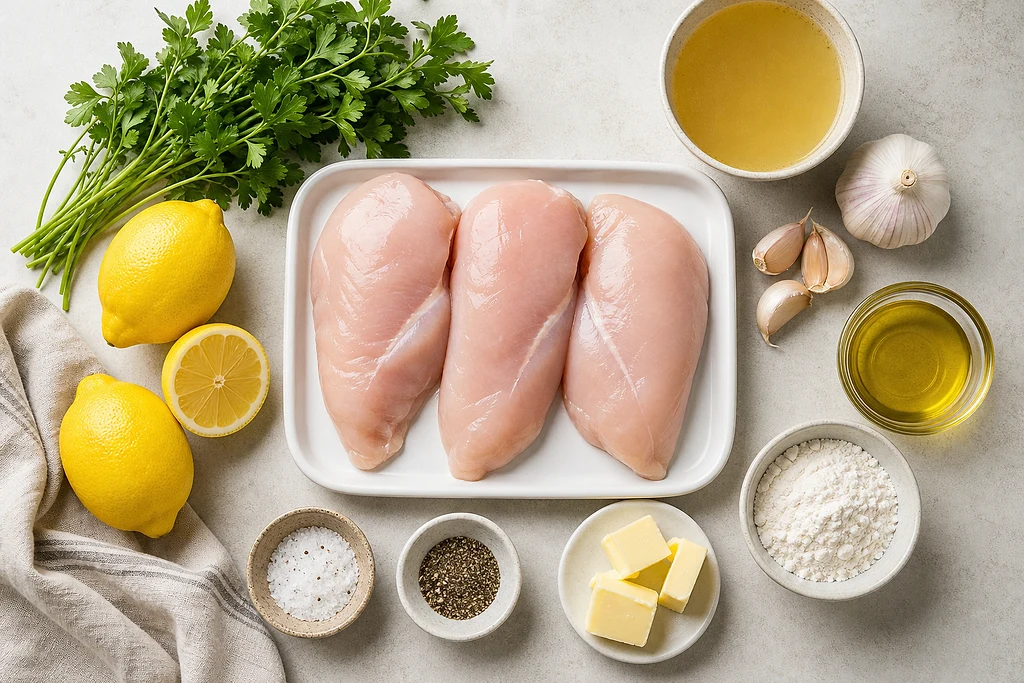
- 4 boneless, skinless chicken breasts, about 6 to 8 ounces each
- 1 teaspoon kosher salt
- 1/2 teaspoon black pepper
- 1/2 cup all-purpose flour, for a light dredge
- 2 tablespoons olive oil
- 3 tablespoons unsalted butter, divided
- 4 garlic cloves, minced or finely grated
- 1/3 cup chicken broth
- 1/4 cup fresh lemon juice, from about 2 lemons
- 1 teaspoon lemon zest
- 2 tablespoons chopped parsley
- Optional: 1/4 teaspoon red pepper flakes for gentle heat
Best Chicken to Use
Use medium-size chicken breasts so they cook evenly. If one end is much thicker than the other, gently pound the chicken to an even thickness before seasoning. This makes a huge difference because the thinner end will not dry out while the thicker end finishes cooking.
You can also use boneless chicken thighs. They are more forgiving and stay juicy, but they may need a few extra minutes depending on thickness.
Step 1: Prep and Season the Chicken
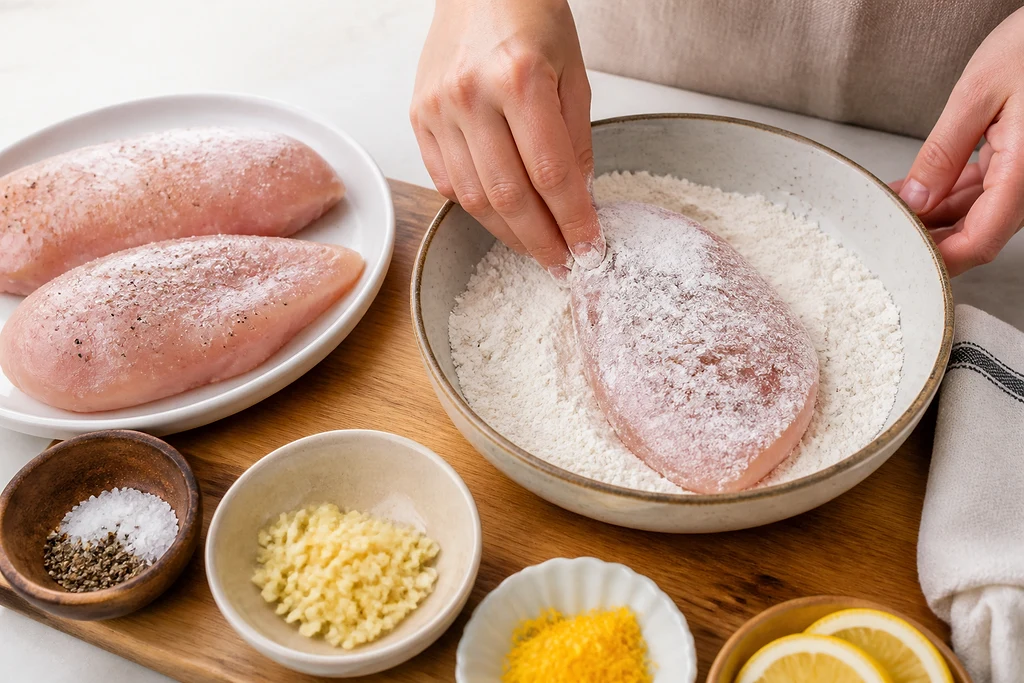
Pat the chicken very dry with paper towels. Season both sides with salt and pepper. Add the flour to a shallow bowl, then dredge each piece lightly and shake off the excess. You want a thin coating, not a thick crust.
Set the chicken on a clean plate while the skillet heats. Wash hands, boards, and any surfaces that touched raw chicken before moving on to the sauce ingredients.
Step 2: Sear Until Golden
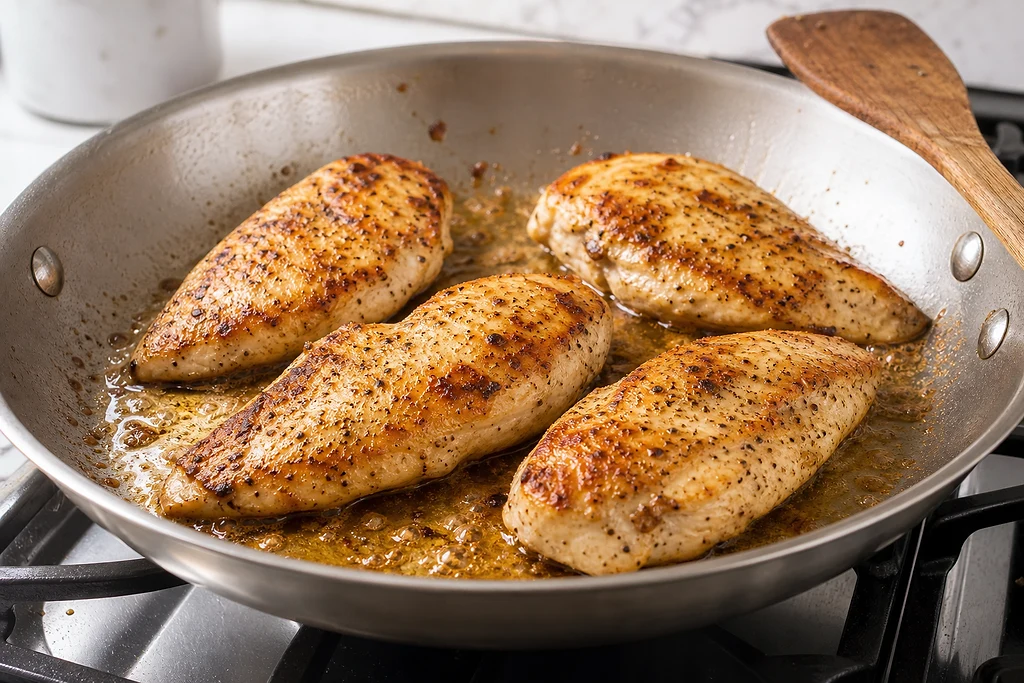
Heat olive oil and 1 tablespoon butter in a large skillet over medium-high heat. Add the chicken in a single layer. Cook for 4 to 5 minutes on the first side, then flip and cook 3 to 5 minutes more, depending on thickness.
The chicken does not need to be fully finished at this exact moment if it will return to the sauce. What matters is a golden surface and flavorful browned bits on the bottom of the pan. Transfer the chicken to a plate.
Step 3: Build the Lemon Garlic Sauce
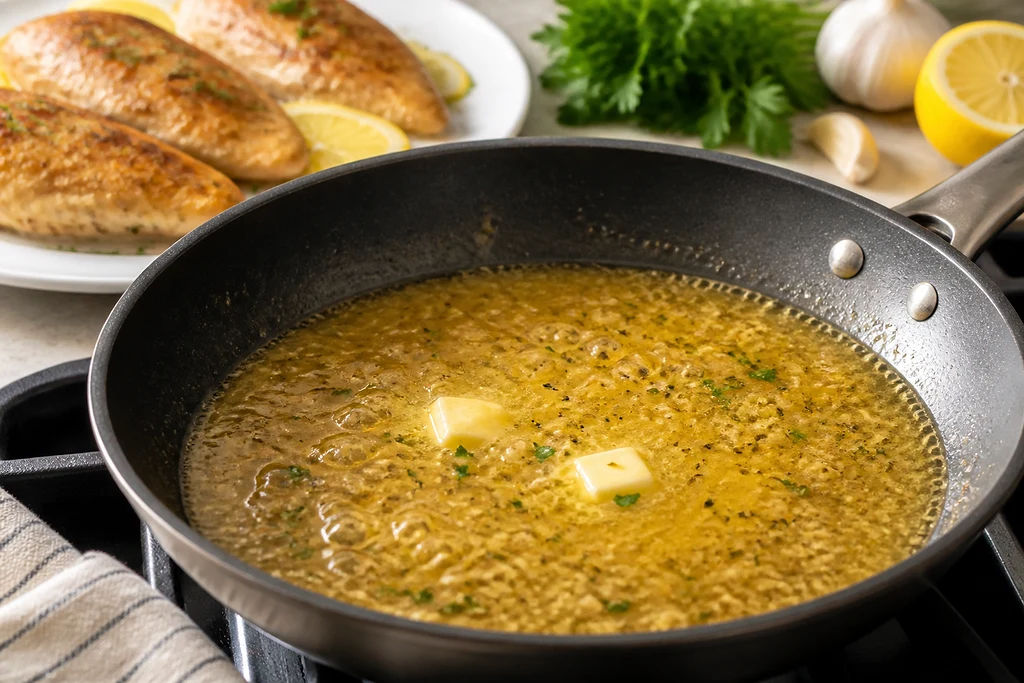
Reduce the heat to medium. Add the remaining butter and the garlic. Stir for 30 to 45 seconds, just until fragrant. Do not let the garlic burn, because burnt garlic can make the whole sauce taste bitter.
Pour in the chicken broth and scrape the bottom of the skillet with a wooden spoon. Add lemon juice and lemon zest. Let the sauce simmer for 2 to 3 minutes so it reduces slightly and turns glossy.
Step 4: Finish the Chicken in the Sauce
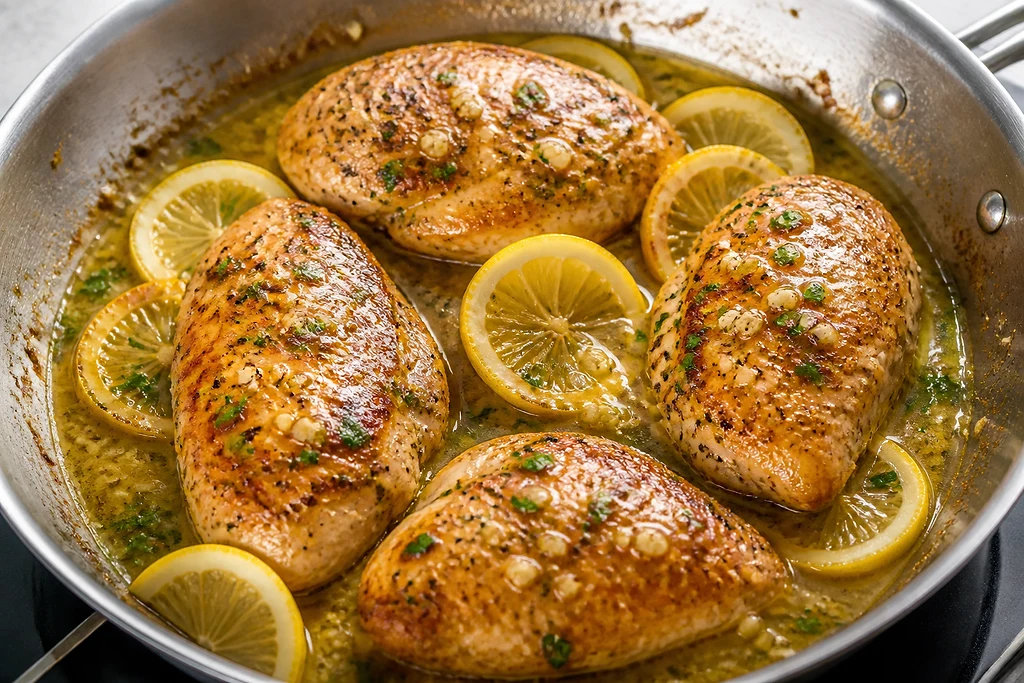
Return the chicken and any plate juices to the skillet. Spoon sauce over the top and simmer gently for 2 to 4 minutes, or until the thickest part of each chicken breast reaches 165°F on an instant-read thermometer.
If the sauce reduces too much, add a splash of broth. If it tastes too sharp, whisk in a small pat of butter. Finish with parsley right before serving.
Step 5: Slice and Serve
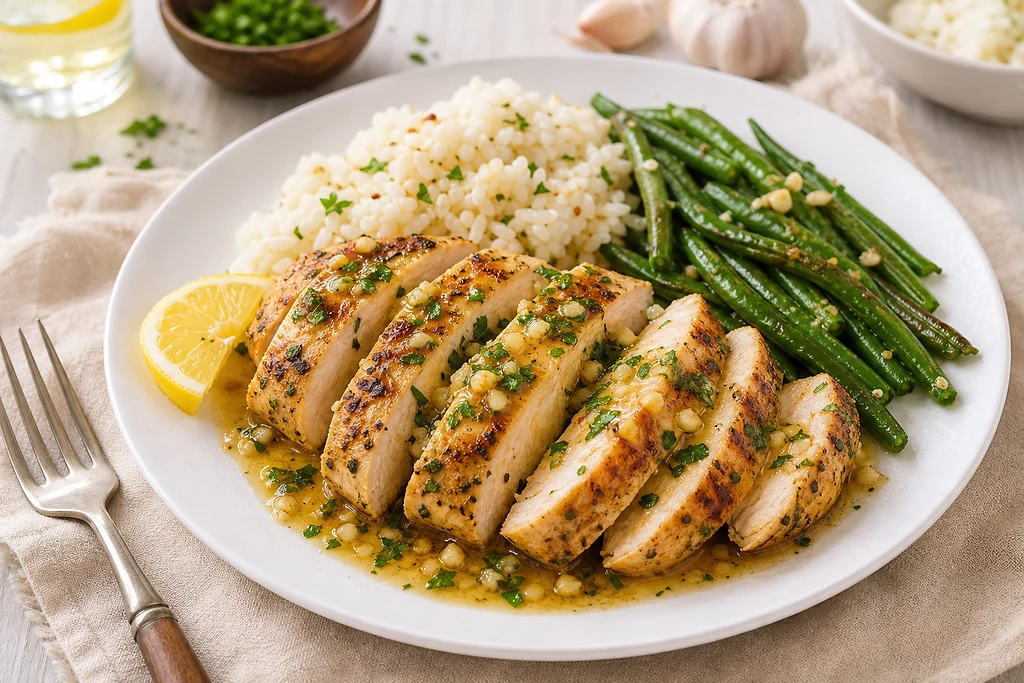
Let the chicken rest for 3 to 5 minutes before slicing. This keeps the juices in the meat instead of on the cutting board. Spoon the lemon garlic sauce over each serving.
This chicken is excellent with rice, roasted potatoes, pasta, green beans, asparagus, broccoli, or a crisp salad. For a lighter plate, serve it over greens and use the sauce as a warm dressing.
Doneness and Juiciness Tips
- Use a thermometer: 165°F is the target for chicken breasts.
- Even thickness matters: pound thick pieces gently before cooking.
- Do not over-flour: a dusty coating is enough.
- Rest before slicing: even 3 minutes helps.
- Keep sauce gentle: a hard boil can make the chicken tough.
Easy Variations
For a creamier sauce, add 2 tablespoons heavy cream at the end and warm gently. For a Mediterranean version, add capers or chopped olives. For extra herbs, use thyme, rosemary, or basil with the parsley. For a gluten-free version, use a gluten-free all-purpose flour blend or skip the dredge and reduce the sauce a little longer.
What to Serve With It
Rice is the easiest side because it catches the sauce. Pasta is a close second, especially angel hair or orzo. Roasted potatoes make it cozy, while green beans, asparagus, broccoli, or a simple salad keep it fresh. If you like easy dinner ideas, you may also enjoy roasted garlic alfredo tortellini, spinach tomato quesadilla with pesto, and more Food & Drink recipes.
Make-Ahead, Storage, and Reheating
You can season and dredge the chicken right before cooking, or season it a few hours ahead and dredge just before it hits the skillet. The sauce tastes best fresh, but leftovers still work well.
Store cooled chicken and sauce in an airtight container for up to 3 days. Reheat gently in a covered skillet over low heat with a splash of broth or water. The microwave works for speed, but use short intervals so the chicken does not overcook.
Common Mistakes to Avoid
- Using bottled lemon juice: fresh lemon gives better flavor and zest.
- Burning the garlic: add garlic after reducing the heat.
- Skipping the thermometer: guessing often leads to dry chicken.
- Overcrowding the skillet: cook in batches if needed.
- Boiling the sauce hard: keep it at a gentle simmer.
FAQ
Can I use chicken thighs instead of breasts?
Yes. Boneless thighs work beautifully and are harder to overcook. Cook until they reach 165°F and are tender.
Can I make this without flour?
Yes. Skip the dredge and sear the seasoned chicken directly. The sauce will be a little thinner, so simmer it an extra minute or two.
Is this recipe very lemony?
It is bright but balanced. If you prefer a softer lemon flavor, start with 3 tablespoons lemon juice and add more at the end.
Can I double the sauce?
Yes. Double the broth, lemon juice, garlic, and butter. Use a large skillet so the sauce can reduce without crowding the chicken.
How do I keep chicken breasts from drying out?
Use even-thickness pieces, avoid overcooking, check for 165°F, and rest before slicing.
Final Thoughts
A good lemon garlic chicken recipe should be simple, but it should still feel cared for. This version gives you golden chicken, a sauce with real brightness, and enough practical detail to make it work the first time. Save it for a night when you want dinner to taste fresh without spending an hour in the kitchen.