
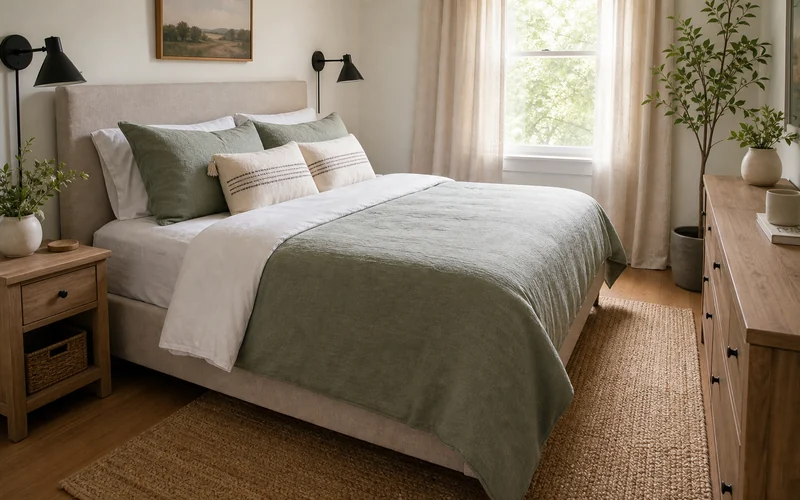
A small bedroom with a queen bed can work beautifully, but only if the layout protects the walking path first. The mistake is treating the bed like the only important piece. In a tight room, the bed, door swing, closet access, dresser depth, and nightstand choice all have to cooperate.
This guide walks through practical queen bed layouts for small bedrooms, including when to center the bed, when to push it into a corner, how to use the window wall, and which furniture swaps make the room feel easier to live in.
Start with the Clearance, Not the Bed
A queen mattress is about 60 inches wide by 80 inches long. The frame may add a few extra inches, so measure the actual bed before moving furniture. In most small bedrooms, the goal is at least one comfortable walking lane and one side that can be accessed without climbing over the bed.
- Best target: 24 to 30 inches on the main walking side.
- Tight but workable: 18 to 22 inches for a secondary path.
- Foot clearance: leave room for drawers, closet doors, or a walkway.
- Door check: make sure the room door and closet door can open freely.
Layout 1: Center the Bed on the Longest Wall
This is the most balanced small bedroom queen bed layout when the room has enough width. Centering the bed gives both sides access, keeps the room visually calm, and makes it easier for two people to use the bed.
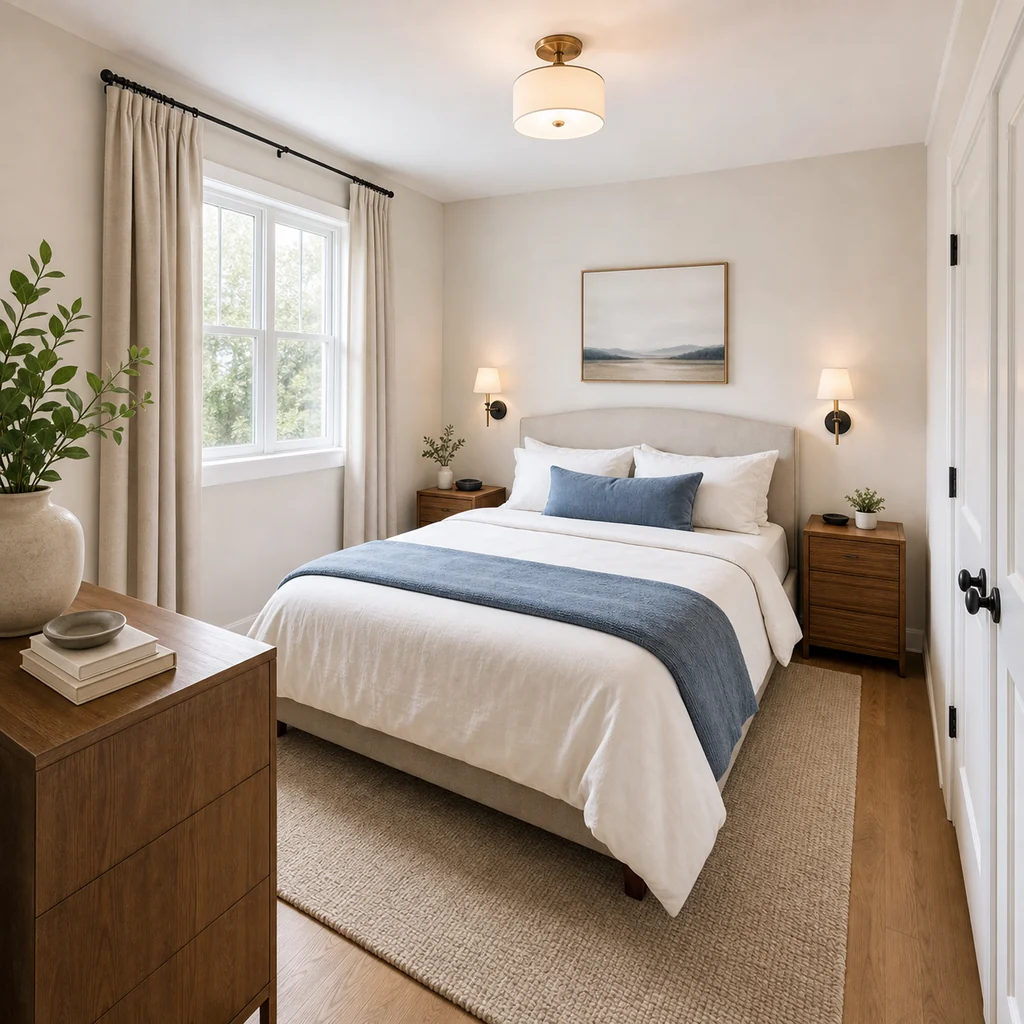
Best for
- Square or slightly rectangular bedrooms
- Rooms with a closet on the opposite wall
- Shared bedrooms where both sides of the bed matter
- Rooms that can fit slim nightstands or wall shelves
Make it work
Choose narrow nightstands, wall-mounted lamps, and a low-profile frame. If both nightstands make the path too tight, use one slim table and one wall shelf instead.
Layout 2: Push the Bed into a Corner
A corner layout is useful when the room is very narrow or when the door, closet, and window leave only one realistic bed wall. It gives up access on one side, but it can return valuable floor space for a desk, dresser, or open walkway.
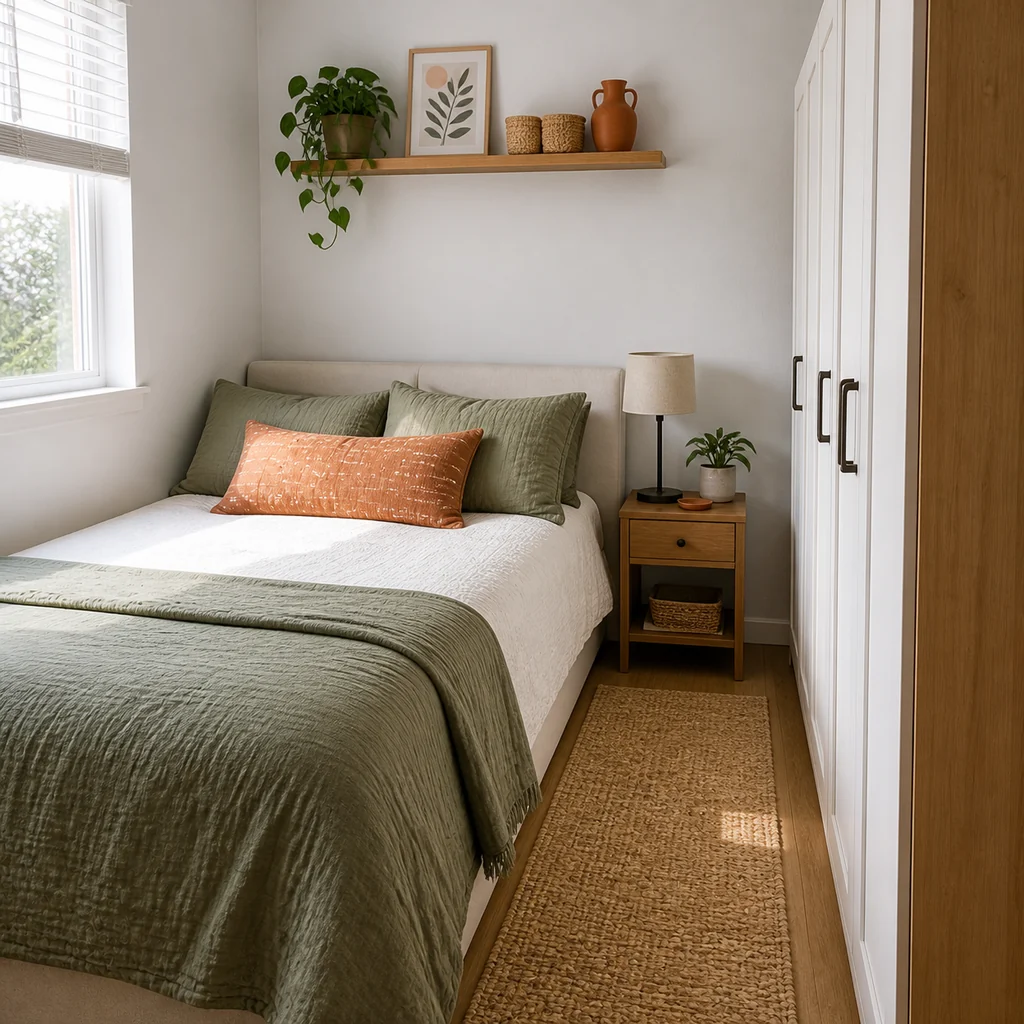
Best for
- Single sleepers
- Guest rooms
- Long, narrow rooms
- Rooms that need a small desk or dresser
Make it work
Keep the open side generous. Add a wall-mounted light, a small shelf, and under-bed storage so the corner does not turn into a clutter trap.
Layout 3: Place the Bed Under the Window
The window wall can be a smart bed wall when other walls are interrupted by doors or closets. The trick is choosing a low headboard, leaving curtain movement clear, and avoiding a frame that blocks airflow or light.
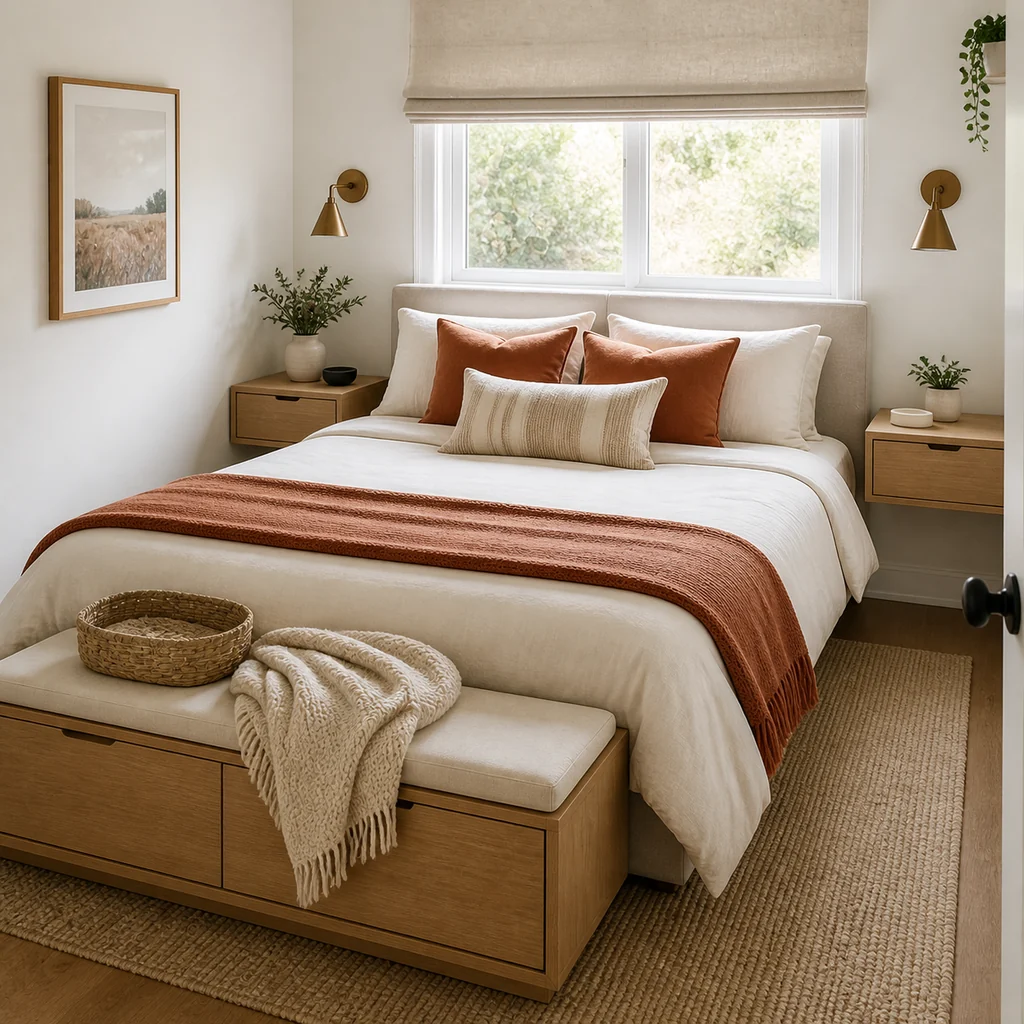
Best for
- Rooms with awkward door placement
- Bedrooms with one strong window wall
- Small rooms that need the side walls for storage
- Layouts where a centered bed blocks the closet
Make it work
Use cordless-looking, tidy window treatments, floating nightstands, and sconces. Keep the sill reachable for cleaning and ventilation.
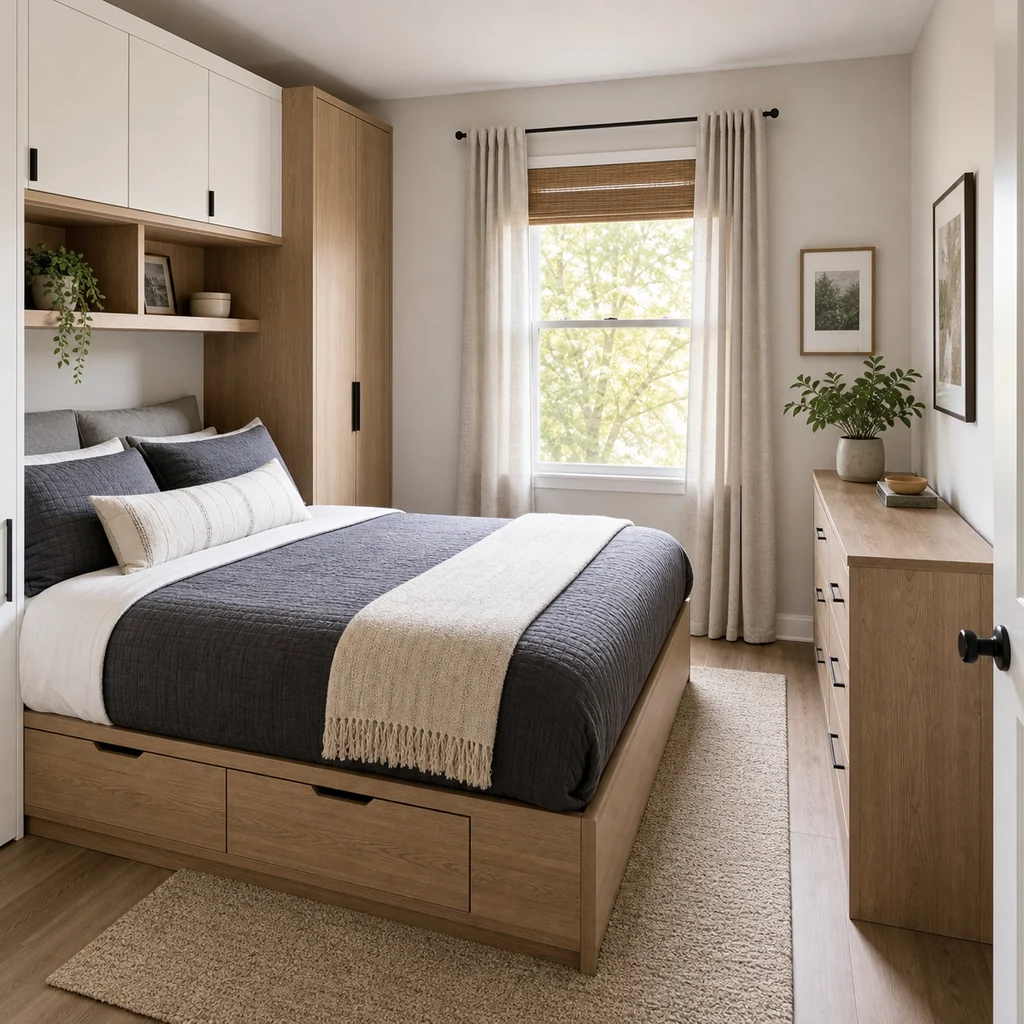
Layout 4: Build Storage Around One Side
If the closet is small, the best layout may be the one that gives storage a defined wall. A queen bed can still fit if the storage pieces are shallow, tall, and kept away from the main walking lane.
Best for
- Small bedrooms with limited closet space
- Rooms where under-bed drawers are useful
- Bedrooms that need a dresser but cannot hold a large one
- People who prefer fewer loose baskets and bins
Make it work
Use vertical storage, shallow drawers, and sliding or soft-close pieces where possible. Test drawer clearance before committing to the layout.
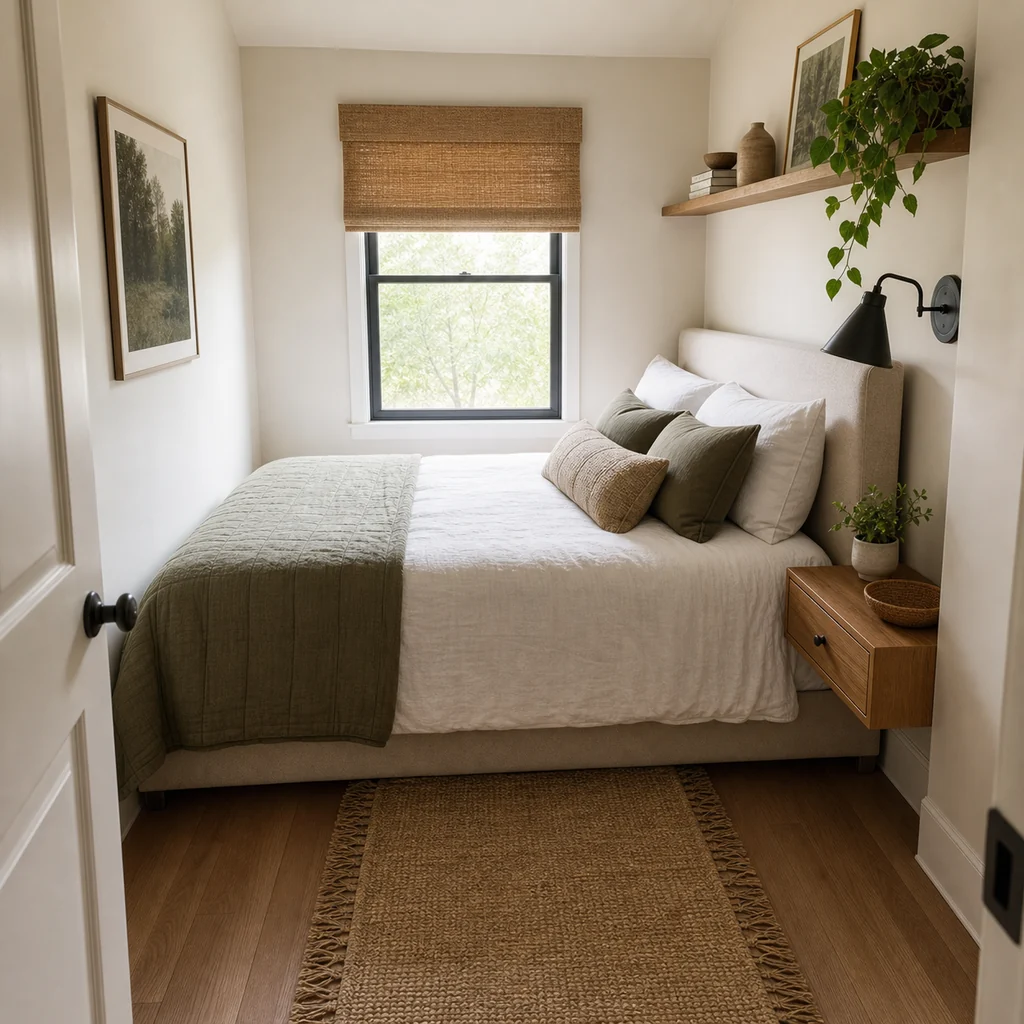
Layout 5: Keep the Walkway at the Foot of the Bed
In a narrow bedroom, the easiest path may run across the foot of the bed instead of along both sides. This setup works best when side furniture stays minimal and the foot of the bed remains open.
Best for
- Long rooms with a door at one end
- Rooms where side clearance is limited
- Bedrooms with a wall-mounted TV or slim dresser opposite the bed
- Spaces where one side of the bed can be secondary
Furniture Swaps That Save Space
The right furniture can make the same queen bed feel much smaller in the room. Focus on pieces that do their job without stealing walking space.
- Use wall sconces instead of table lamps.
- Choose floating shelves instead of bulky nightstands.
- Pick a bed frame with built-in drawers only if the drawers can open fully.
- Use a tall narrow dresser instead of a wide low dresser.
- Replace a bench with a slim storage ottoman only if the foot path stays open.
Common Layout Mistakes
Blocking the closet
A layout can look fine from the doorway but fail every morning if the closet door hits the bed. Check swing space before deciding.
Using two large nightstands
Matching nightstands are not required. In a small bedroom, an uneven pair often works better: one drawer table, one wall shelf, or one tiny stool.
Choosing a tall heavy footboard
A footboard can visually chop up a small room. A simple platform frame or low upholstered frame usually keeps the room calmer.
Quick Decision Checklist
- If two people use the bed daily, try the longest wall first.
- If the room is very narrow, test a corner layout.
- If doors interrupt every wall, consider the window wall.
- If storage is the main problem, keep it tall and shallow.
- If the room feels hard to cross, protect the foot-of-bed path.
For more bedroom ideas, see 7 Cozy Bedroom Layout Ideas for a Relaxing Night™s Sleep, Budget-Friendly Bedroom Makeover Ideas You™ll Love, and Paper Clutter Organization System for a Tidy Home.
Small Bedroom Queen Bed Layout FAQ
Can a queen bed fit in a 10 by 10 bedroom?
Often, yes, but the furniture list has to stay lean. A queen bed, slim nightstand, and one narrow dresser may work better than a full matching bedroom set.
Is it bad to put a queen bed against the wall?
No. It depends on how the room is used. A wall-side bed is less convenient for two people, but it can be the smartest choice in a tight single-sleeper room or guest room.
What should I skip in a small bedroom?
Skip oversized nightstands, deep dressers, heavy footboards, and extra accent chairs unless the walking path still feels easy.
How do I make the room feel less cramped?
Use lighter furniture legs, wall lighting, a low headboard, fewer surface items, and one clear floor path. A calm layout usually matters more than adding more decor.