
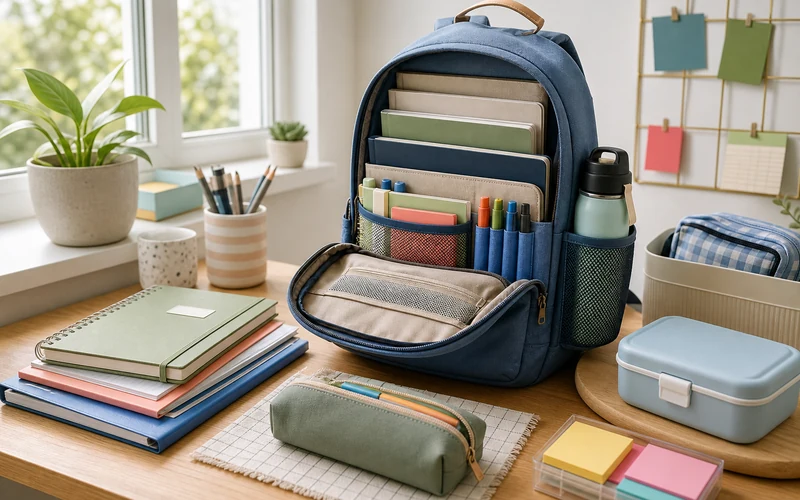
Backpack organization ideas work best when they solve the real school-day mess: loose papers, missing pencils, crushed snacks, too many small items, and a bag that somehow feels full even when nothing useful is inside.
This guide is not about buying a brand-new backpack or making every supply look perfect. It is a practical packing system for students, parents, and busy mornings. The goal is simple: every item should have a place, the backpack should be easy to reset, and the student should be able to find what they need without emptying the whole bag on the floor.
If you already have a backpack, a few folders, and one or two pouches, you can use this system right away. Start with zones, then add a quick daily reset and a weekly cleanout habit.
Build the Backpack Around Clear Zones
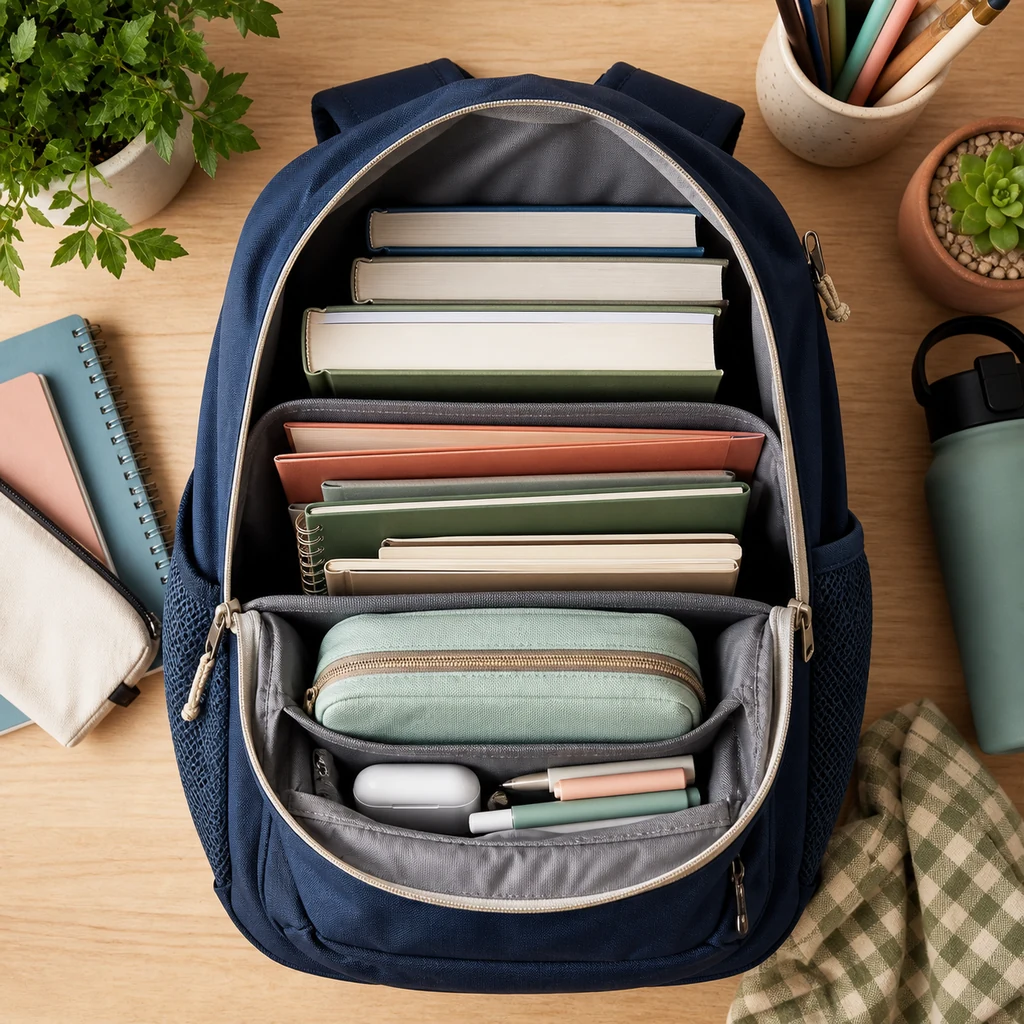
The easiest way to organize a school backpack is to stop treating it like one big pocket. Think in zones instead. Heavy books and binders go closest to the back panel. Folders and notebooks sit in the middle. Smaller supplies, snacks, keys, and personal items stay in front pockets or pouches.
This layout keeps the most important items protected and reduces the daily digging. It also makes packing faster because every item has a predictable home. If a student switches classes, activities, or after-school plans, zones are easier to adjust than a random pile.
- Back zone: textbooks, laptop sleeve, binder, or larger notebooks.
- Middle zone: folders, planners, slim notebooks, and homework packets.
- Front zone: pencil pouch, calculator, small personal items, and quick-grab essentials.
- Side pockets: water bottle on one side, umbrella or slim snack container on the other if needed.
Use Pouches So Small Supplies Stop Disappearing
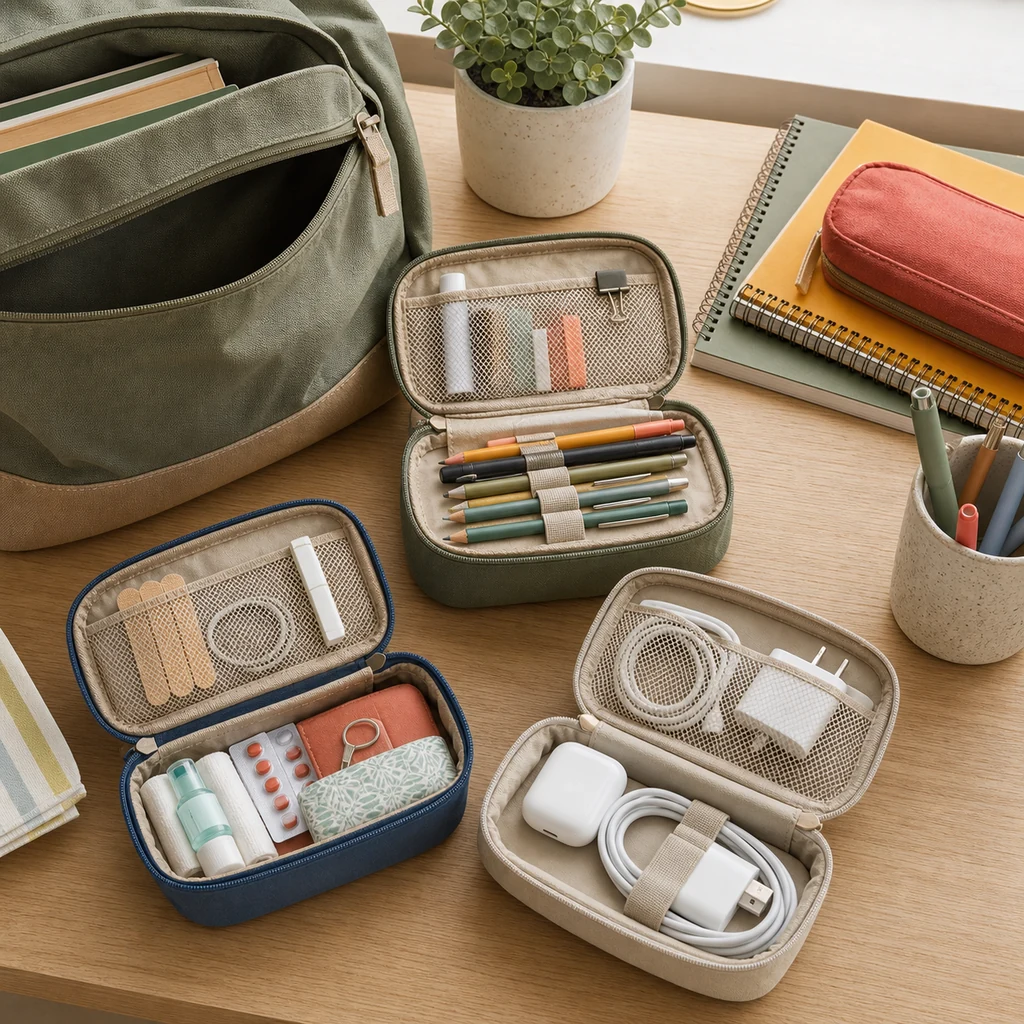
Small supplies cause the biggest mess because they slide into corners and get buried under papers. A pouch system fixes that without making the backpack complicated. The key is to use fewer pouches than you think you need and give each one a clear job.
For most students, three pouches are enough: one for writing tools, one for personal care or emergency basics, and one for tech accessories if the school allows devices. If the student is younger, keep it even simpler with one pencil pouch and one small “extras” pouch.
What to Put in Each Pouch
- Writing pouch: pencils, pens, highlighter, eraser, sticky notes, and a small sharpener if allowed.
- Personal pouch: tissues, bandages, lip balm, hair tie, hand wipes, or other school-approved basics.
- Tech pouch: charger, earbuds, cable, stylus, or calculator accessories.
Choose soft pouches over bulky boxes when space is tight. They fit better around books and are easier to move between backpacks, lockers, and desks.
Control Papers Before They Take Over
Papers are usually the reason backpacks become chaotic by the second week of school. The simplest fix is a two-folder system: one folder for papers that need action and one folder for papers that can stay at school or be filed at home.
A bright “bring back” folder can hold permission slips, forms, graded papers that need a signature, and homework that must return to class. A second folder can hold reference sheets, study guides, or papers that do not need immediate attention. This keeps important forms from mixing with old worksheets and lunch menus.
A 30-Second Paper Rule
At the end of each school day, papers should go into one of three places: return to school, file at home, or recycle. The rule is short on purpose. If it takes too long, nobody will keep doing it.
Set Up an After-School Backpack Reset Station
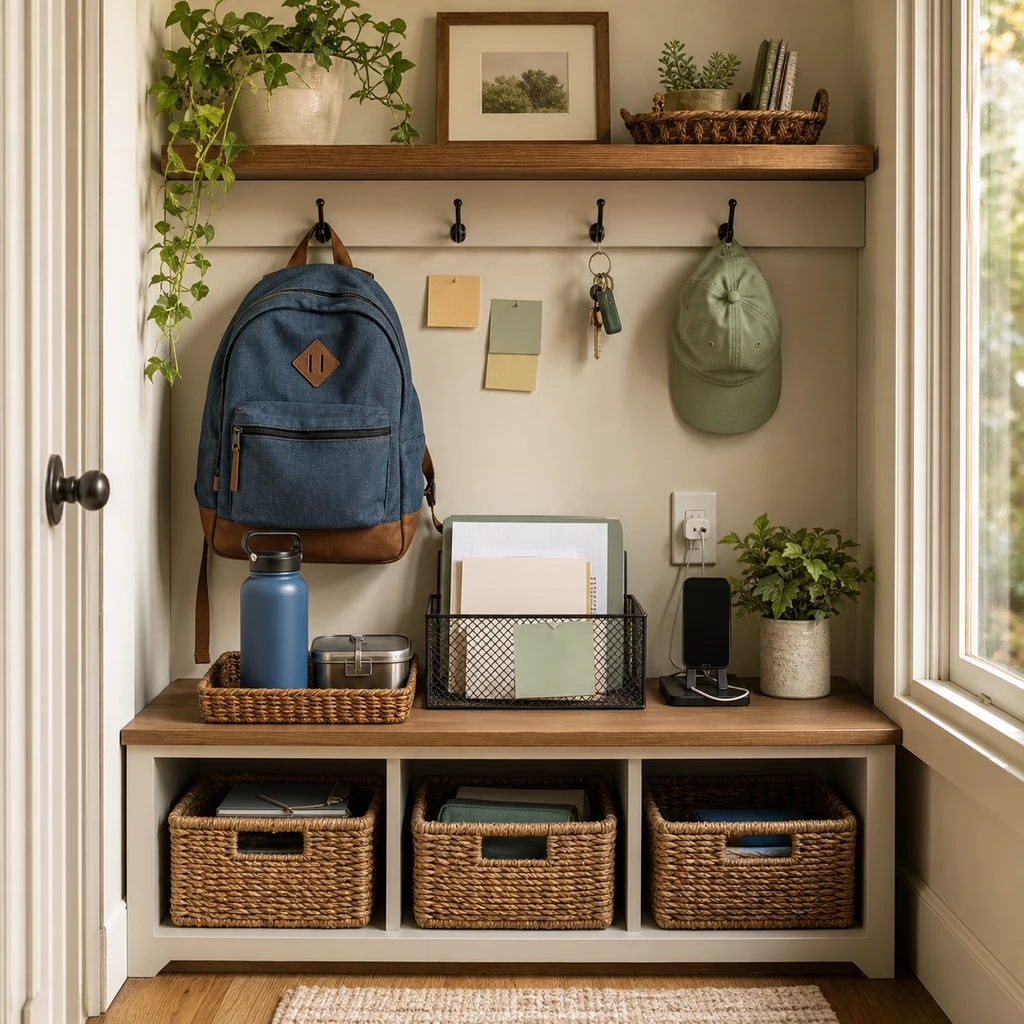
Backpack organization does not only happen inside the bag. A small landing spot at home can make the whole system easier to maintain. It can be a shelf, hook, entryway bench, rolling cart, or one basket near the door.
The station should answer four daily questions: Where does the backpack go? Where do papers land? Where does the lunchbox go? Where does anything that needs charging go? If those answers are visible, the backpack is less likely to disappear into a bedroom corner until morning.
If your home entryway already collects shoes, bags, and mail, the site’s small entryway drop zone ideas can help you shape a simple family landing area without overbuilding it.
- Use one hook or cubby per student if possible.
- Keep a paper tray nearby for forms and homework checks.
- Place lunch containers where they can be emptied right away.
- Add a charging spot only if devices come home daily.
Pack for the Real Day, Not the Perfect Day
A backpack should match the student’s actual schedule. If there is gym, art, music, practice, tutoring, or a club after school, the bag needs a flexible spot for that day’s extras. Otherwise, every special item becomes clutter.
Try a “today pocket” or slim mesh pouch for temporary items. This is where a library book, field trip note, sports socks, flash cards, or club supplies can go for one day only. At the reset station, empty that pocket first so yesterday’s extras do not travel all week.
If the student still needs a better everyday bag, the site’s stylish backpacks for the new school year can help with style and feature ideas. For this system, though, any sturdy backpack with a main compartment and at least one front pocket can work.
Do a Weekly Backpack Cleanout
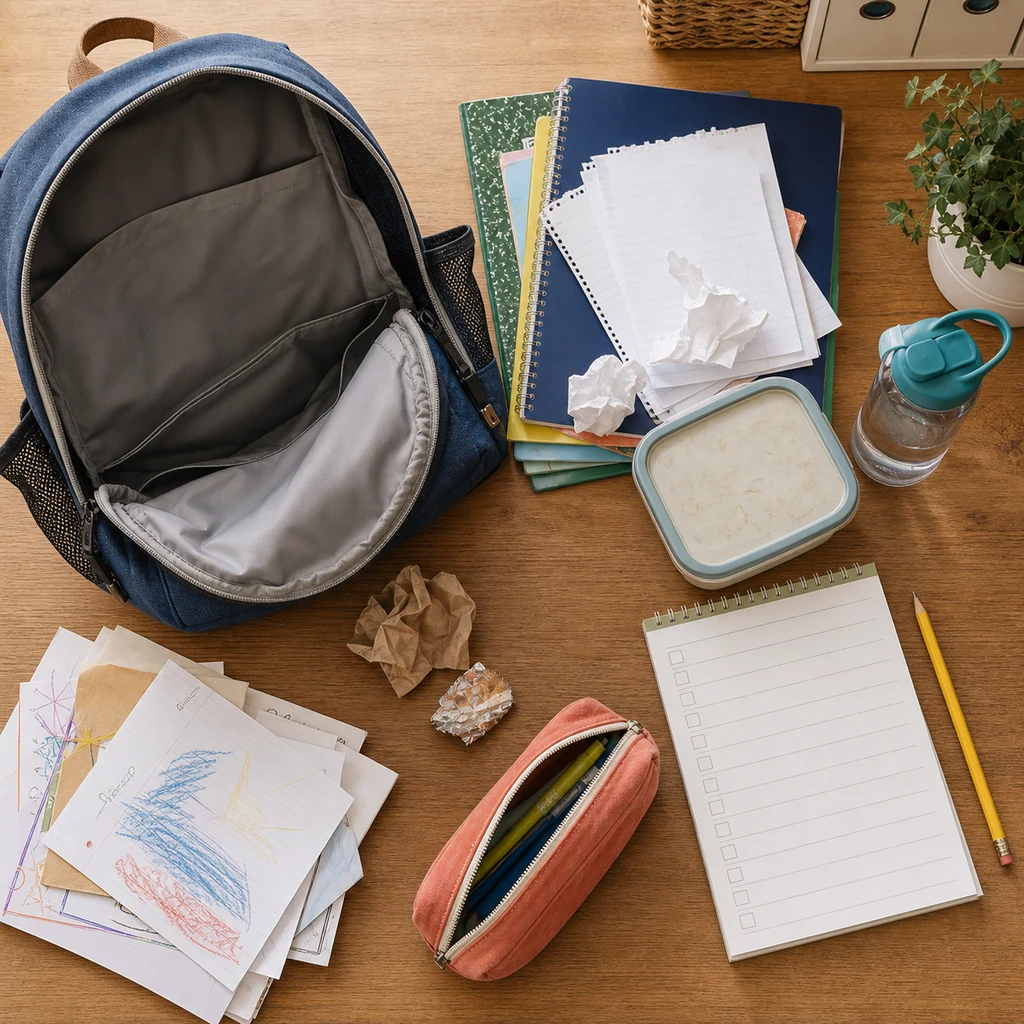
A daily reset keeps the backpack usable, but a weekly cleanout keeps it from slowly collecting old papers, broken pencils, wrappers, and mystery crumbs. Pick one time that already fits your routine, such as Friday after school or Sunday evening.
Empty the main compartment, shake out crumbs, check all folders, restock the pencil pouch, and remove anything that belongs somewhere else. This usually takes 10 to 15 minutes once the system is in place.
Weekly Cleanout Checklist
- Remove trash, loose papers, and old snack wrappers.
- File or recycle papers that no longer need to travel.
- Restock pencils, pens, sticky notes, and index cards.
- Check lunch containers and water bottle pockets.
- Return library books, sports items, or activity supplies to their proper places.
- Repack only what is needed for the next school day.
Common Backpack Organization Mistakes
- Using too many pouches: If every item has a separate case, the system becomes slower than the mess.
- Keeping every paper: Old worksheets and flyers add bulk fast. Sort papers daily or at least weekly.
- Packing for every possible situation: A backpack should cover the real day, not every emergency imaginable.
- Ignoring comfort: If the bag feels painful, uneven, or overloaded, remove extras and check what the school actually requires each day.
- No home landing spot: Even a perfectly packed backpack falls apart if papers, lunch items, and chargers have nowhere to go after school.
FAQ
How often should a school backpack be cleaned out?
A quick paper check works best daily, while a fuller cleanout once a week is usually enough. If the student carries lunch, sports gear, or art supplies, check those areas more often.
What should stay in a backpack every day?
Keep only the true daily essentials: current books or folders, a planner if used, writing tools, water bottle, and school-approved personal basics. Anything used once a week should have a temporary spot, not a permanent one.
How can younger kids keep a backpack organized?
Use fewer categories. One homework folder, one pencil pouch, one lunch spot, and one home hook are easier to remember than a detailed system with many rules.
What is the best way to organize school papers?
Use a simple action folder for papers that need a signature, homework, or return trip to school. Keep reference papers separate so urgent forms do not get buried.
Final Thoughts
The best backpack organization ideas are the ones a student can repeat on a tired Tuesday. Keep the zones simple, use pouches for small supplies, sort papers before they pile up, and give the backpack a home base after school.
Once the system feels easy, the backpack stops being a daily scramble and starts doing its job: carrying what is needed, protecting what matters, and making the school day feel a little more manageable.