
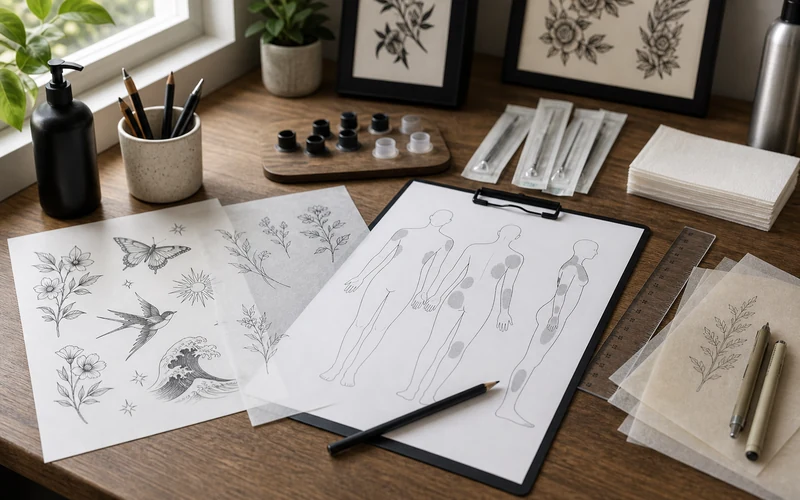
First tattoo placement is one of the biggest decisions you make before booking an appointment. The design matters, of course, but the spot changes how visible the tattoo feels, how it ages, how easy it is to care for, and how confident you feel wearing it every day.
This guide is for the “I know I want a tattoo, but I do not know where it should go” stage. It will not tell you there is one perfect spot for everyone. Instead, it walks through the practical questions that help you choose a placement you can live with, show off, cover, and care for without second-guessing yourself.
Use it before your consultation, then bring your favorite placement ideas to a licensed tattoo artist. A good artist can explain what works for your design, skin, body movement, and long-term goals.
Start With Visibility, Not Just Pain

Many first-timers ask about pain first, but visibility usually matters longer. A small wrist tattoo, finger tattoo, or behind-the-ear design may feel exciting now, yet it will also be visible in photos, at work, during family events, and on days when you simply do not feel like explaining it.
Before choosing a spot, ask yourself when you want the tattoo to be seen. If you want easy coverage, consider upper arm, shoulder blade, ribs, hip, thigh, or upper back. If you want daily visibility, wrist, forearm, ankle, collarbone, and lower leg can work, but they carry more social and styling impact.
- Easy to hide: upper arm, back, ribs, hip, upper thigh.
- Sometimes visible: ankle, shoulder, collarbone, inner arm.
- Often visible: wrist, hand, fingers, neck, forearm.
Match the Placement to the Size of the Design
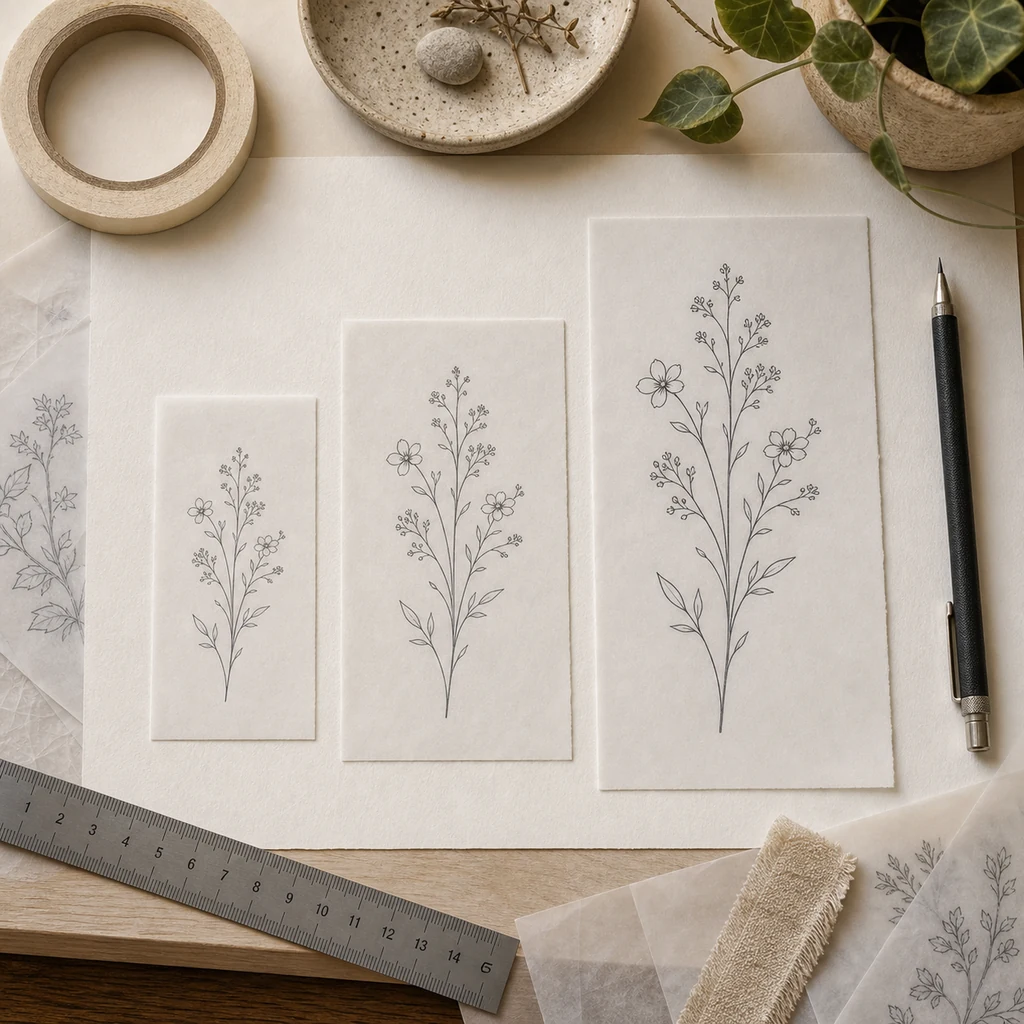
A tiny tattoo is not automatically easier. If the design has too many details, making it small can blur the lines over time. Fine line flowers, tiny script, stars, and symbols often look best when the artist has enough room to keep the shape clean.
Think about the design’s natural shape. Long vertical designs often suit the forearm, spine, calf, or side rib. Rounder designs can work well on the shoulder, upper arm, thigh, or back. If you are unsure, print or sketch the design in two or three sizes and look at it from a normal viewing distance, not only up close.
Quick Size Check
If the design becomes hard to read when you step back, it may need to be bigger, simpler, or moved to a flatter area. This is especially true for script, micro realism, and detailed botanical designs.
Choose a Spot That Fits Your Daily Life
Your tattoo placement should work with the way you dress, move, work, exercise, and spend time outside. A spot that rubs against waistbands, bra straps, socks, shoes, watches, or backpack straps may need extra thought, especially during healing.
If you work in a conservative setting, visible placements may require more planning. If you spend a lot of time in the sun, consider a placement you can protect easily. If you lift weights, run, swim, or wear uniforms, ask your artist how the placement might feel while healing and what timing makes sense.
Good First Tattoo Placement Questions
- Can I cover this spot when I want privacy?
- Will clothing or gear rub this area while it heals?
- Will I still like this placement with different outfits?
- Can I keep it clean and moisturized without awkward reach?
Consider Pain, But Keep It in Perspective
Pain varies from person to person, so no placement chart is perfect. In general, fleshier areas tend to feel easier than thin skin over bone. Upper arm, outer thigh, calf, and shoulder are common first tattoo choices because many people find them more manageable.
Areas like ribs, sternum, foot, ankle bone, fingers, elbow, knee, and spine can feel more intense because the skin is thinner, the area moves more, or the needle is closer to bone. That does not mean you must avoid them, but they may not be the calmest first experience.
- Often easier first spots: outer upper arm, outer thigh, calf, shoulder.
- More sensitive spots: ribs, foot, fingers, inner arm, ankle, sternum.
- High-commitment spots: hand, neck, face, fingers, and very visible forearm pieces.
Pick a Design Style That Ages Well in That Area
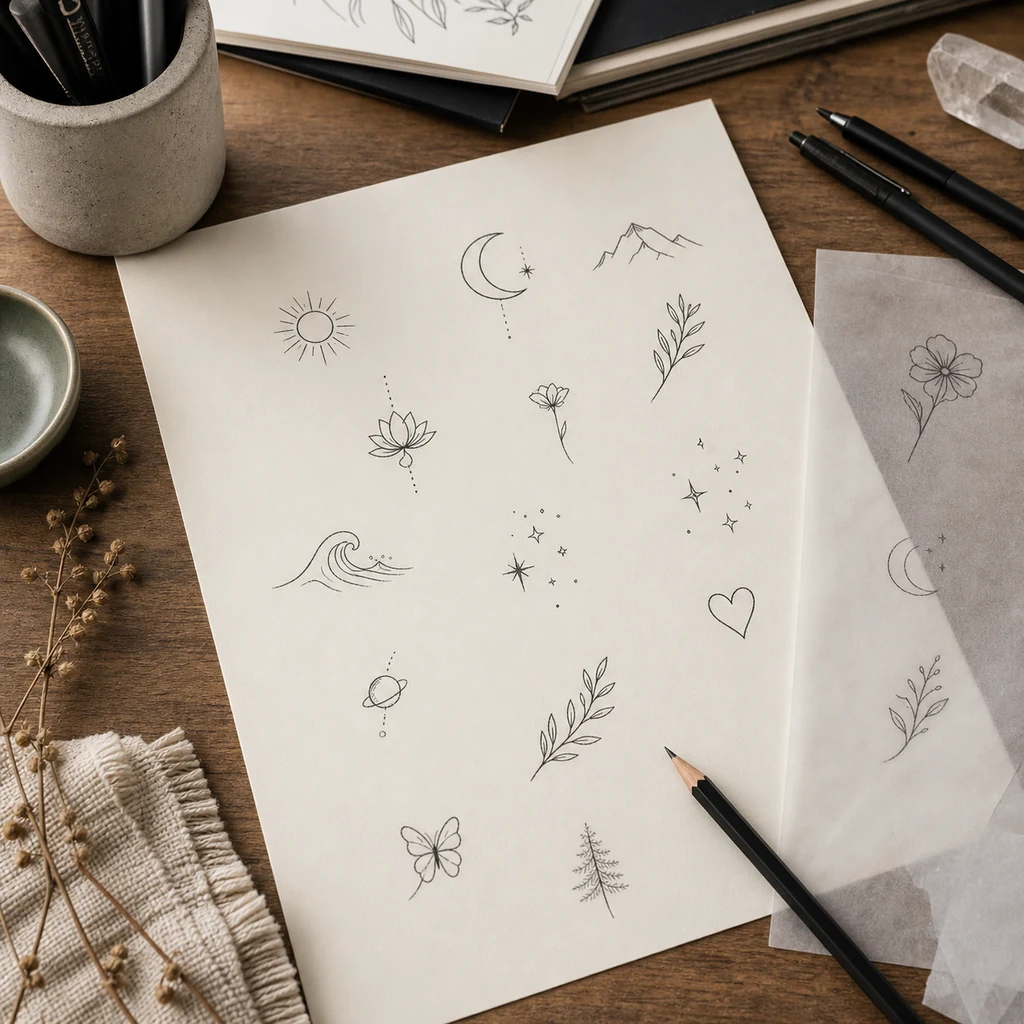
Fine line, minimalist, floral, script, and symbolic tattoos are popular first choices because they feel personal without taking over a large area. The catch is that delicate designs need smart placement. Skin stretches, moves, and sees sun differently depending on the body part.
For your first tattoo, look for a design that can be simplified without losing meaning. A tiny moon, small wave, short word, leaf sprig, star cluster, or simple line drawing can work beautifully when the artist adjusts it for the chosen area.
If you are comparing inspiration, the existing flower tattoo ideas on the site can help you see how shape and placement change the feeling of a design.
Plan Aftercare Before You Book
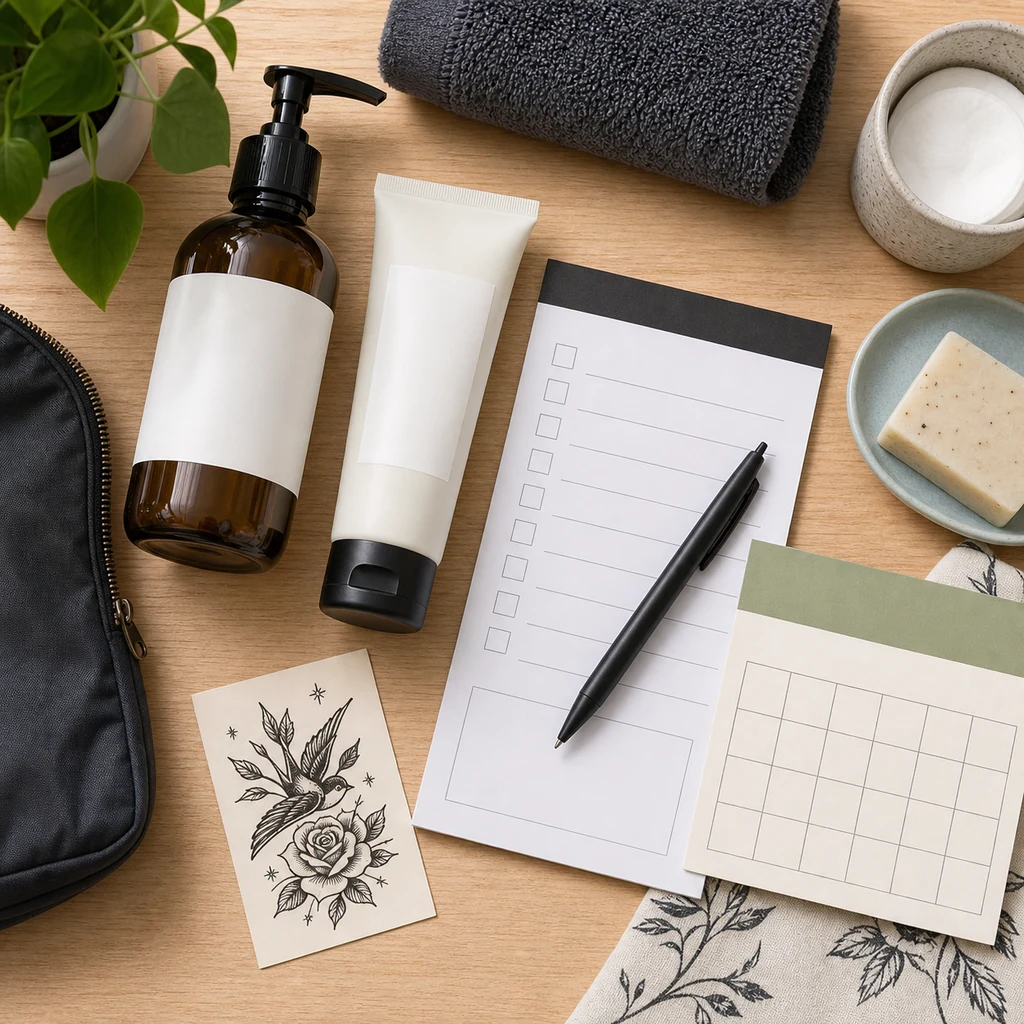
A placement is only practical if you can care for it. Your artist’s aftercare instructions should always come first, but the basic planning question is simple: can you keep this area clean, avoid friction, and protect it while it heals?
For example, a foot tattoo may be hard if you need closed shoes every day. A rib tattoo may rub under tight clothing. A back tattoo may be harder to moisturize without help. None of these are automatic deal breakers; they are planning details that make the first tattoo experience smoother.
Before-You-Book Checklist
- Ask how long the appointment may take for that placement.
- Plan loose clothing for the day of the appointment.
- Avoid scheduling right before swimming, heavy sun exposure, or travel.
- Have artist-approved aftercare supplies ready before the appointment.
- Choose a placement you can keep clean and protected.
Common First Tattoo Placement Mistakes
- Choosing only by trend: A trendy placement can still be wrong for your job, clothes, or comfort level.
- Going too tiny: Small designs can lose detail if the lines are crowded.
- Ignoring movement: Elbows, knees, fingers, and feet move a lot and may need extra thought.
- Skipping the artist’s input: A professional can spot placement problems before the stencil goes on.
- Forgetting aftercare: If clothing or shoes constantly rub the area, healing may be more annoying.
FAQ
What is the best first tattoo placement?
There is no single best spot, but outer upper arm, outer thigh, calf, and shoulder are common first tattoo placements because they are easier to cover and often feel more manageable for many people.
Should my first tattoo be small?
Small can be a good choice, but not every design works tiny. If the artwork has script, detail, or fine botanical lines, your artist may recommend a slightly larger size so it stays readable.
Where should I avoid getting my first tattoo?
Many first-timers choose to wait on hands, fingers, neck, face, ribs, sternum, and feet because they can be more visible, more sensitive, or harder to heal. Your comfort level matters most.
How do I know if a tattoo placement will work with my design?
Look at the design’s shape, size, and detail level, then ask your artist to place the stencil in a few options. Seeing it on the body area before tattooing is one of the most useful decision steps.
Final Thoughts
The right first tattoo placement should feel like a good fit for the design and for your everyday life. Think about visibility, size, movement, comfort, and aftercare before you commit.
Bring your ideas to a licensed tattoo artist, stay open to placement adjustments, and give yourself permission to choose the spot that feels steady, not just exciting in the moment.