

This five-minute desk routine combines gentle hand opening, wrist stretches, tendon glides, circles, and thumb coordination for frequent keyboard users.
5-Minute Wrist and Hand Stretches for Typists
Move away from the keyboard, rest the shoulders, and keep the elbows comfortably bent. Use light pressure only. Spend about one minute on each numbered step, performing both sides where directed.
- Equipment: stable chair or wall as shown
- Effort: gentle to moderate
- Rule: smooth, pain-free range
Follow the Movement Sequence
-
Open and Close the Hands — 1 Minute
Spread all fingers without straining, then close into a soft fist. Open again and repeat ten times. Keep the wrists neutral instead of bending them toward the little-finger side.
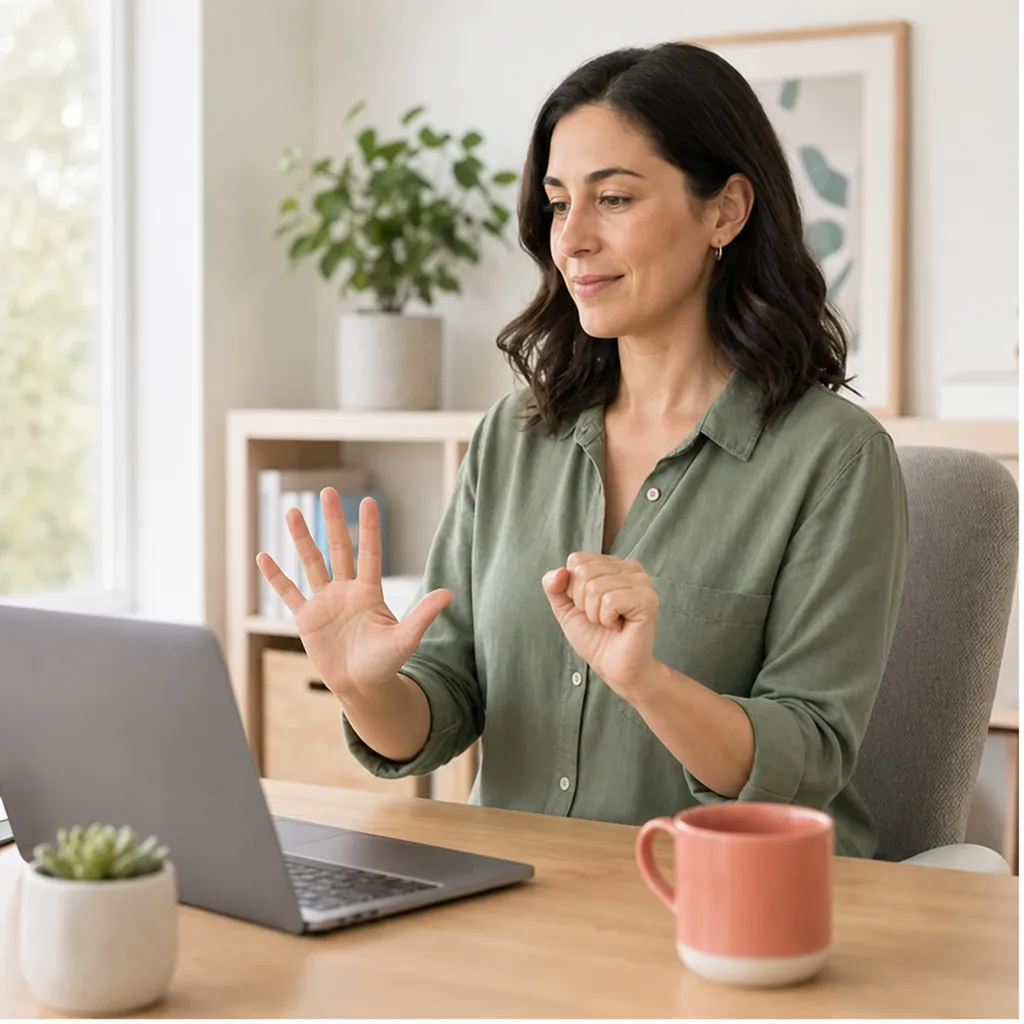
Open the fingers fully, then make a soft fist. -
Wrist Flexor Stretch — 1 Minute
Extend one arm with the palm facing forward. Use the other hand to guide the fingers back gently. Hold 20 seconds, release, and repeat on the other side.
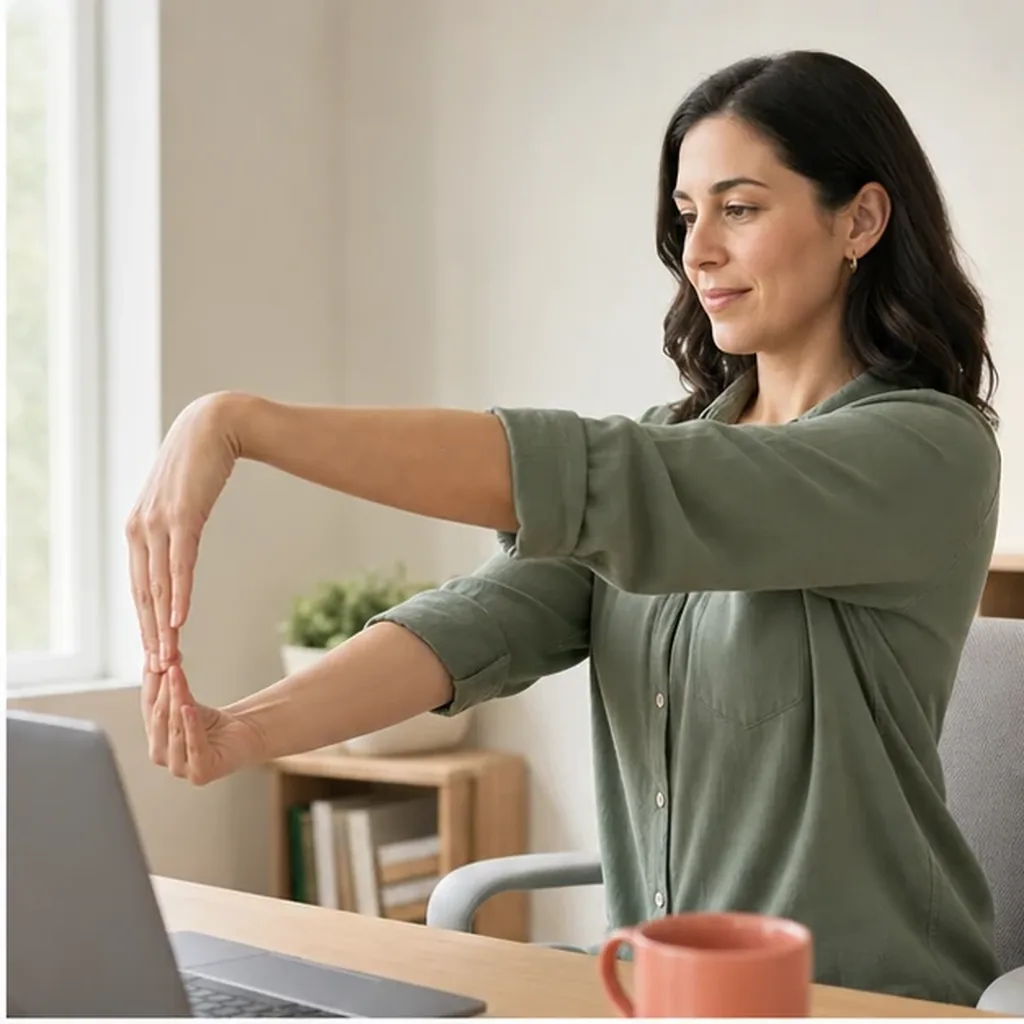
Palm-forward wrist flexor stretch. -
Wrist Extensor Stretch — 1 Minute
Extend one arm with the palm down. Let the wrist bend and guide the hand gently toward you. Hold 20 seconds, release, and switch arms. Do not pull on individual fingers.
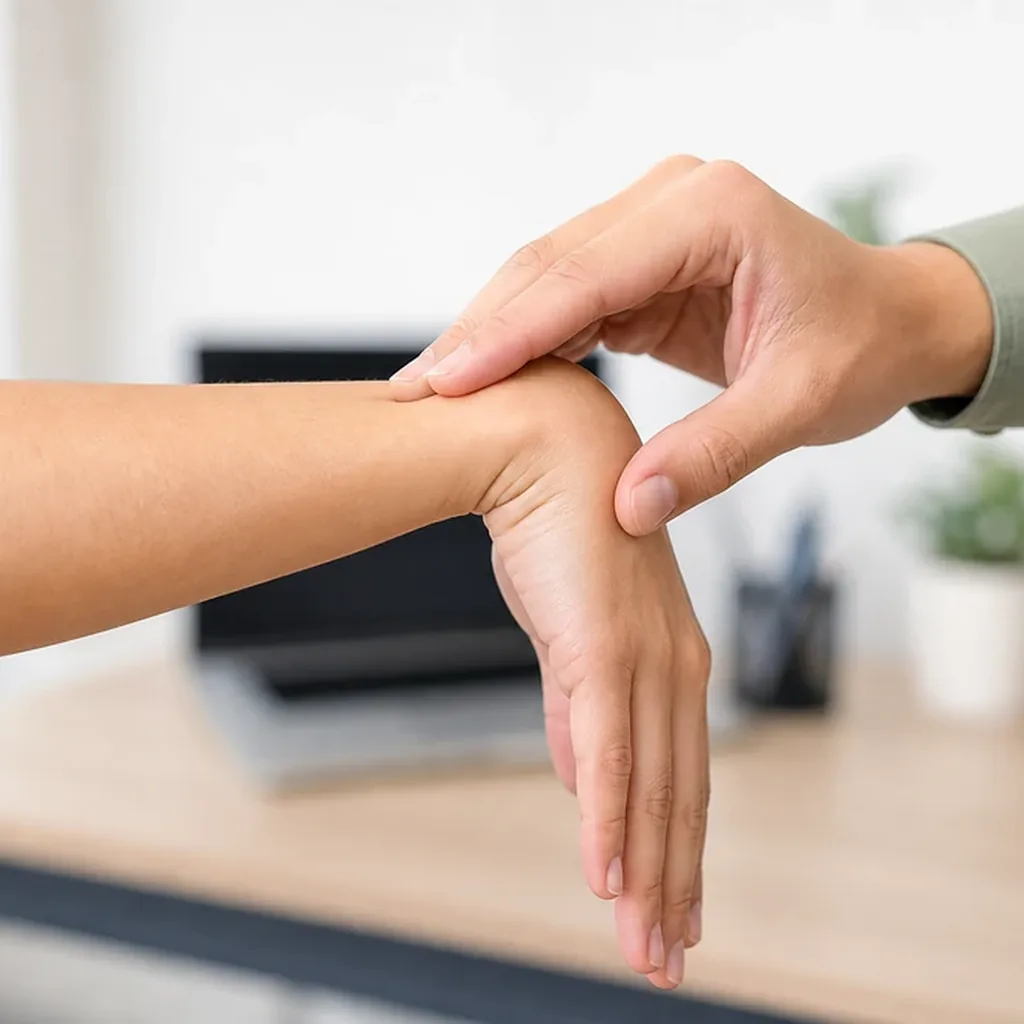
Guide the hand down with very light pressure. -
Finger Tendon Glides — 1 Minute
Start with fingers straight, make a hook shape, then a soft fist, and return to straight. Move smoothly through five cycles. Reduce the bend if a finger catches or becomes painful.
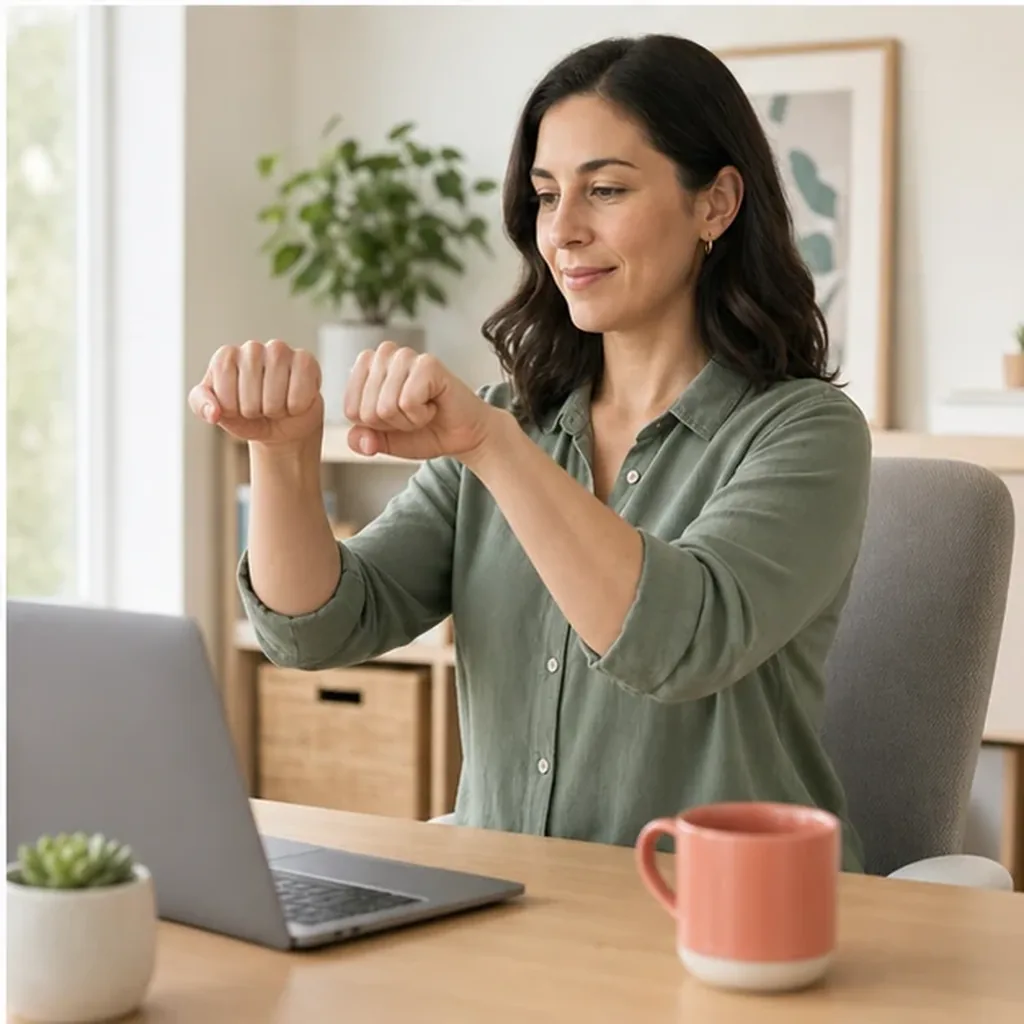
Move slowly through comfortable finger positions. -
Wrist Circles and Thumb Touches — 1 Minute
Make five small wrist circles each direction without moving the elbows. Then touch each thumb to the index, middle, ring, and little fingertip in sequence.
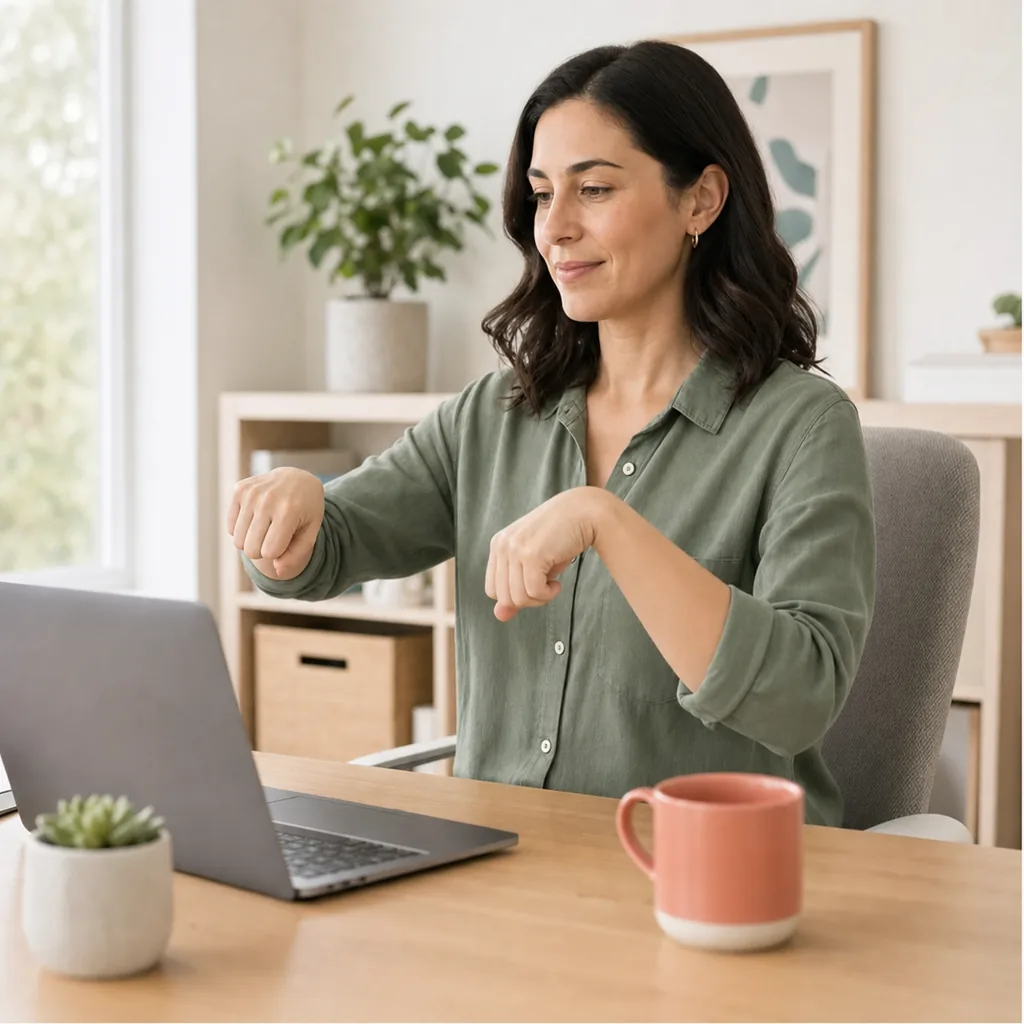
Small wrist circles with relaxed forearms. -
Thumb-to-Fingertip Touches
Repeat the fingertip sequence twice per hand with light contact. Keep the remaining fingers relaxed and stop if the thumb base feels pinched.
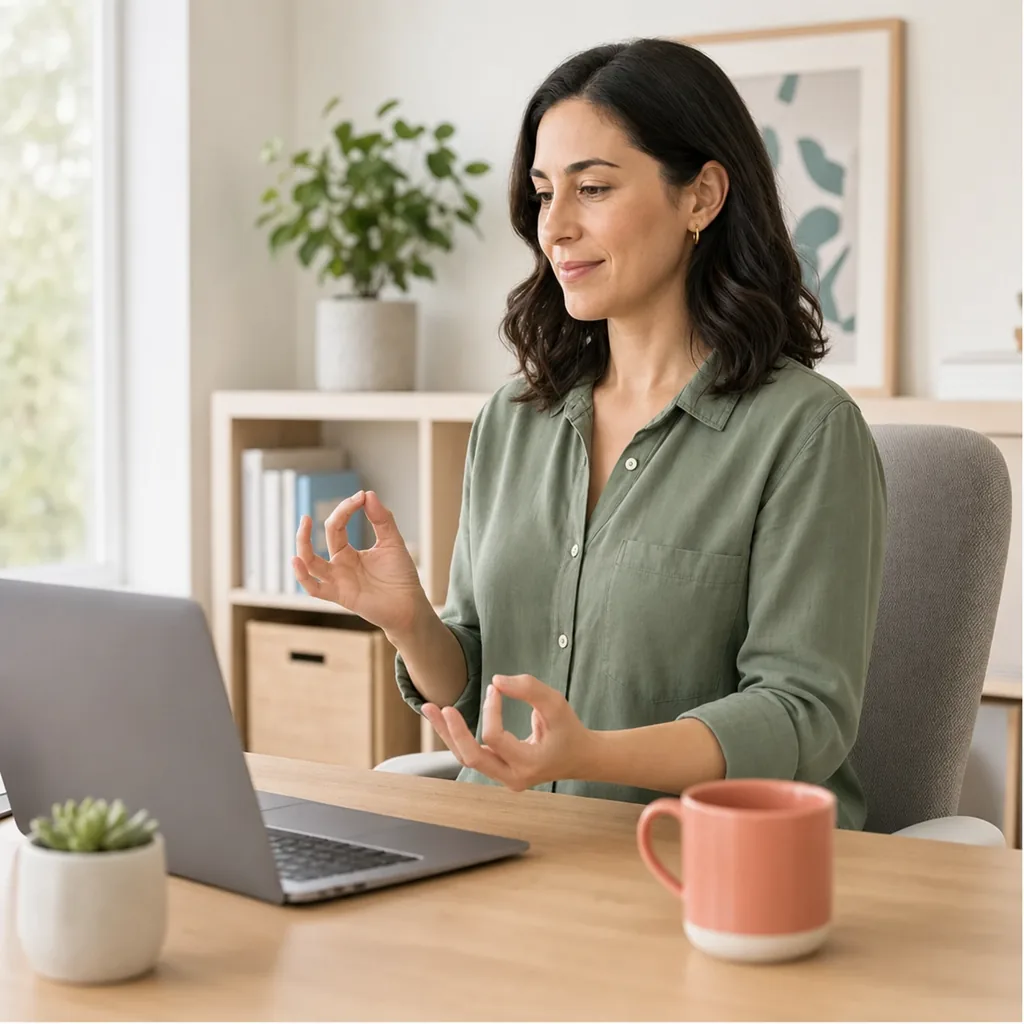
Light thumb-to-fingertip coordination.
Safety and Comfortable Progression
The NHS exercise guidance recommends comfortable, controlled movement and gradual progression. Stop immediately for sharp pain, chest pain, dizziness, unusual breathlessness, new numbness, or weakness.
- Do not bounce, force a joint, or hold your breath.
- Use stable support whenever balance is uncertain.
- Ask a clinician before starting after surgery, injury, a fall, or a major symptom change.
Try the routine during a break instead of waiting for discomfort. Shorten holds if symptoms increase after stretching. Keyboard height, mouse position, workload, and recovery time can matter as much as the exercises themselves.
Build a Consistent Movement Break
Pair this session with forearm self-massage, hand dexterity exercises, or a desk yoga routine. Choose the option that matches your energy, available space, and current comfort.
Finish by returning to a neutral position and taking two easy breaths. Notice how the body feels during the next hour. Persistent or worsening symptoms deserve assessment from a qualified health professional.
Frequently Asked Questions
Should the movements feel intense?
No. Mild muscular effort or a gentle stretch may be appropriate, but pinching, burning, tingling, or sharp pain is a reason to reduce the range or stop.
How often can I use this routine?
Begin with two or three sessions each week. Add sessions only when you recover comfortably and the movements do not worsen symptoms later that day.
This routine provides general fitness information and is not medical treatment or individualized rehabilitation.