

These seated ulnar nerve glides use small coordinated elbow and wrist movements during a five-minute desk break. They should feel gentle, never like a forceful stretch.
5-Minute Ulnar Nerve Glides Desk Routine
- Total time: 5 minutes
- Position: Seated upright
- Equipment: Stable chair
- Repetitions: 5 slow cycles per side
- Intensity: Symptom-free or very mild
Nerve symptoms have many causes. This routine is general information, not a diagnosis or treatment for cubital tunnel syndrome, neck disease, or persistent hand weakness.
Set Up Safely
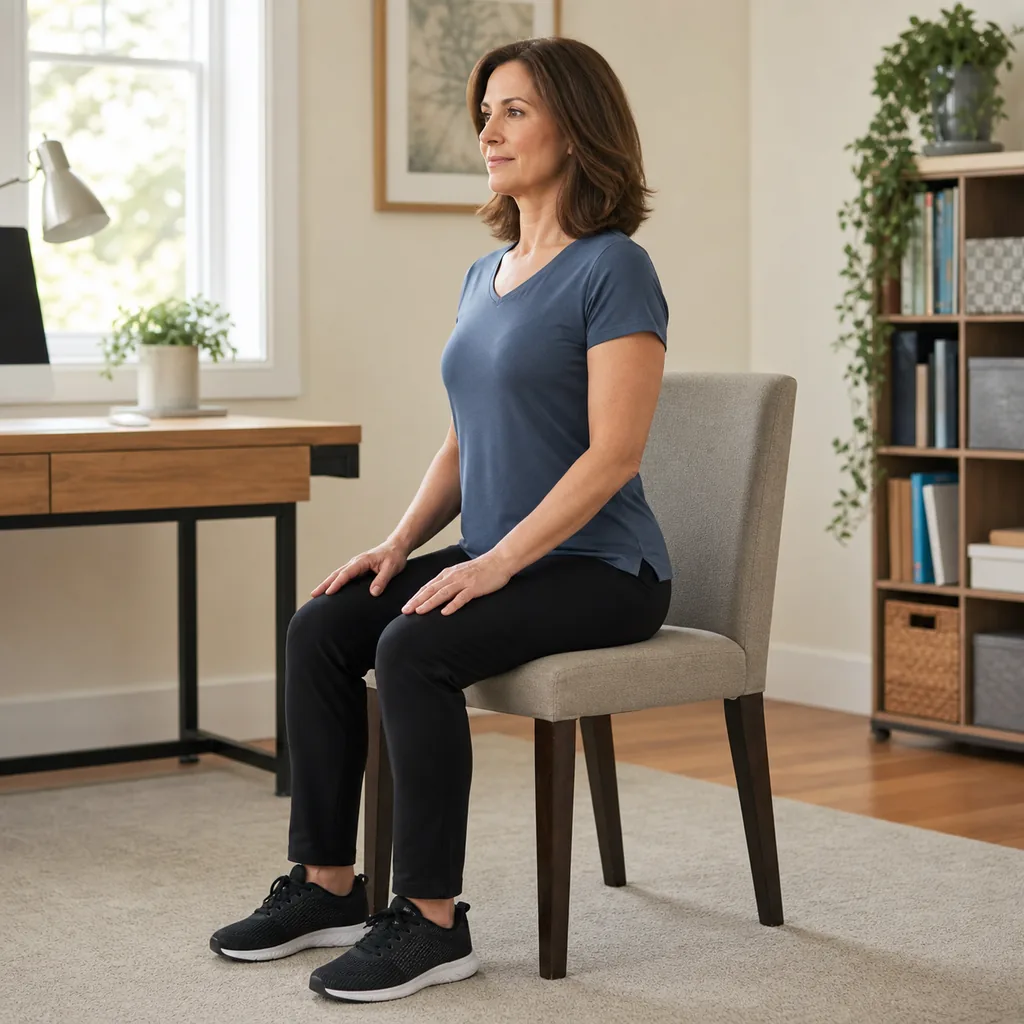
- Use a chair without wheels.
- Keep both feet on the floor.
- Drop the shoulders away from the ears.
- Move only within an easy range.
- Remove watches or tight sleeves.
The Five-Minute Ulnar Nerve Glide
- Reset, 1 minute: Rest hands on thighs, breathe slowly, and complete five gentle shoulder rolls without shrugging.
- Start, 1 minute: Bring one arm slightly to the side, elbow bent, palm facing toward you, and wrist neutral.
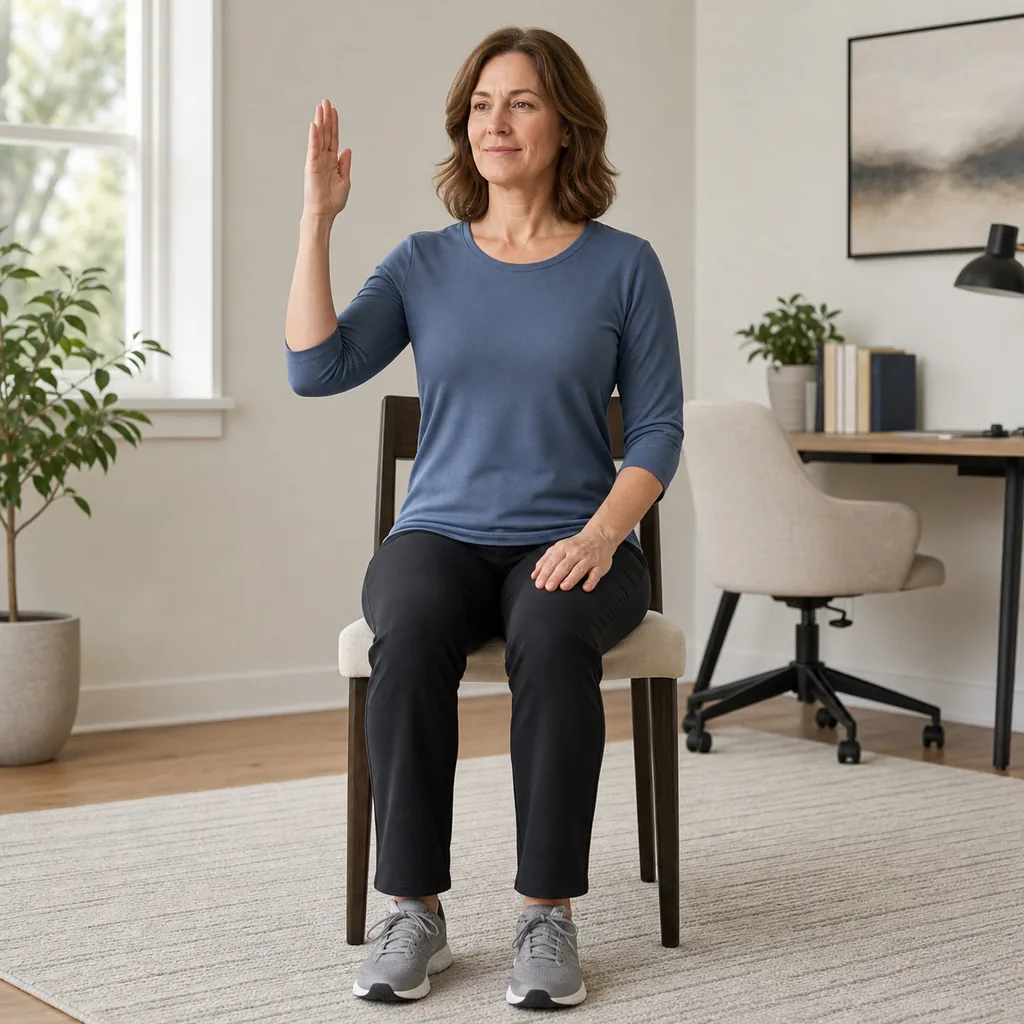
Starting position for a seated ulnar nerve glide - Open, 1 minute: Slowly straighten the elbow as the wrist bends so fingers point toward the floor. Stop before symptoms increase.
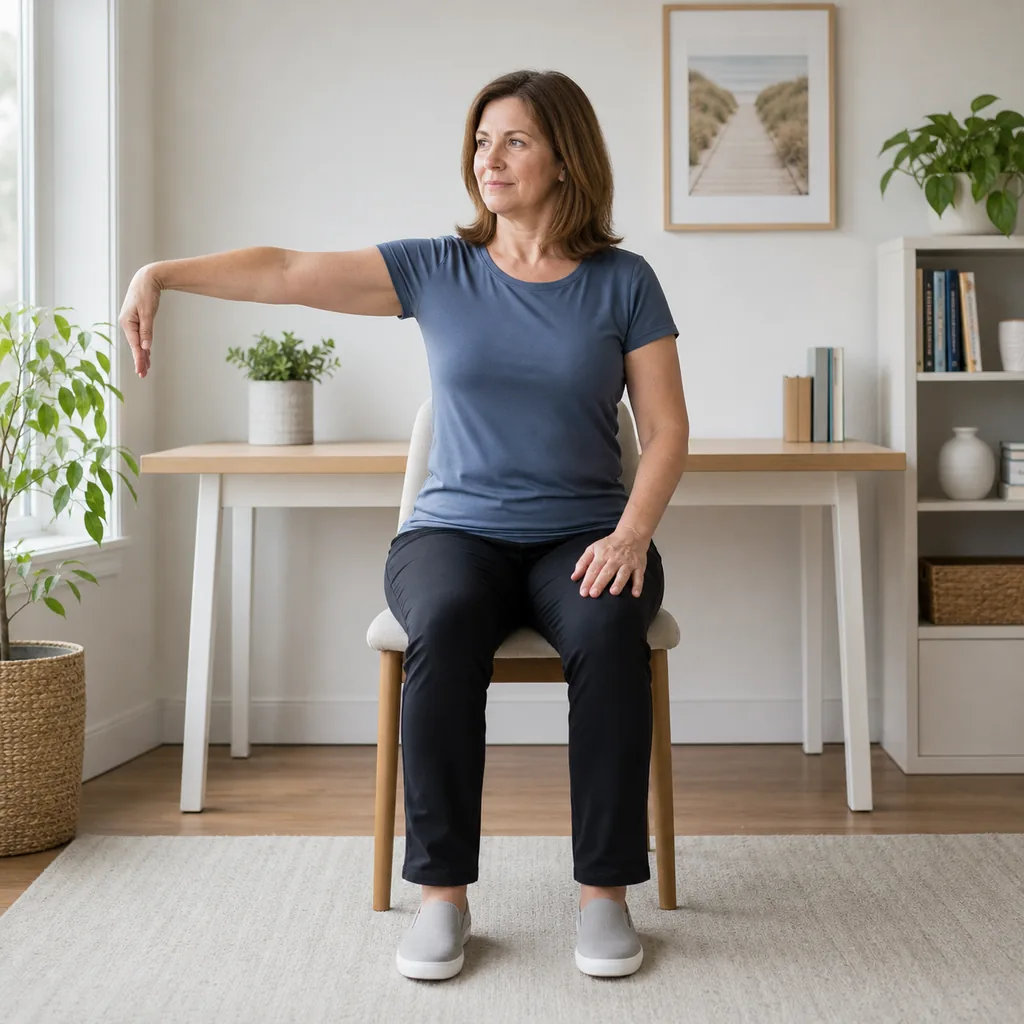
Gentle open phase of a seated ulnar nerve glide - Return, 1 minute: Bend the elbow and return the wrist to neutral. Complete five smooth open-and-return cycles on each side.
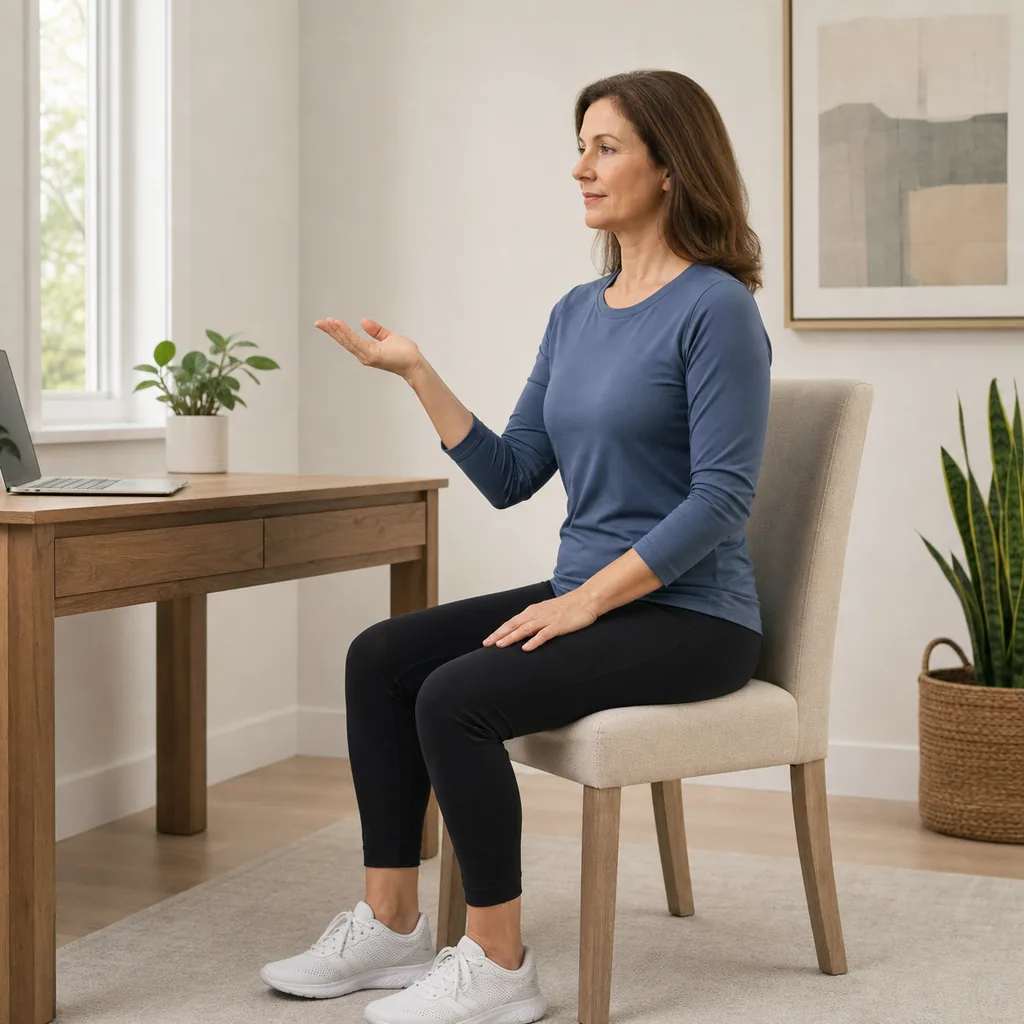
Controlled return phase of a seated ulnar nerve glide - Finish, 1 minute: Lower both arms, shake hands gently, and check that any mild pulling settles within minutes.
Technique Checklist
- The shoulder stays relaxed.
- The movement remains slow and continuous.
- No position is held as a stretch.
- Range becomes smaller if tingling appears.
- Breathing stays normal.
Support your workday with our forearm self-massage, wrist and hand stretches, or hand dexterity routine.
Safety Guidance
Frimley Health NHS advises moving only to the point before pain and stopping if new discomfort continues after the exercise. Review its ulnar nerve guidance.
Stop immediately for sharp pain, spreading numbness, stronger tingling, hand weakness, or symptoms that remain after the session. Seek assessment if symptoms are persistent or worsening.
- Do not force the wrist.
- Do not pull the fingers with the other hand.
- Do not combine with sustained neck bending.
- Skip the drill after recent arm surgery unless cleared.
Desk Habits
Avoid resting the inner elbow on a hard edge or keeping it deeply bent for long periods. Adjust armrests and vary position regularly.
A glide is not a test of flexibility. Smaller, comfortable, controlled motion is more appropriate than chasing a strong sensation at all.
When Desk Changes Matter
Repeated elbow pressure may irritate symptoms even when the glide itself feels comfortable. Pad hard edges and keep the keyboard close enough that shoulders remain relaxed.
During calls or reading, avoid holding the elbow deeply bent for long periods. Alternate positions instead of trying to maintain one perfect posture.
- Move briefly every 30 to 60 minutes.
- Keep wrists near neutral while typing.
- Do not sleep with the elbow tightly folded.
Frequently Asked Questions
Should I feel tingling?
A brief mild sensation may occur, but it should settle quickly. Reduce range or stop if it lingers.
How often should I practice?
Begin with one short session. A hand therapist can prescribe a personal frequency.