
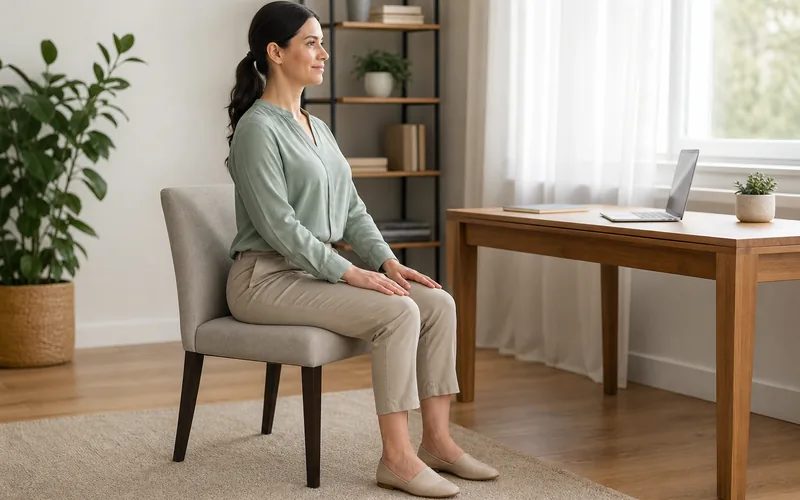
This seated psoas release desk routine uses breathing, posture changes, and gentle hip movement during a five-minute typing break. It does not physically isolate or manually release the psoas.
5-Minute Seated Psoas Release Desk Routine
- Total time: 5 minutes
- Position: Seated in a stable chair
- Equipment: Optional folded towel
- Intensity: Gentle
- Goal: Reduce sustained hip-flexed posture
Deep hip or abdominal pain needs professional assessment. This general movement break is not treatment for a hip injury, hernia, abdominal condition, or nerve disorder.
Set Up at the Desk
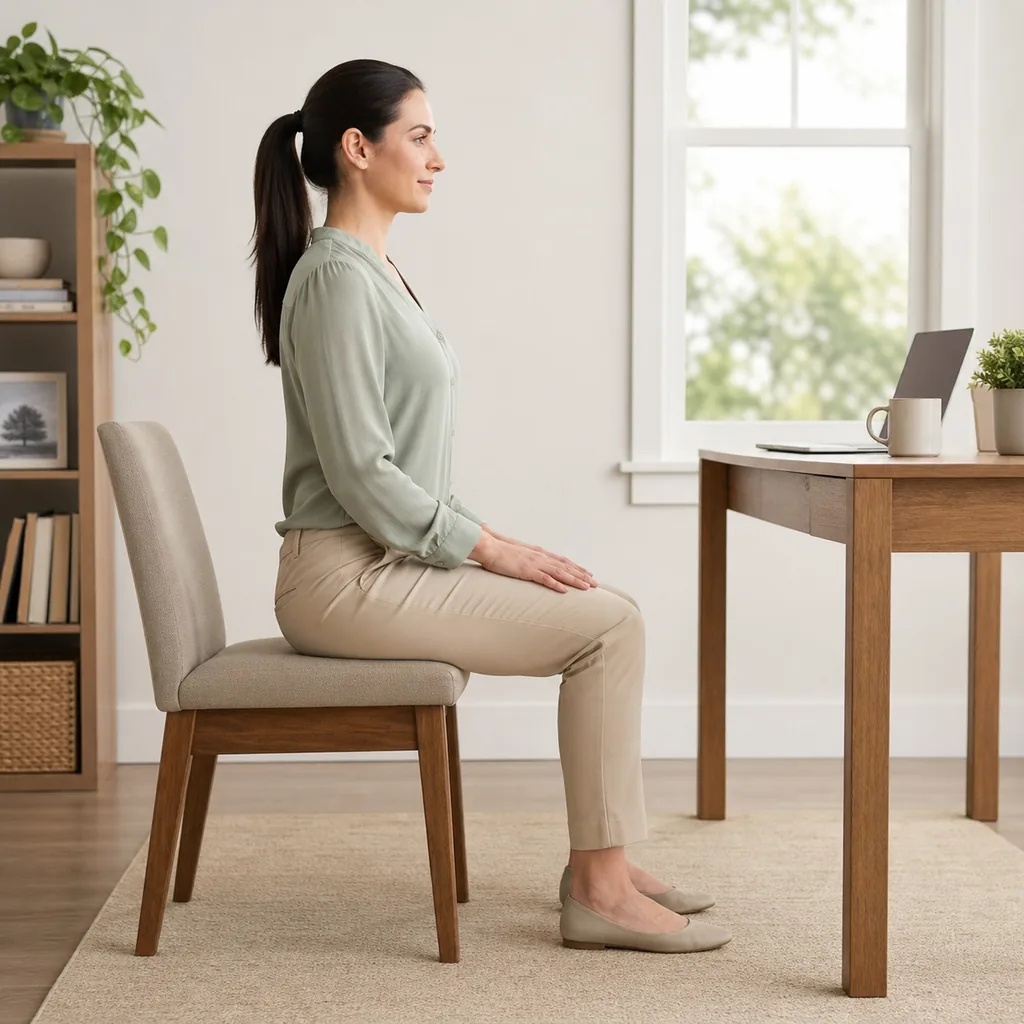
- Lock chair wheels or use a fixed chair.
- Place feet flat and slightly apart.
- Sit near the front half of the seat.
- Keep the spine neutral.
- Stop before pinching in the groin.
The Five-Minute Hip-Flexor Reset
- Breathing, 1 minute: Rest hands on lower ribs. Take five quiet breaths and let the abdomen move naturally without bracing hard.
- Pelvic clocks, 1 minute: Make small forward-and-back pelvic tilts, then return to a comfortable middle position for eight cycles.
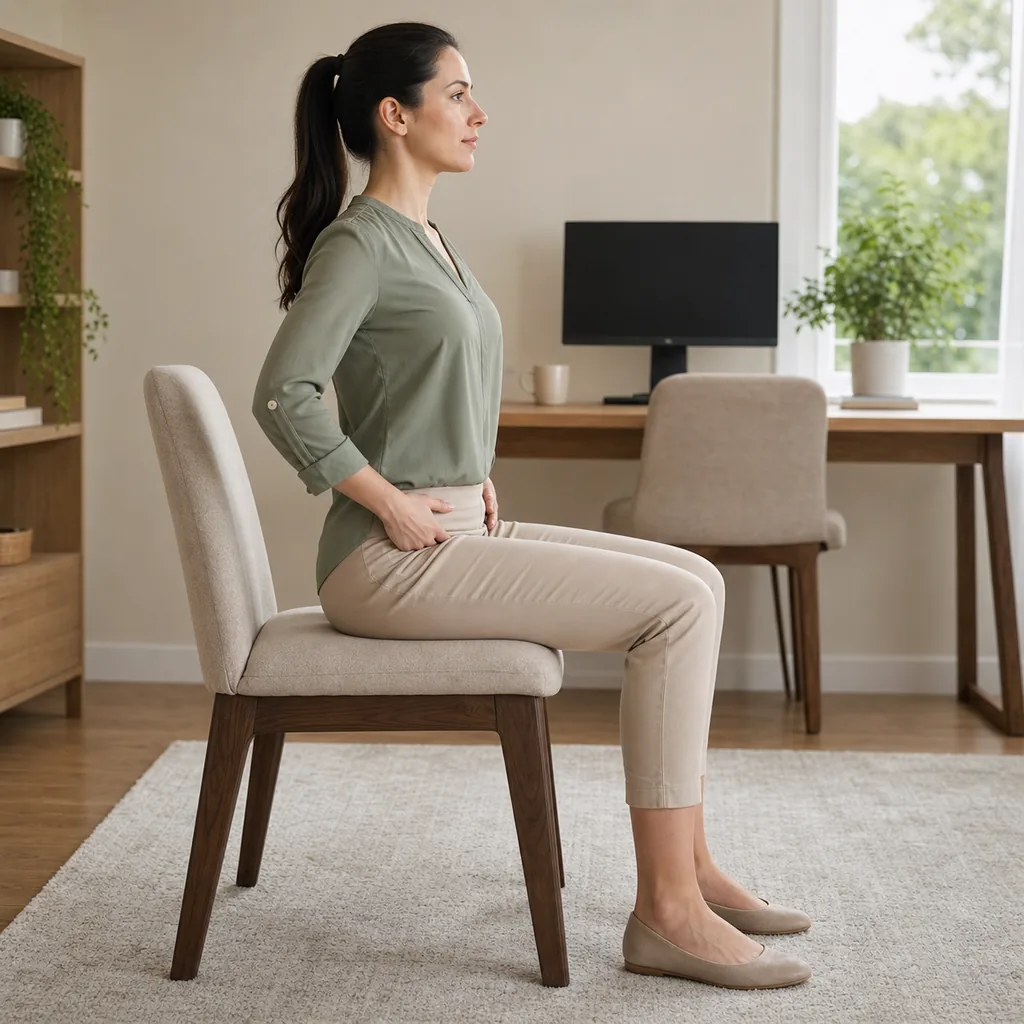
Small seated pelvic clock movement - Heel peel, 1 minute: Keep toes down and lift one heel slightly, then lower slowly. Alternate ten controlled repetitions.
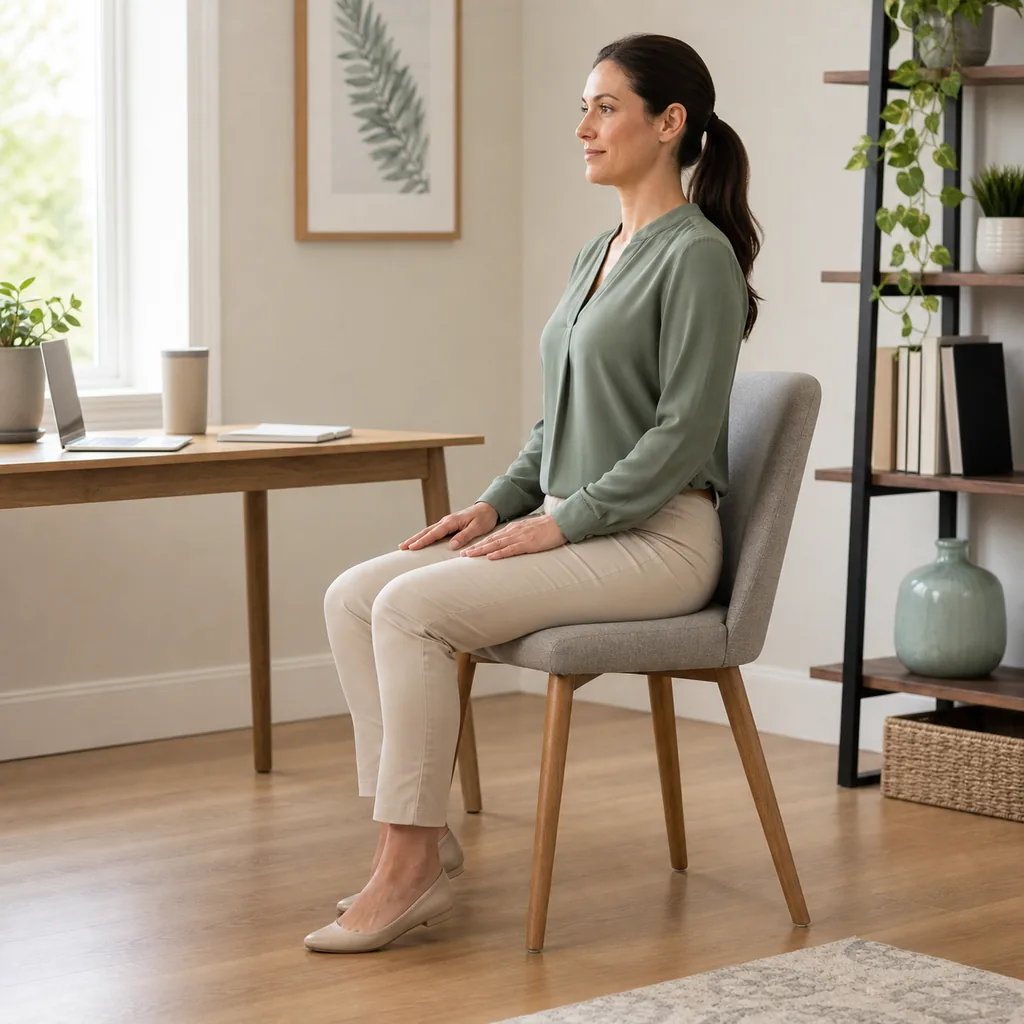
Controlled seated heel peel with toes grounded - Staggered sit, 1 minute: Slide one foot slightly behind the knee while keeping the toes down. Sit tall for 15 seconds, then switch.
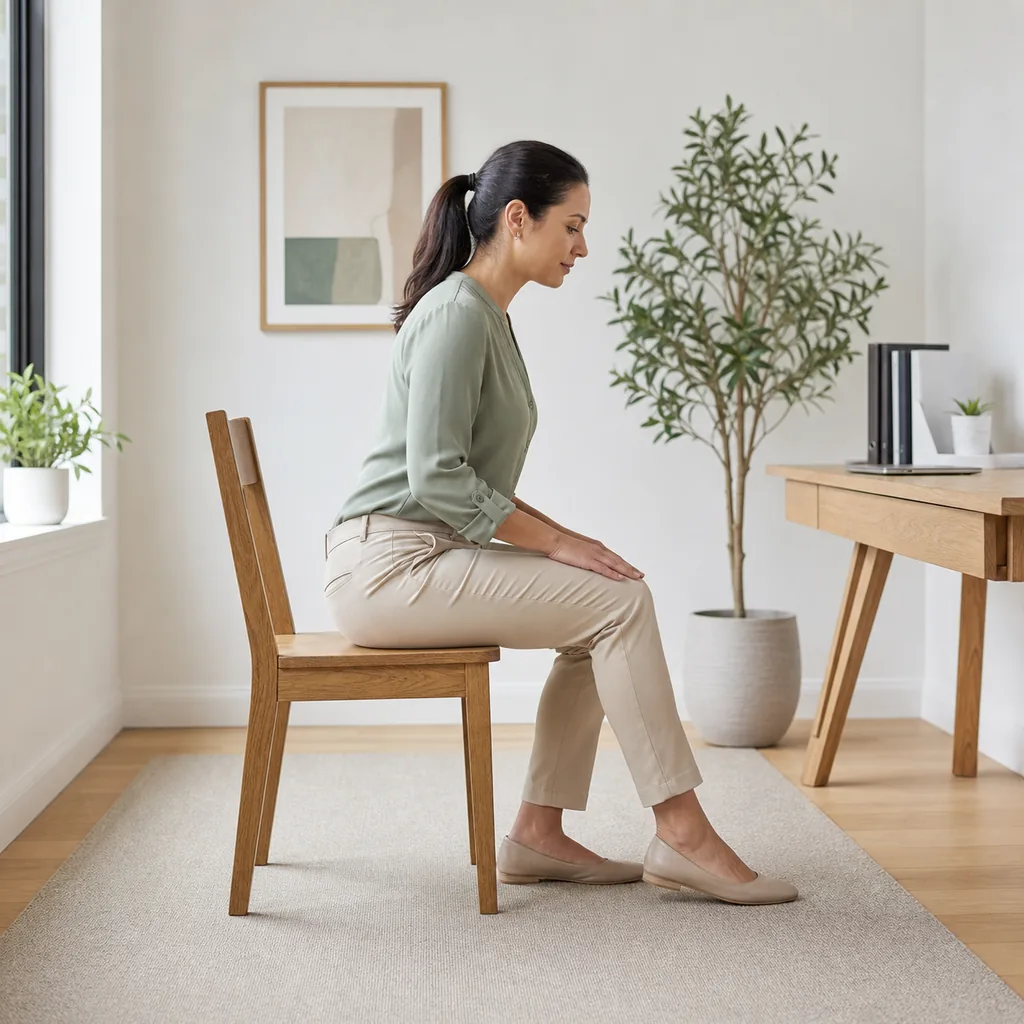
Staggered seated position with a small supported hip hinge - Stand transition, 1 minute: Move to the seat edge, stand with support if safe, take three easy breaths, and sit slowly.
Form Checklist
- No deep abdominal pressure is applied.
- The pelvis moves through a small range.
- The lower back does not arch forcefully.
- Both sit bones remain supported.
- Groin discomfort does not increase.
Continue with our seated pelvic tilts, hip mobility routine, or seated glute stretches.
What “Release” Means Here
The psoas is a deep hip flexor and cannot be reliably isolated by pressing through the abdomen at a desk. Here, release means changing position and reducing unnecessary effort.
Royal National Orthopaedic Hospital describes a controlled seated heel-peel exercise. Individual rehabilitation instructions always take priority.
Safety Guidance
- Stop for sharp groin or abdominal pain.
- Stop for new numbness or weakness.
- Avoid abdominal pressure after surgery.
- Use prescribed hip precautions.
- Seek advice for persistent night pain.
People with a recent hip replacement, abdominal surgery, pregnancy-related restrictions, or a diagnosed hip disorder should obtain personalized clearance from an appropriate health professional before trying these movements or changing established rehabilitation instructions.
Desk Setup Between Breaks
Adjust the chair so the hips are level with or slightly above the knees. A very low seat keeps the hips deeply flexed.
Keep frequently used desk items close and change position regularly. Standing briefly, when safe, usually changes hip angle more clearly than forcing a stronger seated stretch during prolonged typing.
- Avoid sitting on one foot.
- Do not brace the abdomen continuously.
- Use armrests only with relaxed shoulders.
- Alternate sitting and standing when available.
Frequently Asked Questions
Should I press into my abdomen?
No. Deep self-pressure can be unsafe and does not reliably isolate the psoas.
Should I feel a strong stretch?
No. Use small comfortable motion without groin pinching or back strain.