
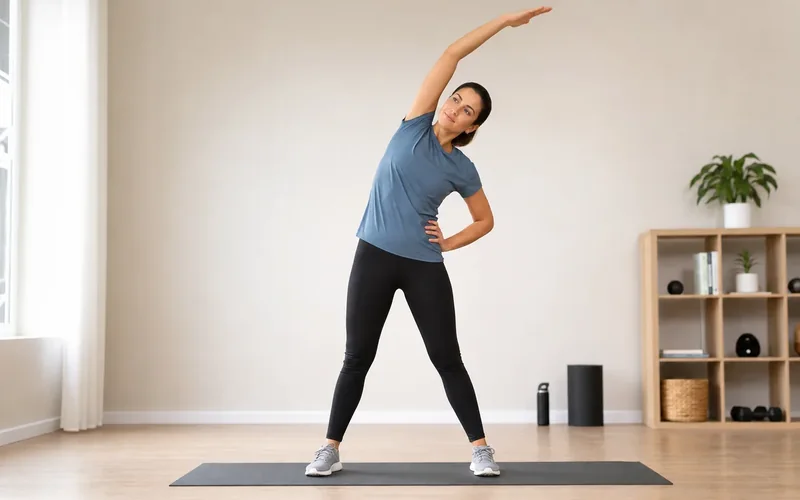
This gentle sequence moves from standing stretches to supported floor positions, helping you explore comfortable mobility without rushing or forcing your joints.
Full Body Stretch Routine: A Safe 15-Minute Plan
Use an exercise mat, a clear wall, and a timer. Wear clothes that allow easy movement. Breathe normally, move slowly, and aim for mild tension rather than pain.
- Total time: 15 minutes
- Equipment: mat and wall
- Effort: gentle and controlled
- Format: eight positions
The Eight-Stretch Sequence
-
Standing Side Reach — 1 Minute
Stand with feet wider than hip-width. Reach one arm overhead and lean away without rotating the chest. Hold 30 seconds, then switch sides.
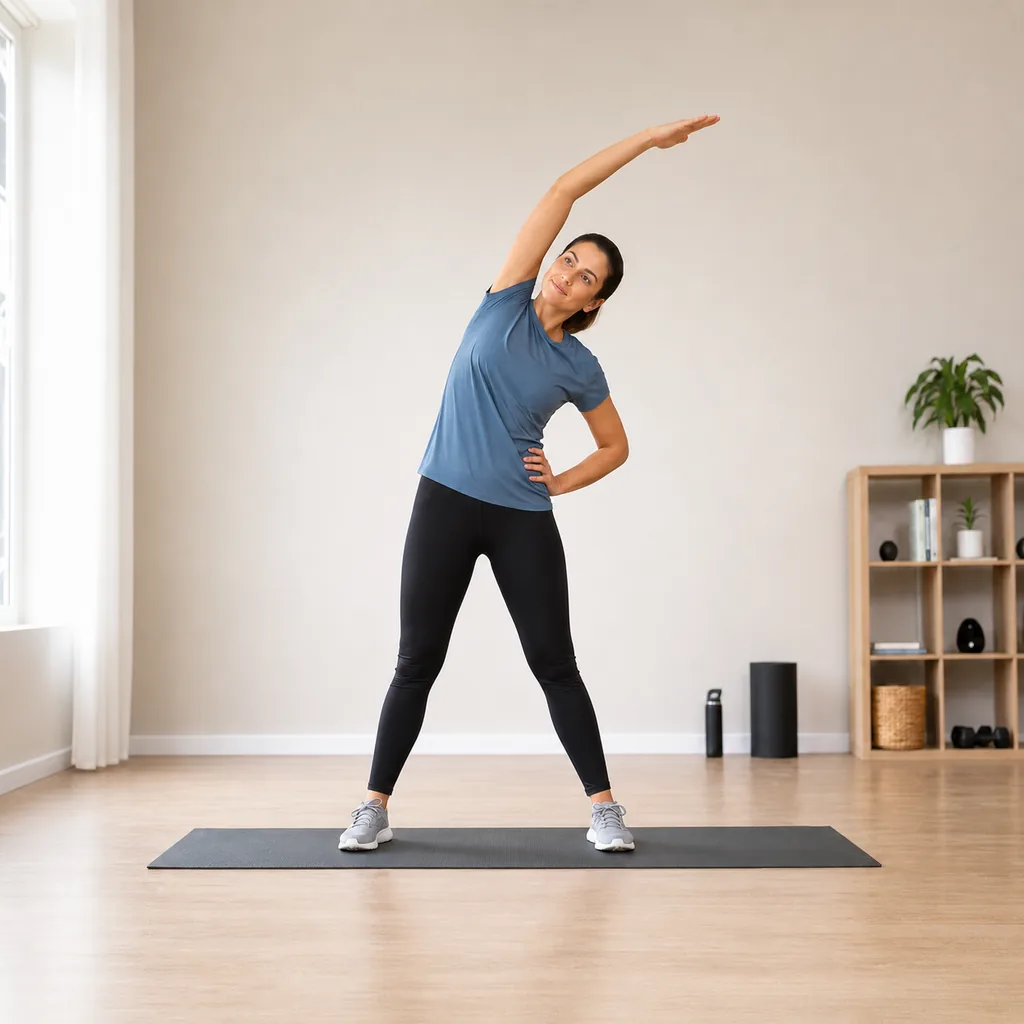
Standing side reach. -
Wall Calf Stretch — 2 Minutes
Place both hands on the wall. Step one foot back, point both feet forward, and lower the back heel. Hold 60 seconds per side.
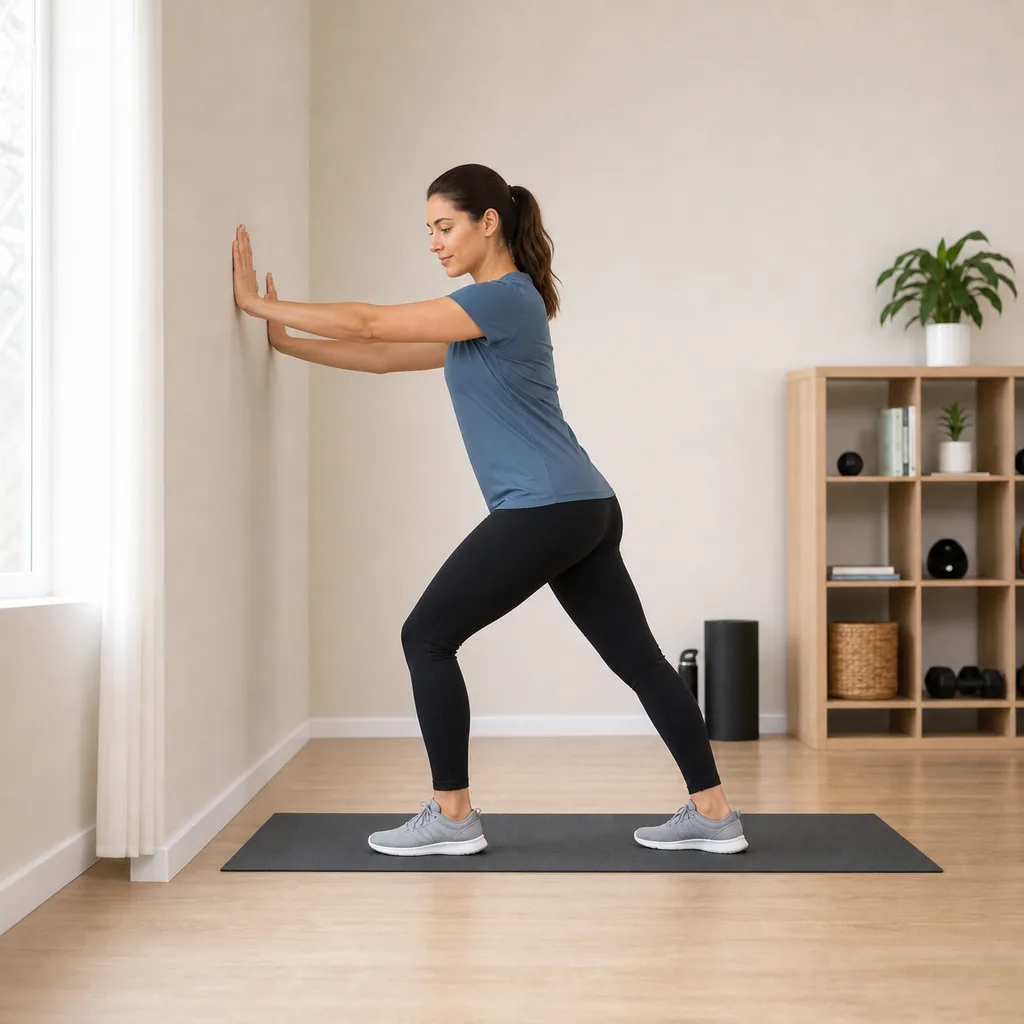
Wall calf stretch. -
Standing Chest Opener — 1 Minute
Clasp your hands loosely behind you. Draw the shoulders back and lift the breastbone slightly. Keep the ribs stacked instead of arching the lower back.
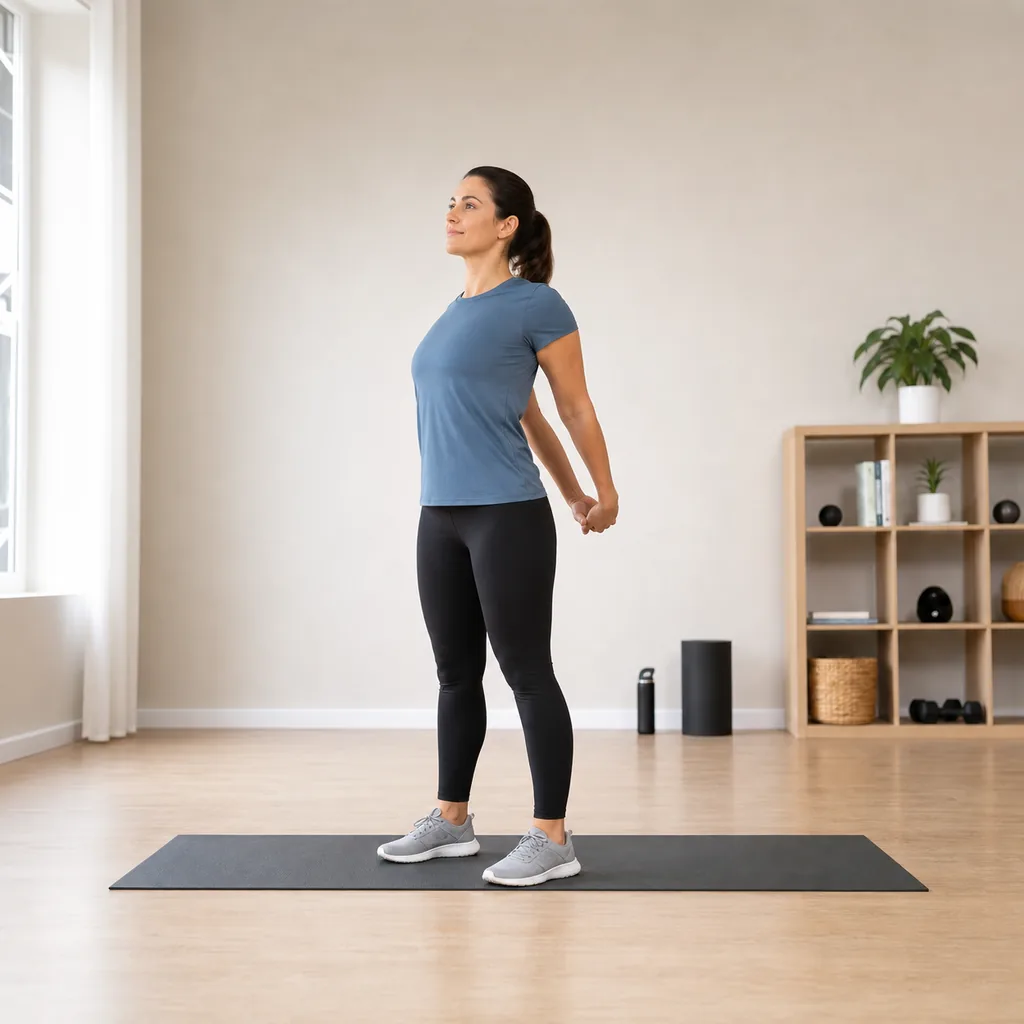
Standing chest opener. -
Half-Kneeling Hip Flexor — 2 Minutes
Kneel with one foot forward. Gently tuck the pelvis and shift forward until the front of the rear hip lengthens. Hold 60 seconds per side.
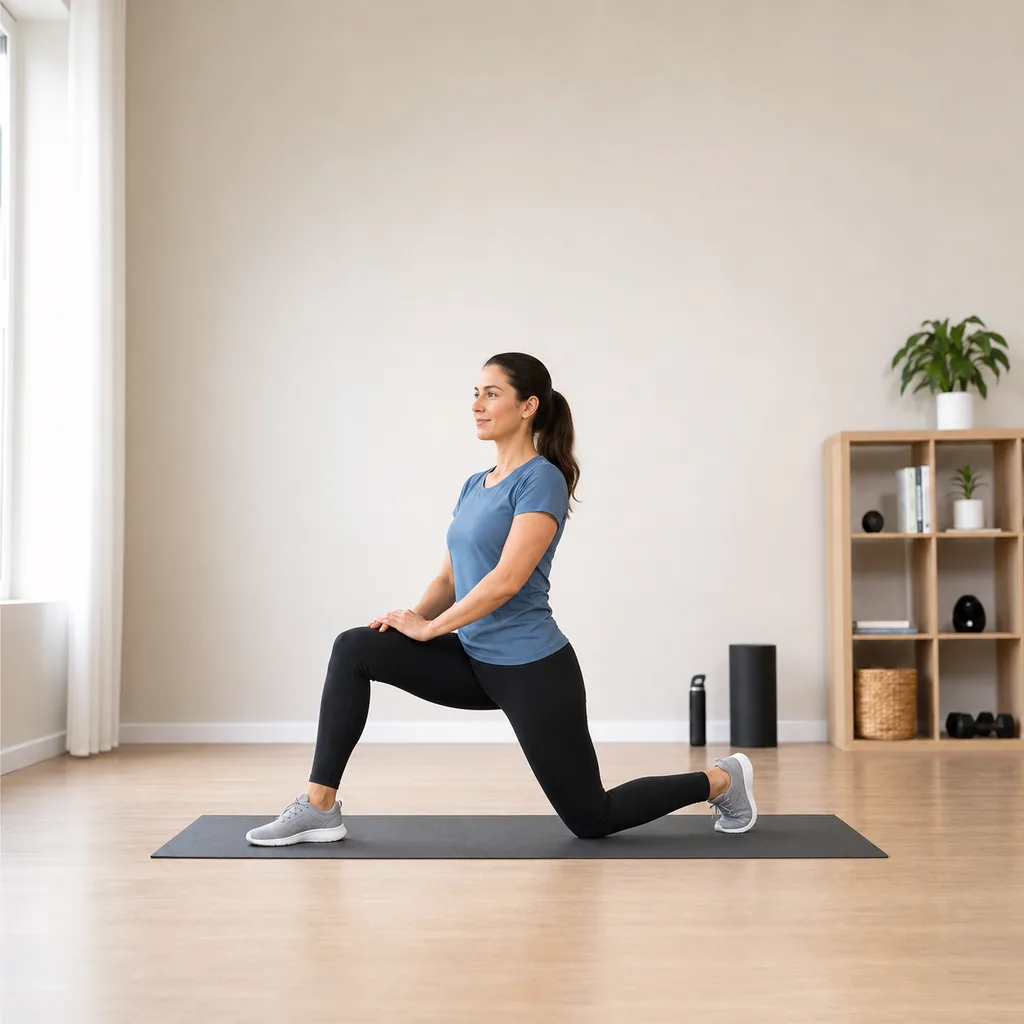
Half-kneeling hip flexor stretch. -
Seated Hamstring Stretch — 2 Minutes
Extend one leg and bend the other comfortably. Hinge from the hips with a long spine. Stop before the knee or back feels strained.
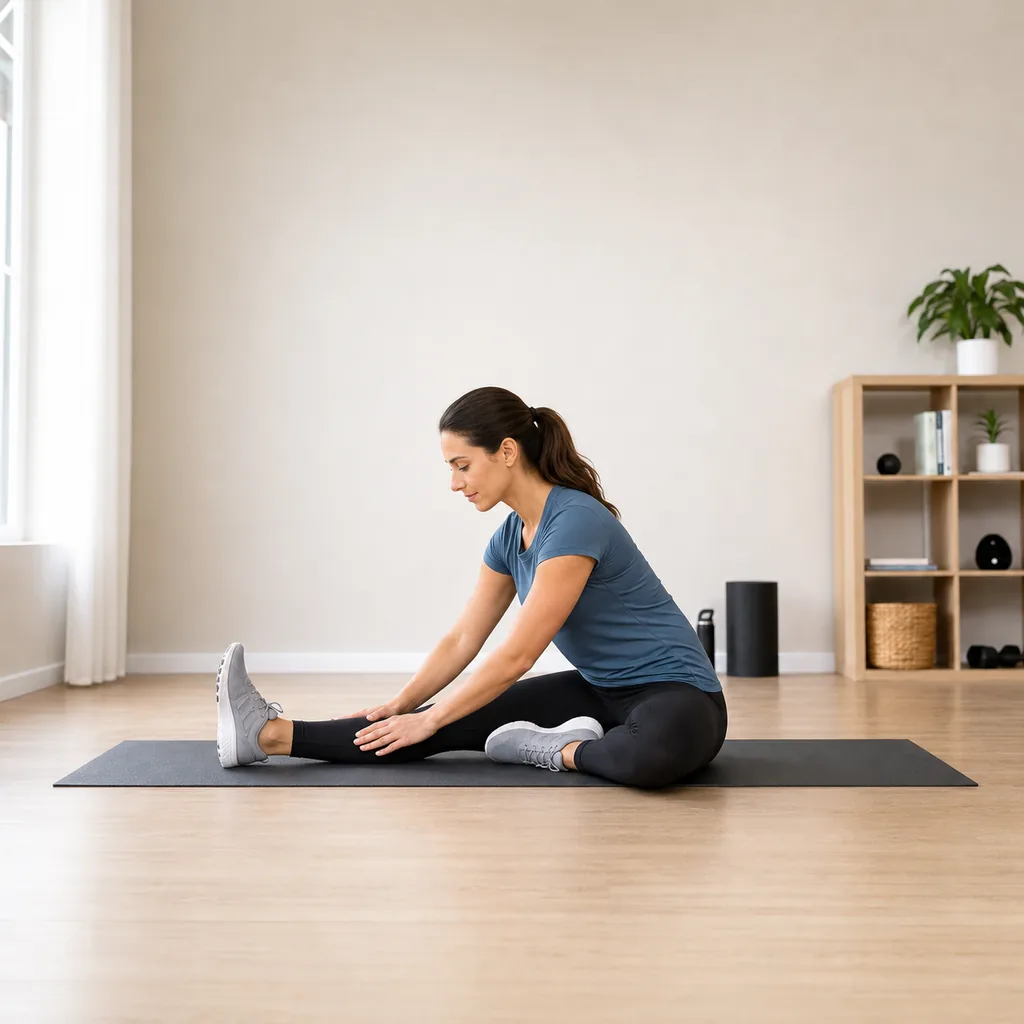
Seated hamstring stretch. -
Supine Figure-Four — 2 Minutes
Lie down, cross one ankle over the opposite thigh, and draw the supporting leg inward. Keep your head and shoulders relaxed throughout.
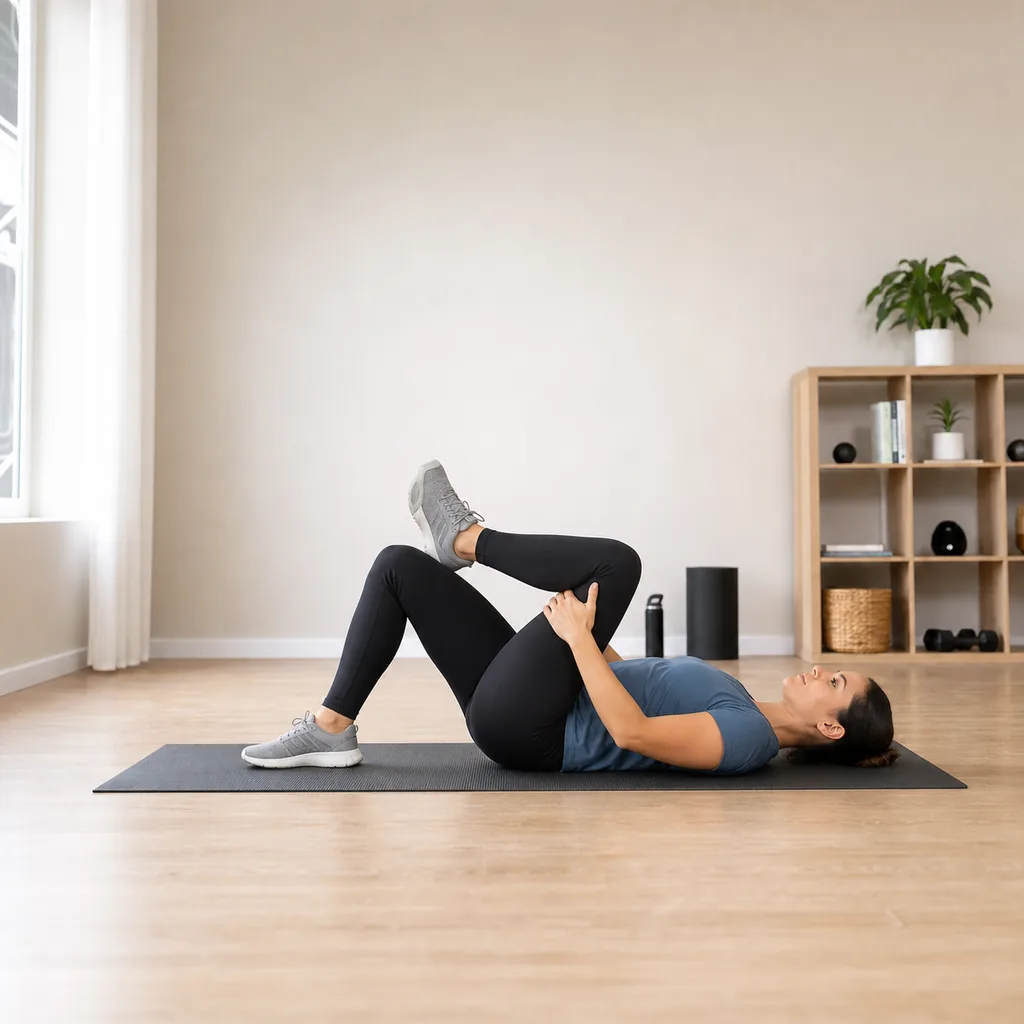
Supine figure-four stretch. -
Supine Spinal Rotation — 2 Minutes
With knees bent, lower both legs toward one side while the shoulders stay comfortable on the mat. Hold gently, then change sides.
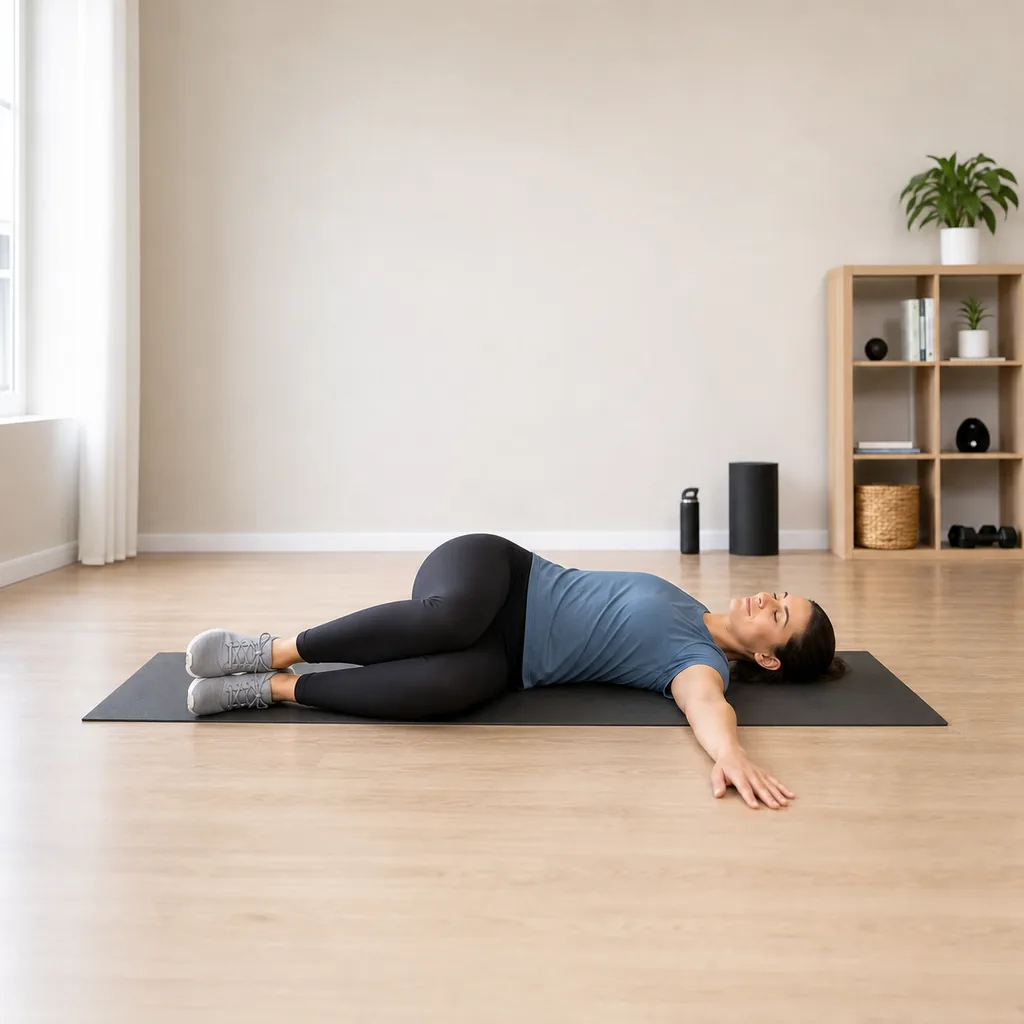
Supine spinal rotation. -
Child’s Pose Breathing — 3 Minutes
Sit the hips toward the heels and reach forward. Support the torso or forehead with cushions if needed. Finish with slow, unforced breaths.
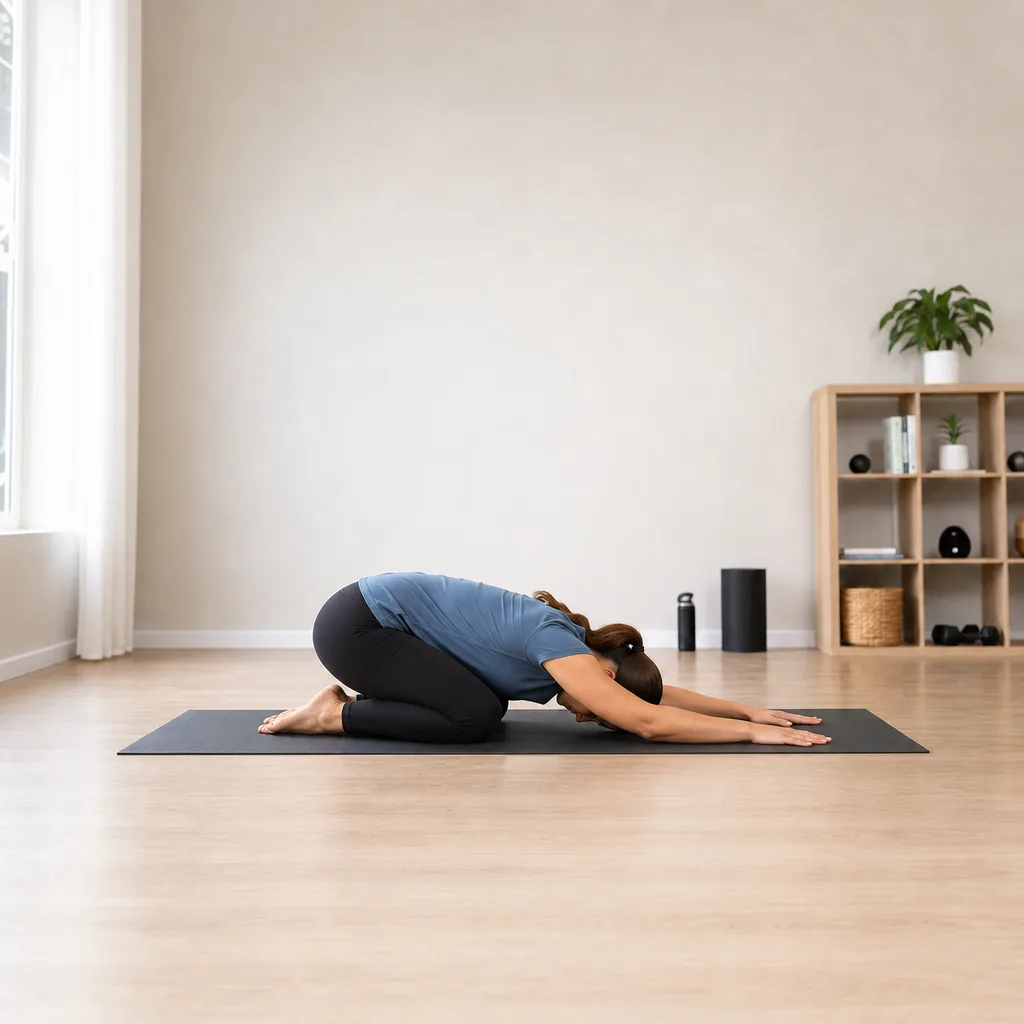
Child's pose breathing.
Safety, Modifications, and Progress
The NHS stretching guide recommends adapting stretches when injury, pregnancy, or a medical condition affects what feels suitable. Never bounce or push through sharp discomfort.
- Shorten the hold or reduce the range when muscles feel guarded.
- Use a folded towel beneath the knee in kneeling positions.
- Stop for sharp pain, dizziness, numbness, tingling, or joint instability.
- Ask a qualified clinician for individual guidance after surgery or injury.
For shorter workday options, try these wall stretches for rounded shoulders, a seated spinal twist, or gentle desk stretches for tight hips.
Frequently Asked Questions
Should I stretch every day?
A comfortable routine can fit into many days, but recovery needs vary. Start with two or three sessions weekly and increase only when your body responds well for you.
How intense should each stretch feel?
Choose a mild, steady pulling sensation that allows relaxed breathing. Pain, pinching, shaking, or breath-holding means the position or duration should be reduced.
This routine provides general fitness information and is not medical treatment or rehabilitation.