
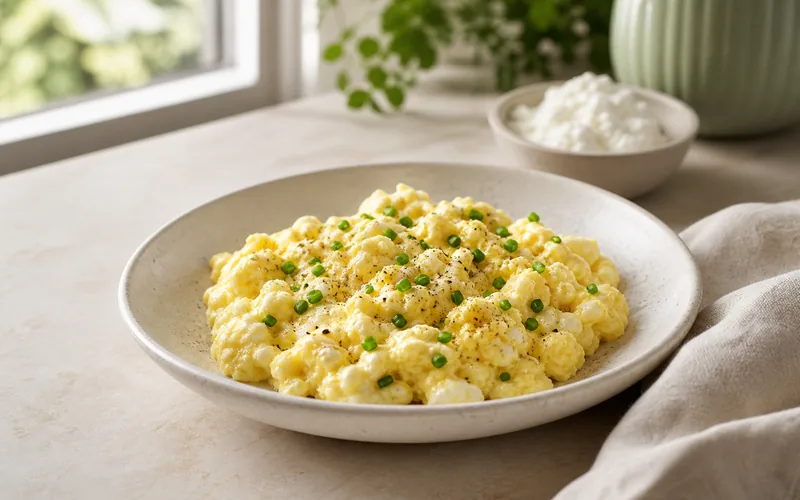
Soft, creamy scrambled eggs get extra body from cottage cheese without requiring a blender. This fast stovetop breakfast makes two satisfying servings with simple ingredients.
RECIPE CARD
High-Protein Cottage Cheese Scrambled Eggs
Ingredients
- 4 large eggs
- 1/2 cup small-curd cottage cheese, 2% or full-fat
- 1 tablespoon unsalted butter
- 1/8 teaspoon kosher salt, plus more to taste
- 1/8 teaspoon black pepper
- 1 tablespoon thinly sliced chives, optional
Quick Method
Condensed overview. Use Full Instructions for the complete method, timing and doneness details.
- Whisk the Eggs: Crack 4 eggs into a medium bowl. Add salt and pepper, then whisk for 30 seconds until the whites and yolks are fully combined.
- Add Cottage Cheese: Fold in 1/2 cup cottage cheese. Do not blend; visible curds create a creamy, lightly textured scramble.
- Heat the Skillet: Melt butter in a 10-inch nonstick skillet over medium-low heat for 30 to 45 seconds. The butter should foam without browning.
- Pour and Cook Slowly: Cook slowly. Pour in the egg mixture. Wait 20 seconds, then pull the set edges toward the center with a silicone spatula Fold slowly…
- Fold the Curds Gently: Fold gently. Continue folding every 15 to 20 seconds for 4 to 6 minutes. Reduce the heat if liquid collects quickly or the eggs…
- Check for Doneness: Check doneness. Cook until no liquid egg remains and the center reaches 160°F. Remove the skillet from the heat immediately.
- Serve the Eggs: Serve. Divide between two plates and add chives. Serve within 2 hours, or refrigerate promptly.
High-Protein Cottage Cheese Scrambled Eggs
- Prep time: 3 minutes
- Cook time: 5 to 7 minutes
- Total time: 8 to 10 minutes
- Yield: 2 servings
- Equipment: 10-inch nonstick skillet, bowl, whisk, silicone spatula, thermometer
Cottage cheese adds protein and moisture while keeping small, tender curds in the finished eggs. Protein varies by brand, so check the cottage cheese label if you track nutrition closely.
Ingredients
- 4 large eggs
- 1/2 cup small-curd cottage cheese, 2% or full-fat
- 1 tablespoon unsalted butter
- 1/8 teaspoon kosher salt, plus more to taste
- 1/8 teaspoon black pepper
- 1 tablespoon thinly sliced chives, optional
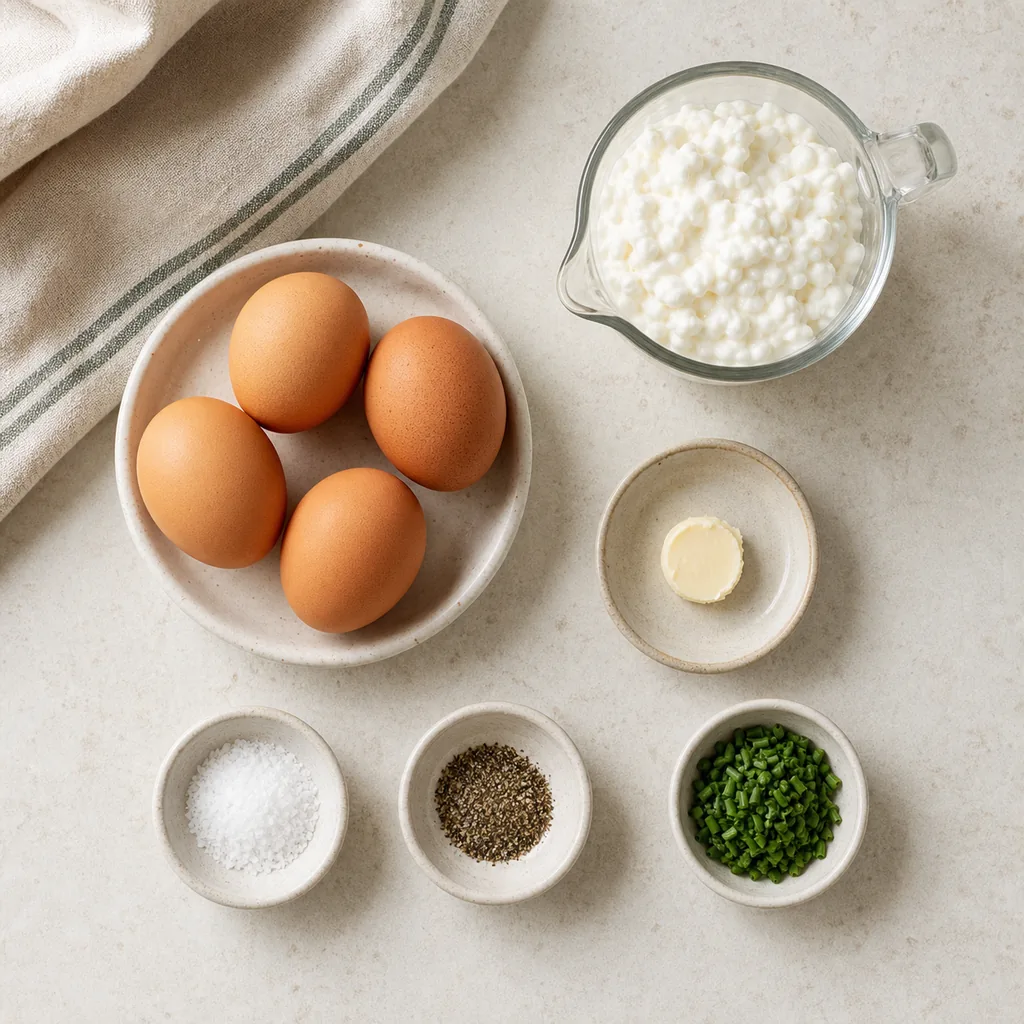
Use plain cottage cheese rather than a flavored variety. Small-curd cheese distributes evenly, but large-curd cottage cheese also works when stirred thoroughly.
How to Make Cottage Cheese Scrambled Eggs
- Whisk the eggs. Crack 4 eggs into a medium bowl. Add salt and pepper, then whisk for 30 seconds until the whites and yolks are fully combined.
- Add cottage cheese. Fold in 1/2 cup cottage cheese. Do not blend; visible curds create a creamy, lightly textured scramble.
- Heat the skillet. Melt butter in a 10-inch nonstick skillet over medium-low heat for 30 to 45 seconds. The butter should foam without browning.
- Cook slowly. Pour in the egg mixture. Wait 20 seconds, then pull the set edges toward the center with a silicone spatula.
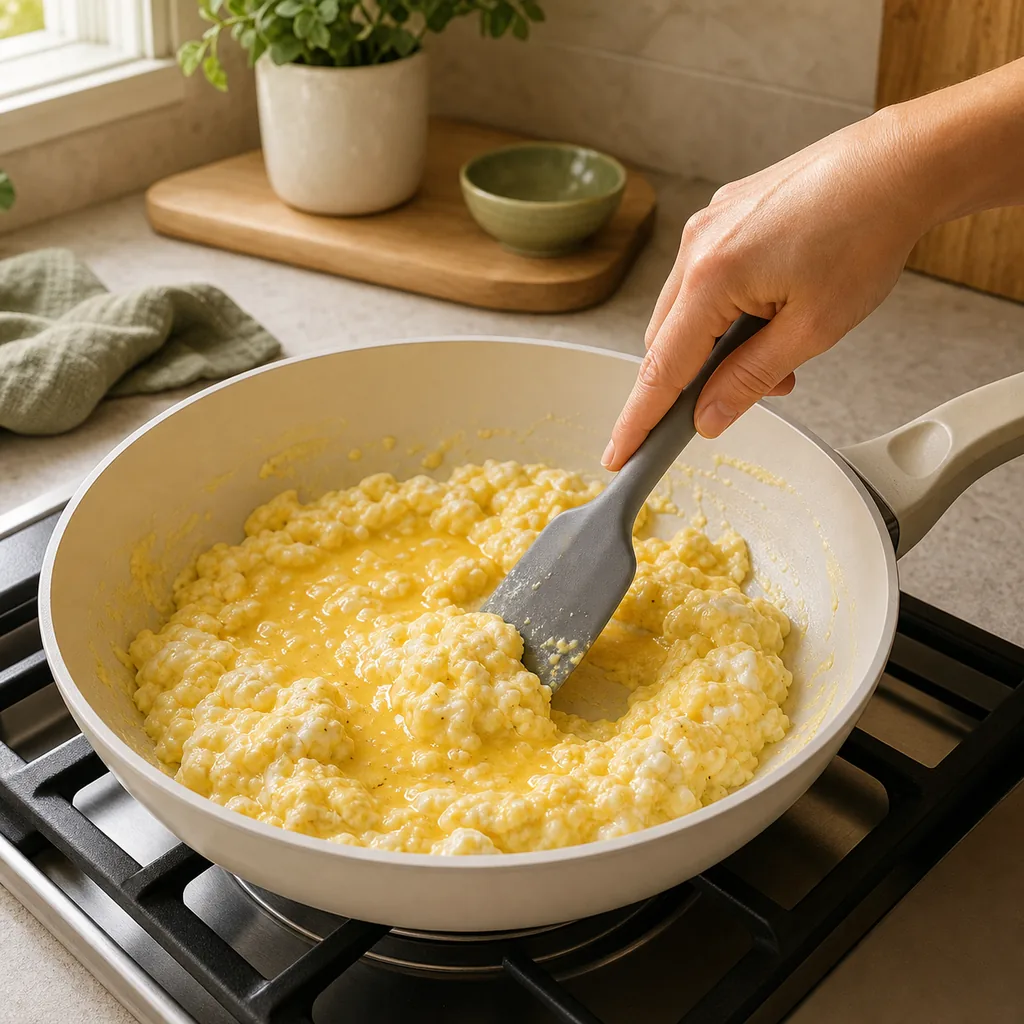
Fold slowly over medium-low heat to keep the curds tender. - Fold gently. Continue folding every 15 to 20 seconds for 4 to 6 minutes. Reduce the heat if liquid collects quickly or the eggs begin browning.
- Check doneness. Cook until no liquid egg remains and the center reaches 160°F. Remove the skillet from the heat immediately.
- Serve. Divide between two plates and add chives. Serve within 2 hours, or refrigerate promptly.
Texture Cues That Prevent Watery Eggs
Low heat gives moisture time to evaporate without toughening the eggs. The finished curds should look glossy and soft, not wet or surrounded by clear liquid.
- Drain unusually watery cottage cheese before measuring.
- Keep the skillet at medium-low rather than high heat.
- Fold instead of stirring constantly.
- Remove the eggs as soon as they reach 160°F.
For an oven-friendly version, try these cottage cheese egg bites. They suit meal prep, while this skillet recipe is best freshly cooked.
Serving Ideas
Serve the eggs with whole-grain toast, sliced avocado, berries, or a simple tomato salad. For another quick breakfast, pair them with cottage cheese pancakes on a weekend menu.
If you want a savory lunch built around the same ingredient, this blended cottage cheese pasta sauce uses a completely different texture and cooking method.
Storage and Food Safety
Egg dishes should reach 160°F. The USDA egg safety guidance also recommends prompt refrigeration.
- Refrigerate leftovers in a airtight container within 2 hours.
- Keep the refrigerator at 40°F or below.
- Use refrigerated leftovers within 3 to 4 days.
- Reheat only the portion needed until steaming hot.
- Discard eggs left above 40°F for more than 2 hours.
Freezing is not recommended because cottage cheese and scrambled eggs can release water and become rubbery after thawing.