

Wedding jewelry in 2025 moved beyond one prescribed bridal look. Personal engraving, colored stones, vintage references, expressive earrings, and adaptable ring stacks all appeared. Couples need not follow all six trends. A ring, necklace, or pair of earrings can reflect the wearer while still working with the dress and life after the wedding.
This practical guide explains what to inspect, what to ask a jeweler, and how to edit a look before buying. Trends are inspiration, not proof of quality: materials, treatments, sizing, comfort, policies, and independent reports still matter. Start with the pieces you expect to wear most, then build outward.
Why You’ll Love This Guide
- Personal rather than prescriptive: each trend can be adapted to a minimalist, romantic, vintage, or modern celebration.
- Practical buying checks: the guide separates attractive styling from questions about construction, disclosure, and long-term wear.
- A cohesive final look: pairing advice helps the jewelry support the outfit instead of competing with it.
What to Consider Before Choosing Wedding Jewelry
- Your realistic budget for the ring, bands, ceremony jewelry, adjustments, and future maintenance
- The dress neckline, fabric, embellishment, veil, hairstyle, and other accessories
- Whether a piece is for one event, occasional wear, or daily wear
- Metal type, stone identity, known treatments, setting security, size, weight, and comfort
- Return, resizing, repair, warranty, appraisal, and insurance documentation
- A final fitting with the complete outfit well before the wedding date
Six Wedding Jewelry Trends to Consider
1. Make Personalization Quietly Meaningful
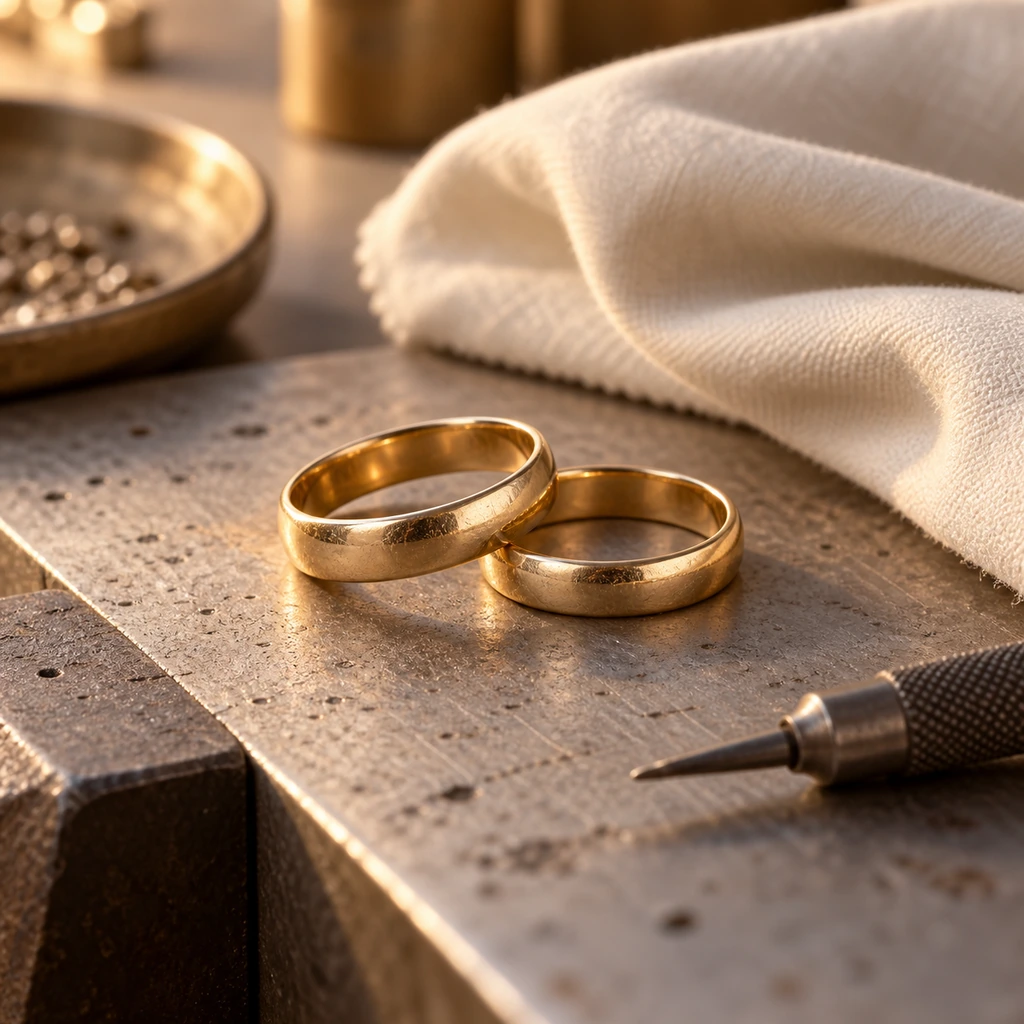
Engraving, custom proportions, and heirloom stones made personalization a defining 2025 idea. Choose a detail that will still matter years later: initials, a date, a private phrase, or a meaningful motif. Confirm the final size before engraving because resizing can disturb an inscription. Ask for a proof, check spelling and date format, and agree on placement in writing. Before resetting an heirloom stone, have the jeweler inspect and document its condition. Personal meaning should never replace secure construction.
2. Choose Colored Gemstones for Beauty and Daily Life
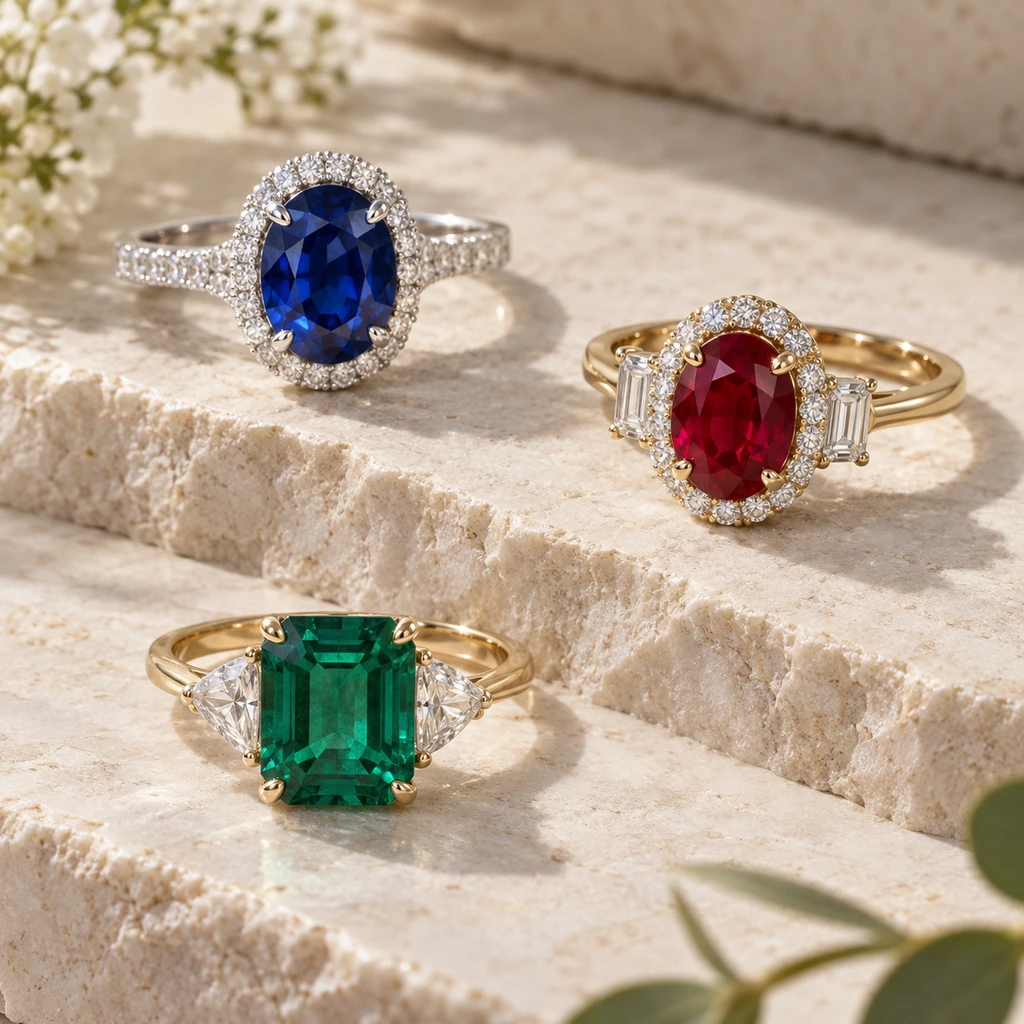
Sapphire blue, ruby red, and emerald green offered a vivid alternative to a colorless center in 2025. Choose by more than hue. GIA explains that durability includes hardness, toughness, and stability; stones respond differently to impact, heat, light, chemicals, and humidity. Ruby and sapphire suit frequent wear better than some delicate gems. Ask about treatments and whether they change cleaning or repair instructions. For a significant purchase, request an independent laboratory report identifying the material and detectable treatments. Match the setting to the wearer’s routine.
3. Distinguish Antique, Vintage, and Vintage-Inspired
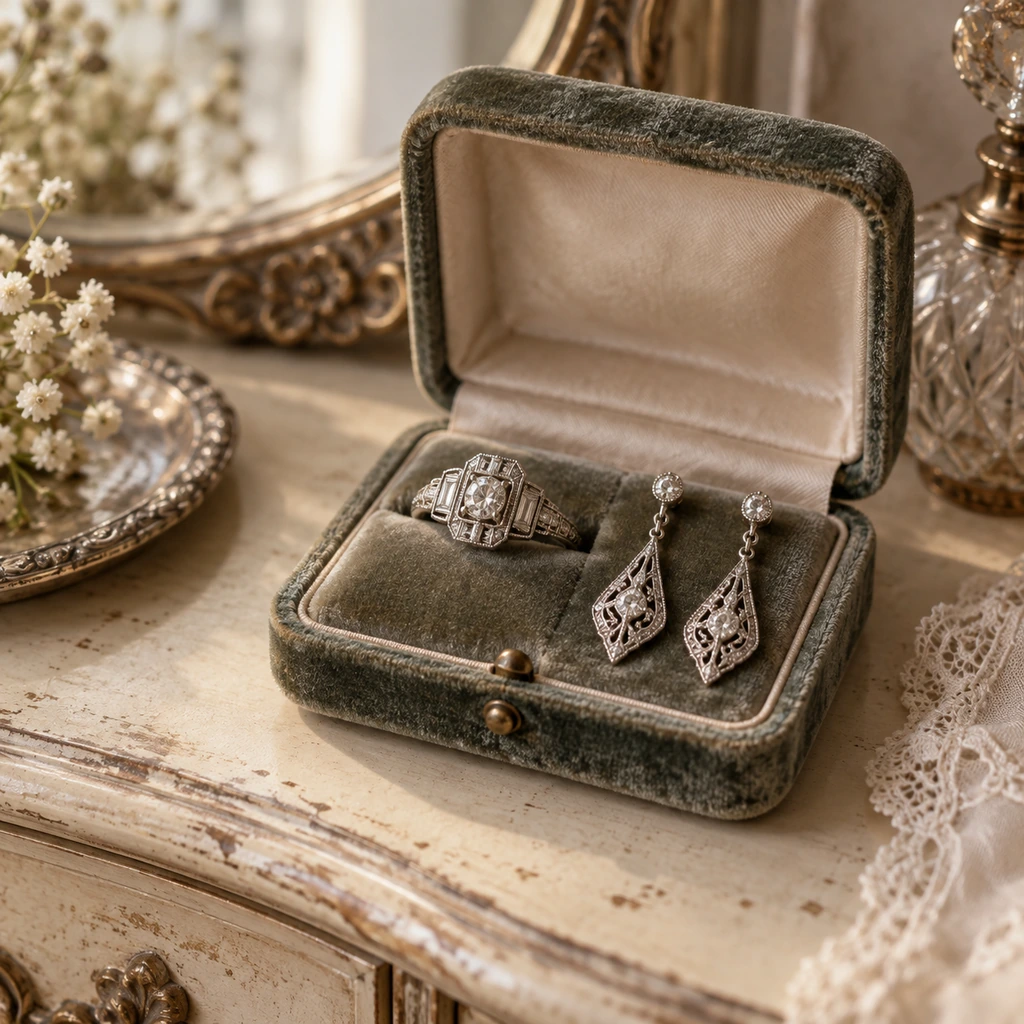
Art Deco geometry, milgrain, and filigree gave 2025 bridal looks a sense of history. An actual period piece and a new vintage-inspired piece are different purchases. On older jewelry, inspect prongs, thin shanks, past repairs, loose stones, and altered settings. Ask which parts are original and get age and material claims in writing. A vintage-inspired design may offer easier sizing and maintenance. Try it beside the wedding band, since ornate profiles can leave a gap or rub neighboring settings.
4. Verify Material and Sourcing Claims
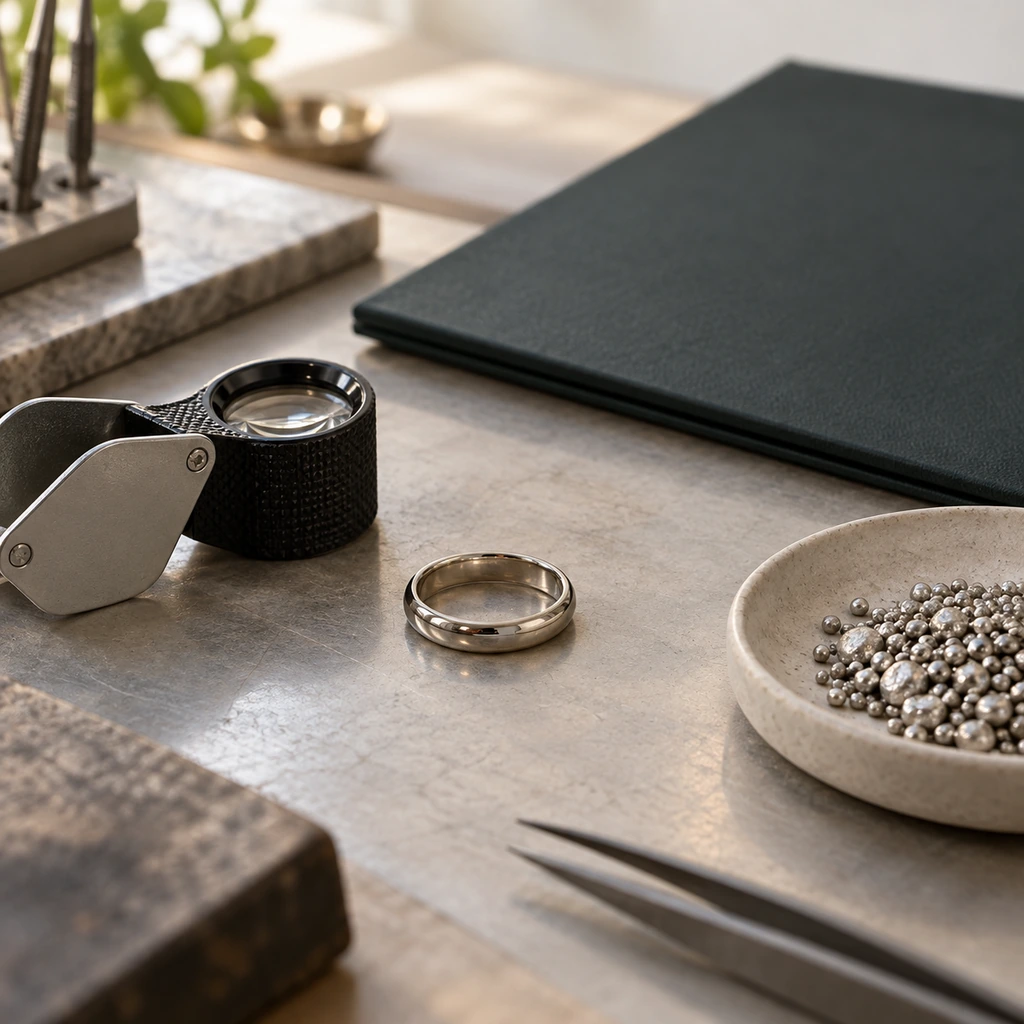
Recycled metal, traceable sourcing, antique stones, and laboratory-grown diamonds entered 2025 conversations, but these terms describe different things. Do not treat “lab-grown” as an automatic environmental conclusion. The FTC says laboratory-created origin should be clear, while broad environmental claims need a reasonable basis and specific qualification. Ask exactly what a claim covers, who verified it, and which document you will receive. Confirm metal fineness, stone identity, represented origin, and chain-of-custody statements separately. If a claim stays vague, choose based on verified facts.
5. Use One Statement Piece as the Focal Point
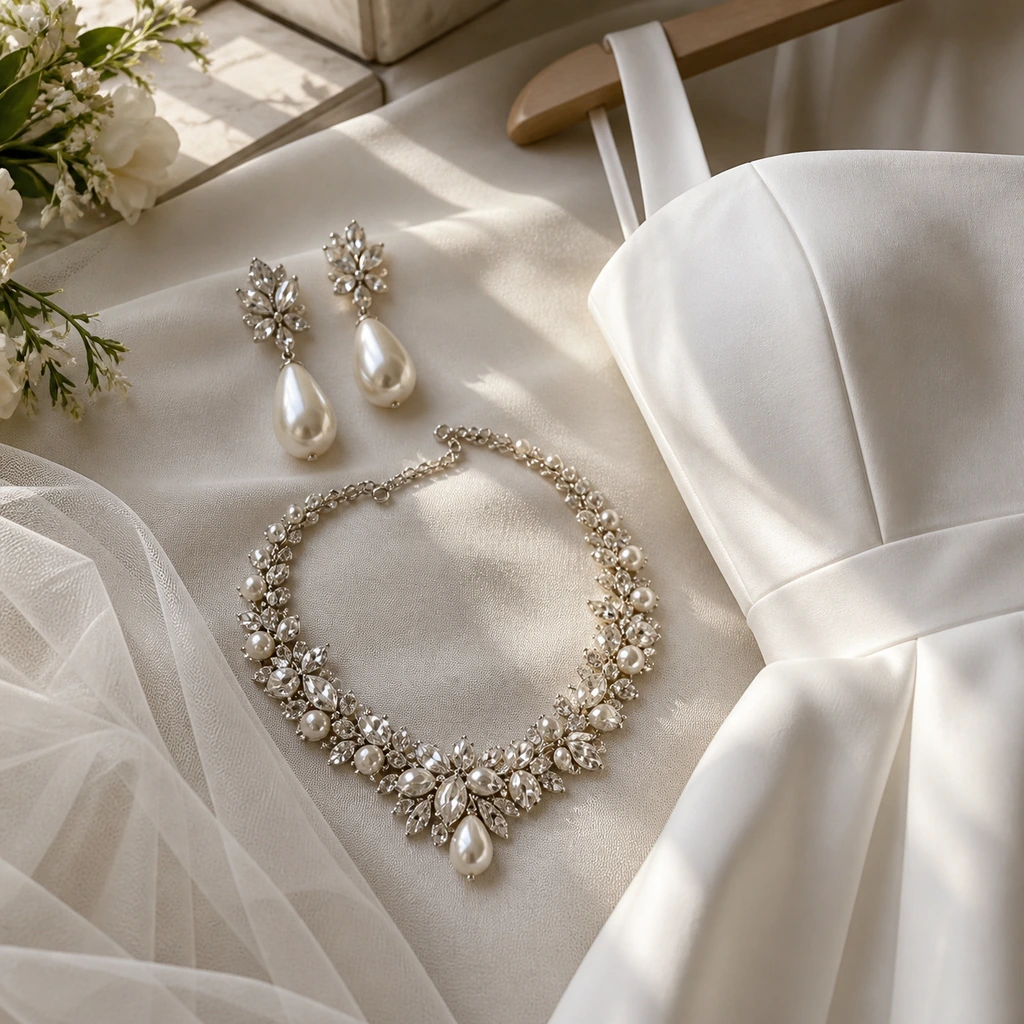
Maximalist and vintage-inspired jewelry drew attention in 2025, including colored gems, sculptural earrings, and bold necklaces. Select one focal area. Pair dramatic earrings with a bare neckline or fine chain; use quiet studs with a detailed necklace. Judge scale against the dress, because beading, lace, and a decorated veil add texture. Wear the piece for twenty minutes to test weight, movement, clasp security, and snagging. Photograph the complete look in daylight and indoor light.
6. Build a Ring Stack That Fits Together
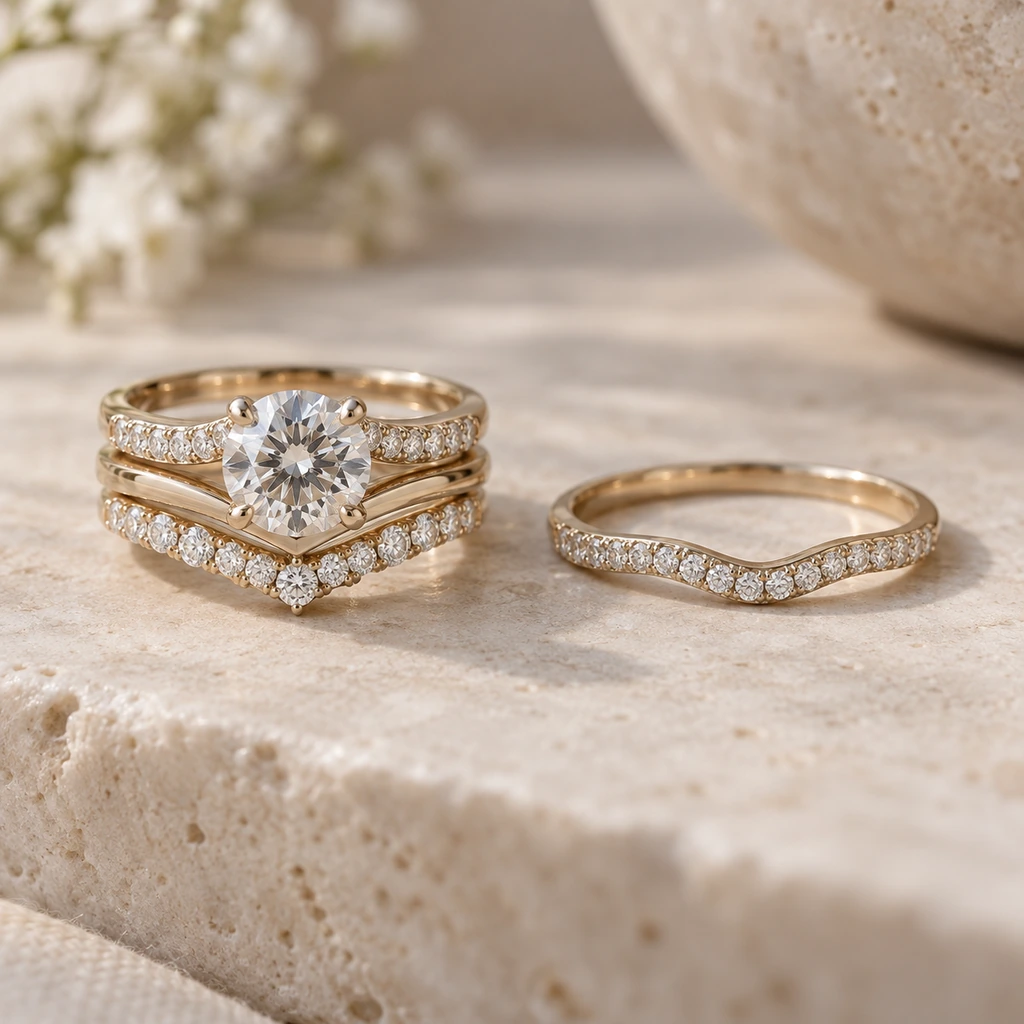
Stackable bands let a set evolve, but compatibility comes first. Try every ring together and look from the side: a high basket, low gallery, protruding prong, or wide band can prevent a flush fit. Metal-on-metal or stone-on-metal contact may cause wear, so ask a jeweler to identify contact points. Discuss mixed-metal maintenance and check total width, because correctly sized rings can feel tight as a stack. Decide whether rings remain separate, are soldered later, or use a contour band.
Substitutions & Variations
Translate a trend without copying its most dramatic version. Use colored side stones instead of a colored center, or a pendant when a daily-wear ring is impractical. Choose a new Art Deco-inspired setting instead of a fragile antique. Put personalization inside a plain band. Replace heavy statement earrings with a shorter drop, or use one contour band for a slim stack effect. On a limited budget, prioritize construction and documented materials, then simplify size or ornament.
What to Pair With Your Wedding Jewelry
Let the neckline establish the jewelry zone. Open necklines can support a necklace; high necks leave more room for earrings or a hair accessory. Repeat one element—a pearl, geometric line, or metal tone—instead of matching everything. Test the veil, hairpiece, bouquet ribbons, and gloves during the fitting to catch tangles and snags. Cool embroidery may suit white metal, while warm ivory can support yellow or rose tones, although deliberate contrast also works. One focal point usually photographs better than several equally loud pieces.
Frequently Asked Questions
Does all wedding jewelry need to match?
No. Cohesion can come from one repeated feature such as metal color, pearl shape, stone color, or geometric line. Exact matching may look overly uniform, while one controlled contrast can feel intentional. View every piece with the full outfit before deciding.
Is a laboratory-grown diamond the same as a simulated diamond?
No. FTC guidance distinguishes laboratory-grown diamonds from imitations or simulated stones, and sellers should clearly disclose what a product is. Ask for the exact description and any grading report rather than relying on an abbreviated display label.
When should wedding jewelry be ordered?
Build in time for production, shipping, inspection, resizing, engraving, and a full-outfit fitting. Custom work and antique repairs can take longer than ready-made pieces, so obtain a written schedule from the jeweler. Avoid engraving until the final size is confirmed.
A Final Editing Check
Before committing, remove one accessory and look again. Confirm that the remaining pieces support the wearer and outfit rather than merely checking a trend box. Save receipts, reports, appraisals, and care instructions together. A successful 2025-inspired plan should feel specific in wedding images and remain comfortable after the celebration.