
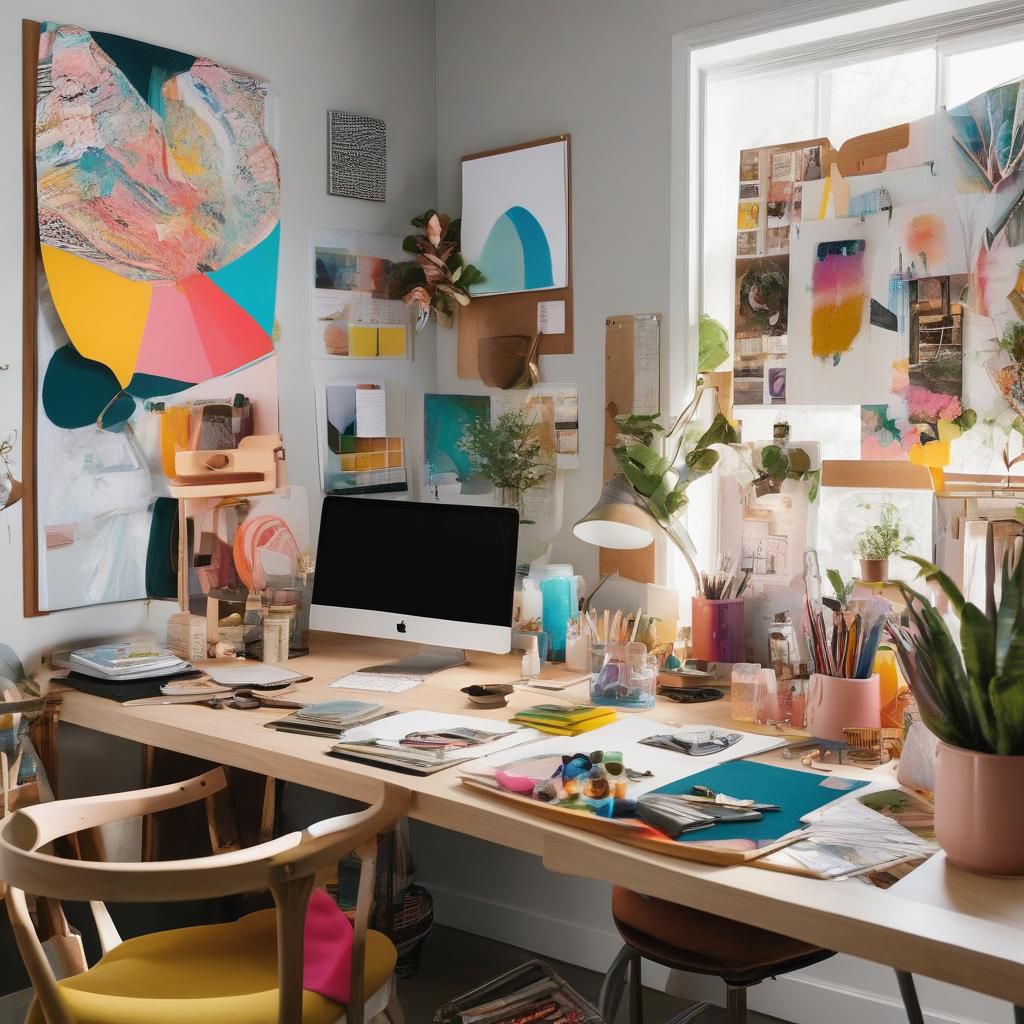
Fresh project ideas are easiest to use when they come with a clear starting point, a realistic materials list, and a reason to keep going after the first burst of excitement fades. These five innovative ideas are designed for makers who want something more useful than a vague inspiration list: each one can be adapted for a weekend DIY session, a handmade gift, a home decor refresh, or a creative content project.
Use this guide as a menu. Pick one idea that matches the supplies you already own, then follow the planning notes, checklist, and troubleshooting tips so your next project feels creative without becoming overwhelming.
How to Choose the Right Project Idea
Before choosing a project, think about the outcome you want. A good creative project should solve a small problem, express a style you like, or help you practice a skill you want to improve. If the idea only looks pretty but has no clear purpose, it may be harder to finish.
Ask these quick questions first
- What will I use it for? Home decor, gifting, organization, self-expression, learning, or content creation.
- How much time do I have? Choose a small version if you only have one afternoon.
- What supplies do I already own? The most innovative projects often start with leftovers, scraps, and overlooked materials.
- What skill do I want to practice? Color planning, hand lettering, simple woodworking, sewing, clay work, collage, or styling.
The goal is not to make the most complicated project. The goal is to make something thoughtful, finished, and useful enough that you are glad you spent time on it.
1. Build a Purposeful Vision Board
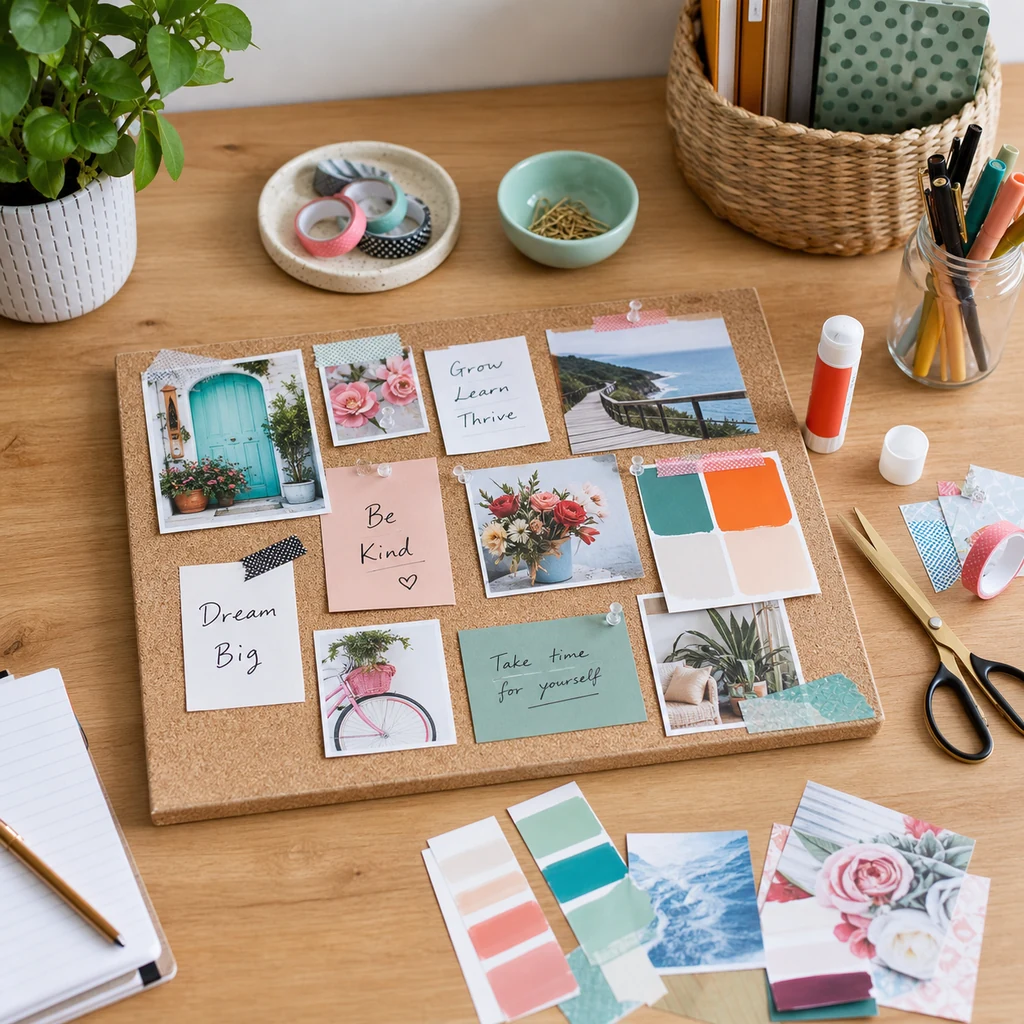
A vision board is more than a collage of pretty images. When planned well, it becomes a visual project brief for the season ahead. You can use it to plan a room makeover, a creative business idea, a handmade product collection, a wellness goal, or a personal style refresh.
What makes it innovative
Instead of filling the board randomly, divide it into zones: color palette, textures, words, practical goals, and project references. This turns the board into a decision tool. When you are unsure about a future project, you can compare the idea against the board and see whether it fits.
Materials to try
- Cork board, poster board, canvas panel, or a large sketchbook spread
- Magazine cutouts, printed photos, paint chips, fabric scraps, ribbon, and washi tape
- Sticky notes for goals that may change later
- Small envelopes to hold receipts, swatches, or sketches
Keep one section flexible. A removable pocket or clipped card lets the board evolve instead of becoming outdated after a week.
2. Start a Creative Project Journal
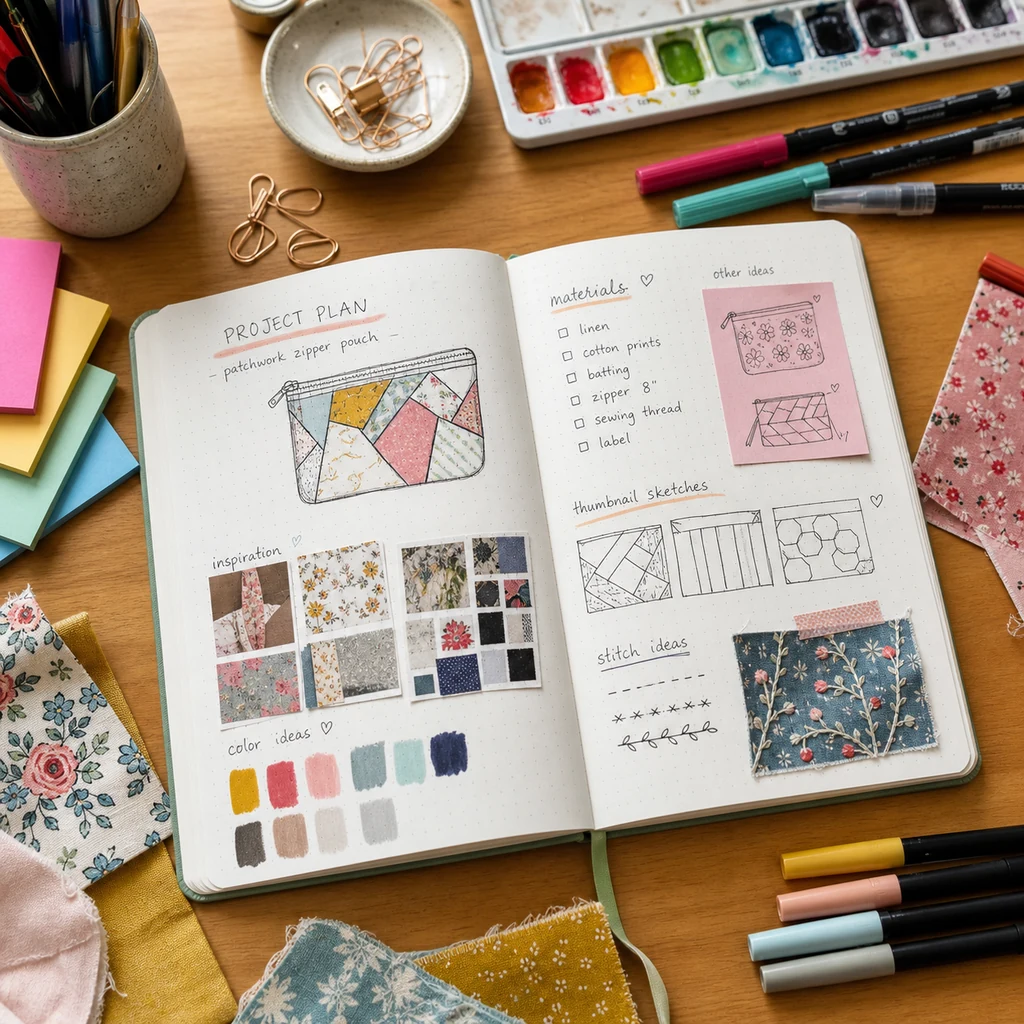
A creative journal gives your ideas somewhere to land before they become full projects. It is especially useful if you often collect inspiration but forget why you saved it. Treat the journal as a workshop notebook, not a perfect art journal.
Pages worth adding
- Idea bank: Quick notes for future projects, even if they are rough.
- Materials inventory: A list of supplies you already own, grouped by type or color.
- Color tests: Marker, paint, yarn, paper, or fabric combinations you might reuse.
- Mini project plans: A thumbnail sketch, supply list, estimated time, and one possible obstacle.
- After-action notes: What worked, what failed, and what you would change next time.
This type of journal helps you notice patterns. If you keep sketching storage ideas, maybe your next project should be an organizer. If your pages are full of botanical textures, try a nature-inspired craft. Innovation often comes from recognizing what you are already drawn to.
3. Create a Mixed-Media Prototype Set
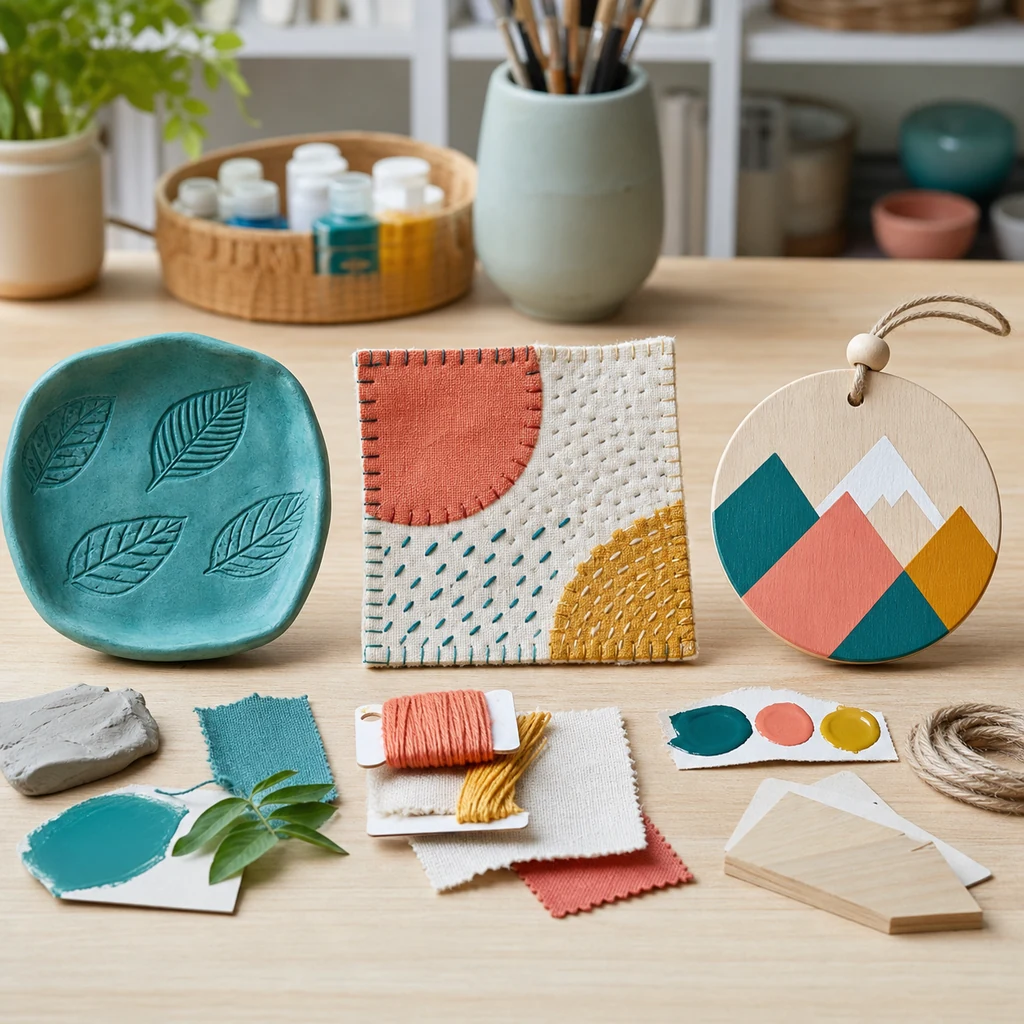
When you are unsure which direction to take, make three tiny versions instead of one large project. A prototype set lets you compare materials, colors, and techniques without spending too much money or time.
Try this three-sample format
- Soft sample: Use fabric, felt, yarn, ribbon, embroidery, or weaving.
- Hard sample: Use wood, clay, cardboard, tile, recycled plastic, or glass.
- Paper sample: Use collage, stamping, folding, painting, or hand lettering.
For example, if you want to make handmade wall decor, test a stitched fabric square, a painted wood shape, and a layered paper collage. Photograph all three in the same light and compare which one feels most original, practical, and repeatable.
4. Turn Everyday Objects Into Functional Decor
One of the best ways to create an innovative DIY project is to combine beauty with usefulness. Look for ordinary items that can be upgraded into something you will actually use: jars, trays, boxes, frames, tins, baskets, clipboards, or old notebooks.
Smart upgrade ideas
- Turn glass jars into labeled craft storage with painted lids and twine handles.
- Cover a plain clipboard with patterned paper and use it as a rotating inspiration display.
- Transform a shallow box into a desk tray with fabric lining and painted edges.
- Use air-dry clay to make small label tags for baskets, drawers, or pantry containers.
- Refresh an old frame with pressed flowers, painted mats, or handmade paper backing.
The key is restraint. Choose one main technique and one accent detail. Too many finishes can make a project look busy, while a focused update feels more polished.
5. Make a Nature-Inspired Project Kit
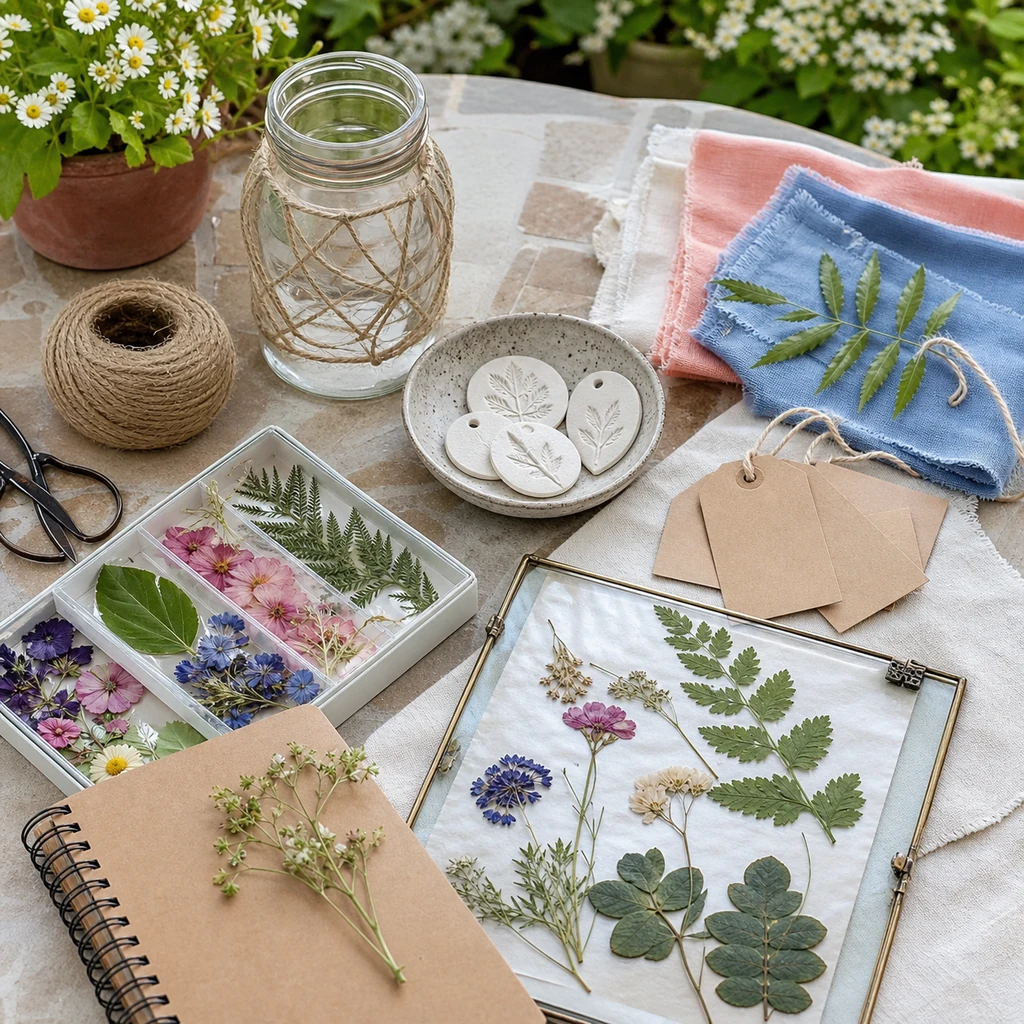
Nature is a reliable source of shape, color, and texture. Instead of simply copying a floral pattern, build a small project kit around natural materials and then decide what to make from it. This approach works well for seasonal crafts, handmade gifts, slow weekends, and low-cost decorating.
What to include in the kit
- Pressed leaves or flowers
- Twine, cotton cord, linen ribbon, or raffia
- Recycled jars, small frames, tags, or kraft paper
- Air-dry clay, natural fabric scraps, or handmade paper
- One accent color inspired by the season
Once the kit is ready, choose one finished object: a pressed-flower frame, a jar lantern, botanical gift tags, clay ornaments, a small wall hanging, or a decorated notebook cover. Limiting your supplies can make the final result feel more cohesive.
Project Planning Checklist
Use this checklist before you begin so your project stays creative and manageable.
- Choose one clear purpose for the project.
- Set a realistic time limit.
- Gather supplies before starting.
- Pick a color palette of three to five colors.
- Make a small test sample if the technique is new.
- Decide where the finished project will live or who it is for.
- Photograph the process if you want to share it later.
- Write down what you would improve next time.
Common Mistakes to Avoid
Starting too large
If an idea feels exciting but intimidating, make a smaller version first. A mini wall hanging, small tray, or one-page journal spread can teach you enough to make the larger version better.
Buying every supply before testing
Use scraps and trial materials first. Once you know the technique works, invest in better paper, fabric, paint, or tools.
Copying inspiration too closely
Use saved images to study color, layout, or material combinations, then change the purpose, scale, or finish. That is how a project starts to feel like yours.
Skipping the finishing details
Trim loose threads, clean glue edges, sand rough corners, press paper flat, and photograph the finished piece in good light. Small finishing steps make DIY projects look intentional.
FAQ
What is the easiest project idea to start with?
A creative project journal is usually the easiest because it does not require special supplies. A notebook, pen, a few color tools, and scraps from past projects are enough to begin.
How do I make a DIY project look more professional?
Limit the color palette, test the technique on a small sample, keep edges clean, and finish with one consistent detail such as matching labels, repeated shapes, or coordinated hardware.
What should I do if I have too many ideas?
Choose the idea with the clearest purpose and the fewest missing supplies. Put the other ideas in a journal or idea bank so they are not lost.
Can these project ideas work for gifts?
Yes. Vision boards, decorated journals, functional storage, botanical frames, handmade tags, and small mixed-media pieces can all become thoughtful gifts when you personalize the colors, initials, materials, or theme.
Final Thoughts
The best innovative project is not always the newest trend. It is often the idea that combines your materials, your taste, and a practical purpose in a fresh way. Start with one small version, learn from the process, and let the next project build on what worked.