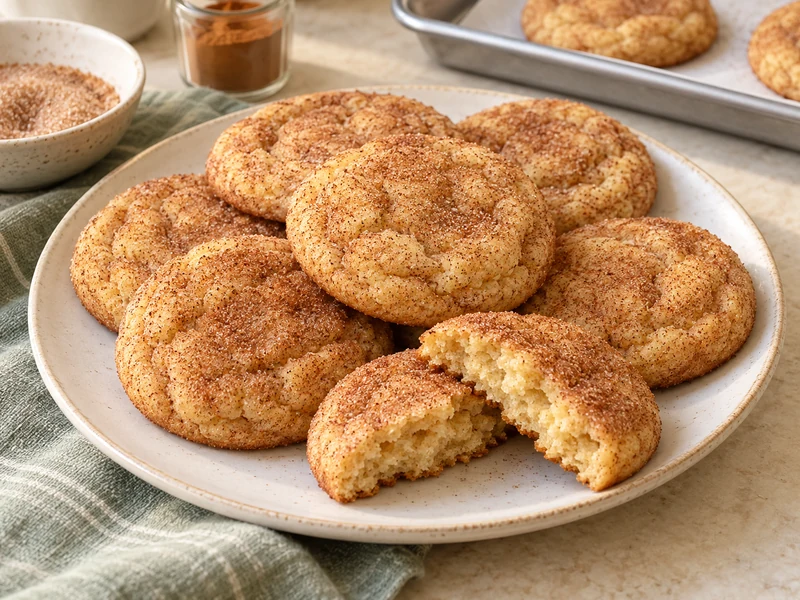
A snickerdoodle should have a cinnamon-sugar shell, gently crackled top and soft center. This classic version uses cream of tartar for its familiar slight tang and chills the dough briefly so the cookies keep a rounded shape. The visual cues below show when to stop mixing and when to pull each tray from the oven.
RECIPE CARD
Soft Snickerdoodle Cookies with Cream of Tartar
Ingredients
- 2 3/4 cups (330 g) all-purpose flour
- 2 teaspoons cream of tartar
- 1 teaspoon baking soda
- 1/2 teaspoon fine salt
- 1 cup (227 g) unsalted butter, softened but still cool
- 1 1/2 cups (300 g) granulated sugar, for the dough
- 2 large eggs
- 2 teaspoons vanilla extract
- 1/4 cup (50 g) granulated sugar, for coating
- 2 teaspoons ground cinnamon, for coating
Quick Method
Condensed overview. Use Full Instructions for the complete method, timing and doneness details.
- Whisk the dry ingredients: In a medium bowl, whisk together 2 3/4 cups (330 g) all-purpose flour, 2 teaspoons cream of tartar, 1 teaspoon baking soda and 1/2…
- Cream the butter and dough sugar: In a large mixing bowl, beat 1 cup (227 g) softened but still cool unsalted butter with 1 1/2 cups (300 g) granulated sugar…
- Mix in the eggs and vanilla: Beat in 2 large eggs, one at a time, then add 2 teaspoons vanilla extract. Scrape the sides and bottom of the bowl. The…
- Combine the cookie dough: Add the dry ingredients to the wet mixture in two additions. Mix on low speed or fold with a sturdy spatula just until the…
- Chill the dough for 30 minutes: Cover the bowl and refrigerate the dough for 30 minutes. It should feel firmer and less sticky but remain easy to scoop. During the…
- Mix the cinnamon-sugar coating: In a shallow bowl, stir together 1/4 cup (50 g) granulated sugar and 2 teaspoons ground cinnamon until the color is even. Set a…
- Scoop, coat and space the dough: Scoop the chilled dough into about 30 equal portions, roughly 1 1/2 tablespoons each. Roll each portion into a ball, then roll it thoroughly…
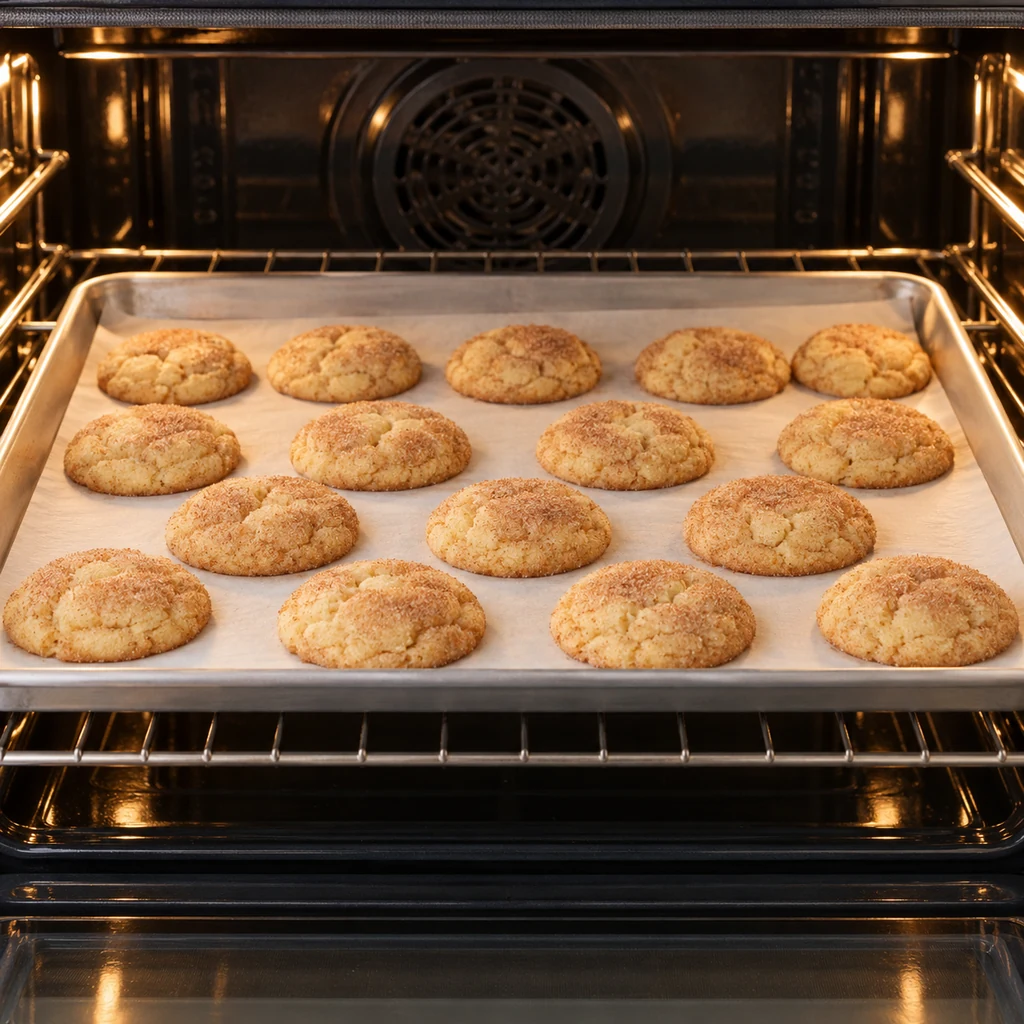
- Bake one sheet at a time: Bake the first sheet on the center oven rack at 350°F (175°C) for 10 to 12 minutes, about 11 minutes on average. The cookies…
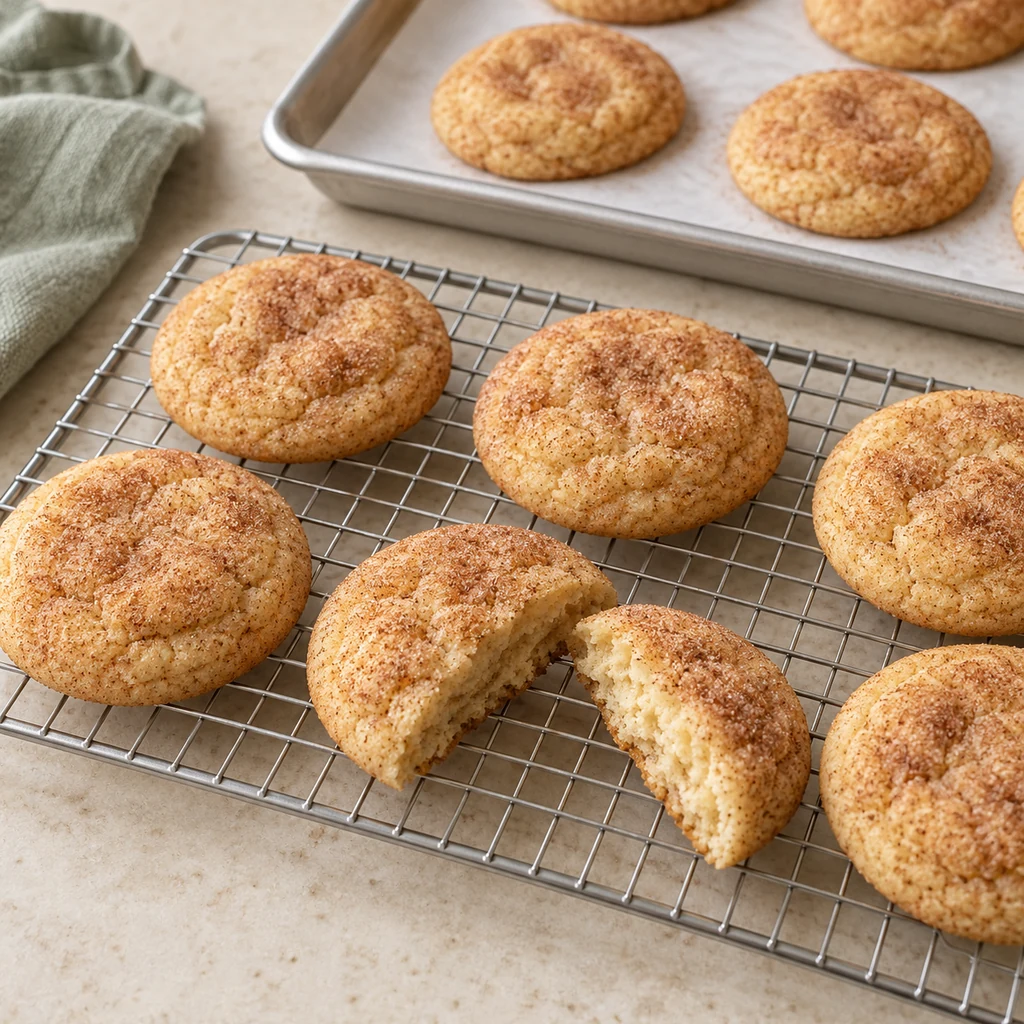
- Cool before moving and serving: Leave each baked sheet undisturbed for 5 minutes so the soft cookies set, then transfer them to a wire rack with a thin spatula.…
At a glance: Makes about 30 cookies. Allow 25 minutes of hands-on preparation, 30 minutes of dough chilling, about 22 minutes to bake two sheets one at a time, and 5 minutes of initial cooling. Total about 1 hour 22 minutes. Bake at 350°F (175°C) on two parchment-lined 18-by-13-inch light-colored rimmed sheets.
Why these cookies stay soft
Cream of tartar works with baking soda and gives classic snickerdoodles a subtle tang. Cool, softened butter creams well with sugar without making the dough oily. A 30-minute chill makes equal portions easier to roll and helps limit spreading. Pulling the cookies when their edges are set but tops remain pale lets them finish setting on the warm pan instead of drying out in the oven.
Ingredients
Ingredients at a glance
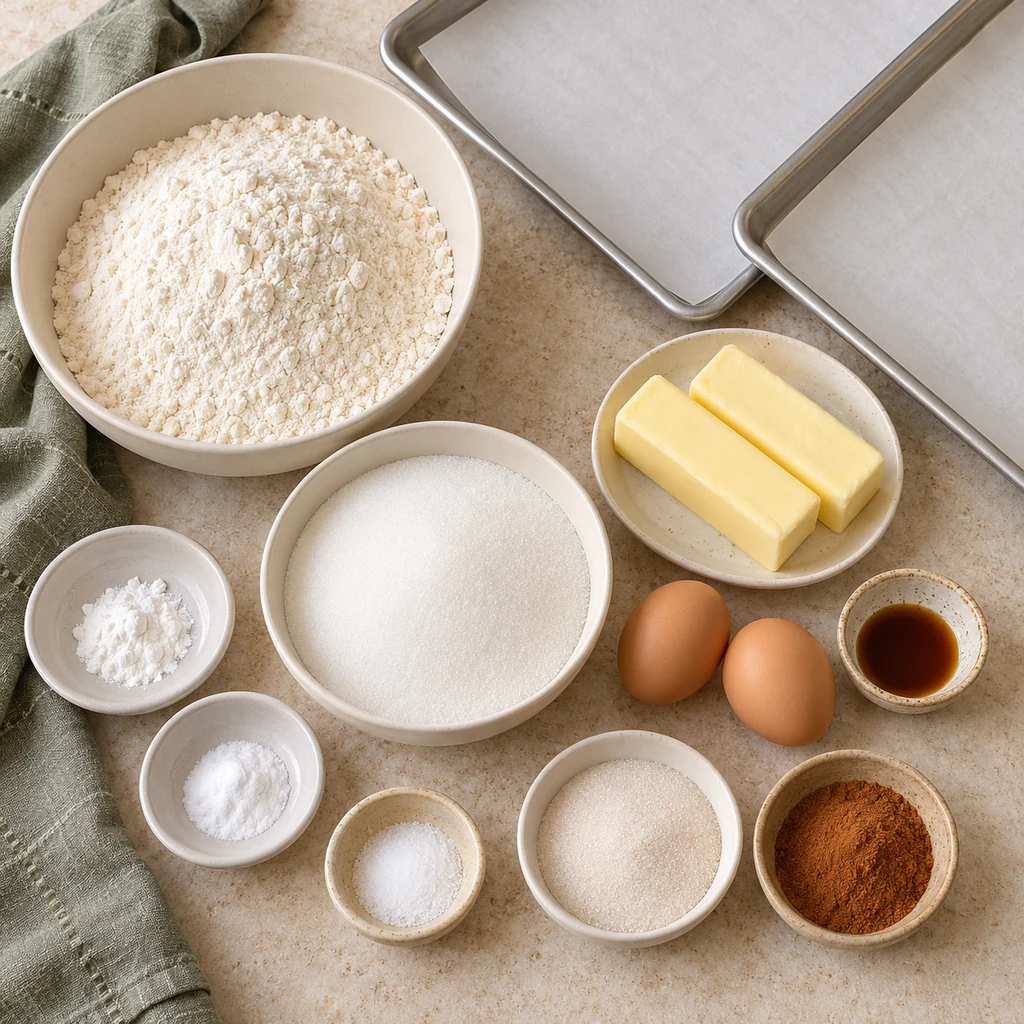
- 2 3/4 cups (330 g) all-purpose flour
- 2 teaspoons cream of tartar
- 1 teaspoon baking soda
- 1/2 teaspoon fine salt
- 1 cup (227 g) unsalted butter, softened but still cool
- 1 1/2 cups (300 g) granulated sugar, for the dough
- 2 large eggs
- 2 teaspoons vanilla extract
- 1/4 cup (50 g) granulated sugar, for coating
- 2 teaspoons ground cinnamon, for coating
Ingredient notes: For consistent dough, weigh the flour at 330 g or spoon it into a measuring cup and level it rather than packing it down. Cream of tartar is part of the classic flavor and leavening balance, so do not casually omit it. Butter should bend when pressed but still feel cool, and the eggs should be large. The extra 1/4 cup of sugar and all the cinnamon are for rolling, not for mixing into the dough.
Equipment and timing
Have two mixing bowls, a whisk, hand mixer or stand mixer, rubber spatula, 1 1/2-tablespoon scoop, shallow coating bowl, two 18-by-13-inch light aluminum sheets, parchment and a wire rack ready. The 25-minute prep time covers measuring, mixing and rolling; the dough chills 30 minutes. Baking the sheets separately takes about 22 minutes in total, and a 5-minute rest on the pan gives the tender cookies enough structure to move.
Step-by-step instructions
Step 1: Whisk the dry ingredients
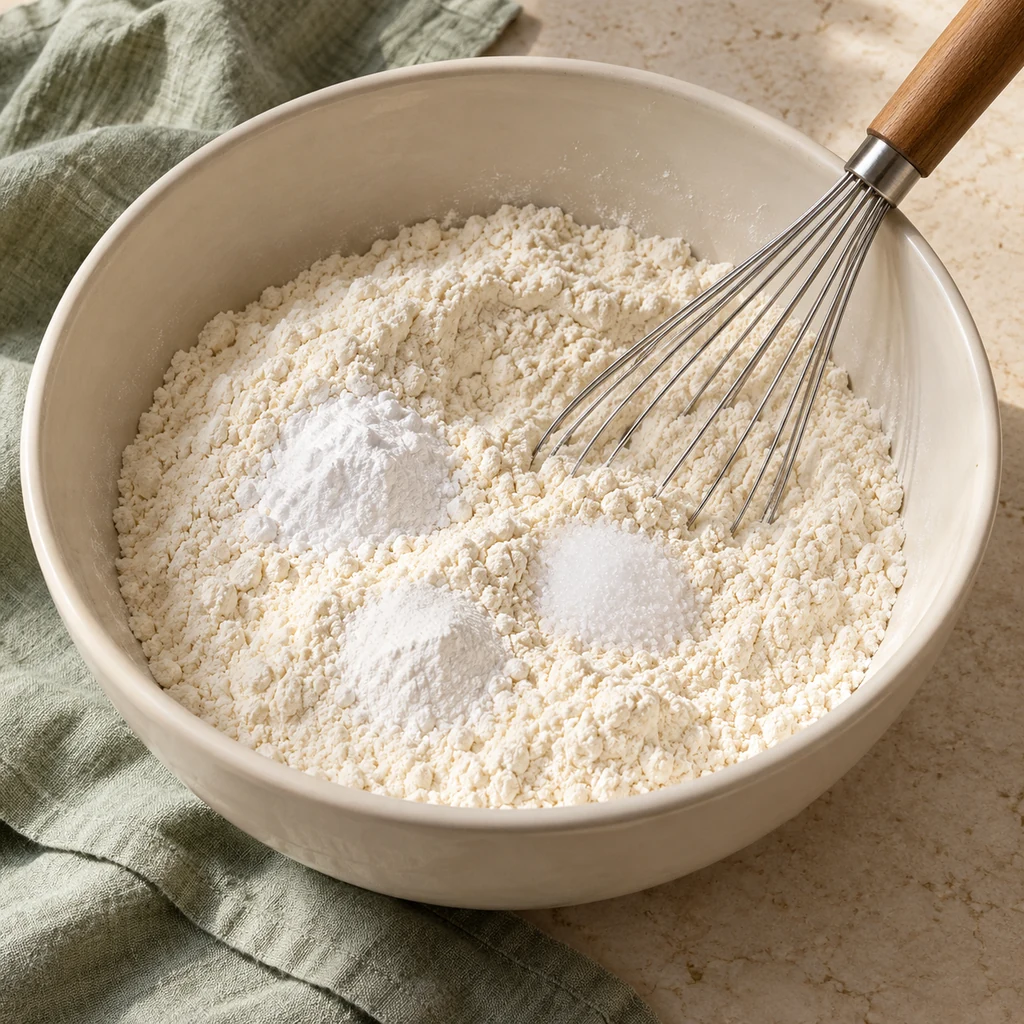
In a medium bowl, whisk together 2 3/4 cups (330 g) all-purpose flour, 2 teaspoons cream of tartar, 1 teaspoon baking soda and 1/2 teaspoon fine salt. Break up any pockets of leavener so each cookie rises evenly. Keep the cinnamon out of this bowl; it belongs in the outside coating.
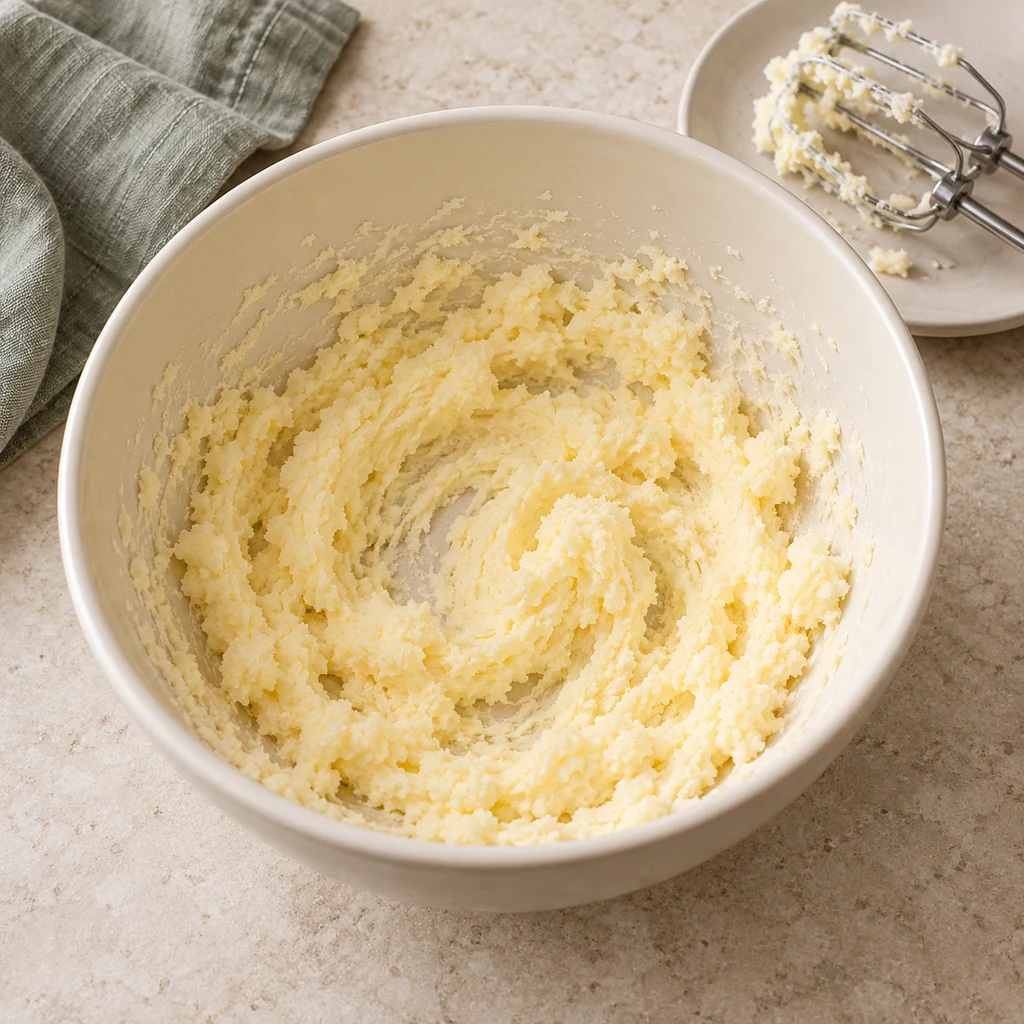
Step 2: Cream the butter and dough sugar
In a large mixing bowl, beat 1 cup (227 g) softened but still cool unsalted butter with 1 1/2 cups (300 g) granulated sugar for 2 to 3 minutes. Scrape the bowl once. Stop when the mixture looks pale and fluffy, not greasy or melted. Butter that feels oily or shiny is too warm; cool it briefly before continuing.
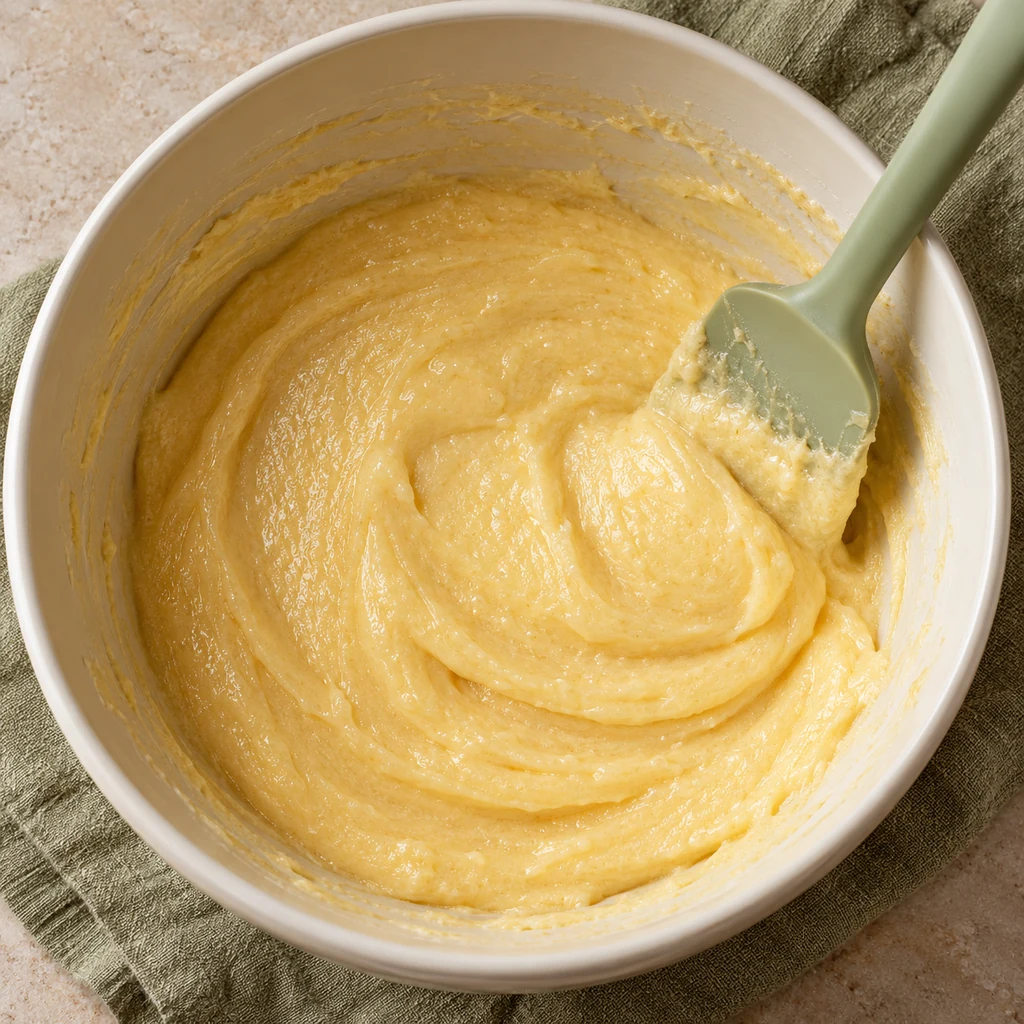
Step 3: Mix in the eggs and vanilla
Beat in 2 large eggs, one at a time, then add 2 teaspoons vanilla extract. Scrape the sides and bottom of the bowl. The mixture should look smooth and slightly glossy before the flour goes in. Do not taste the raw batter or dough.
Step 4: Combine the cookie dough
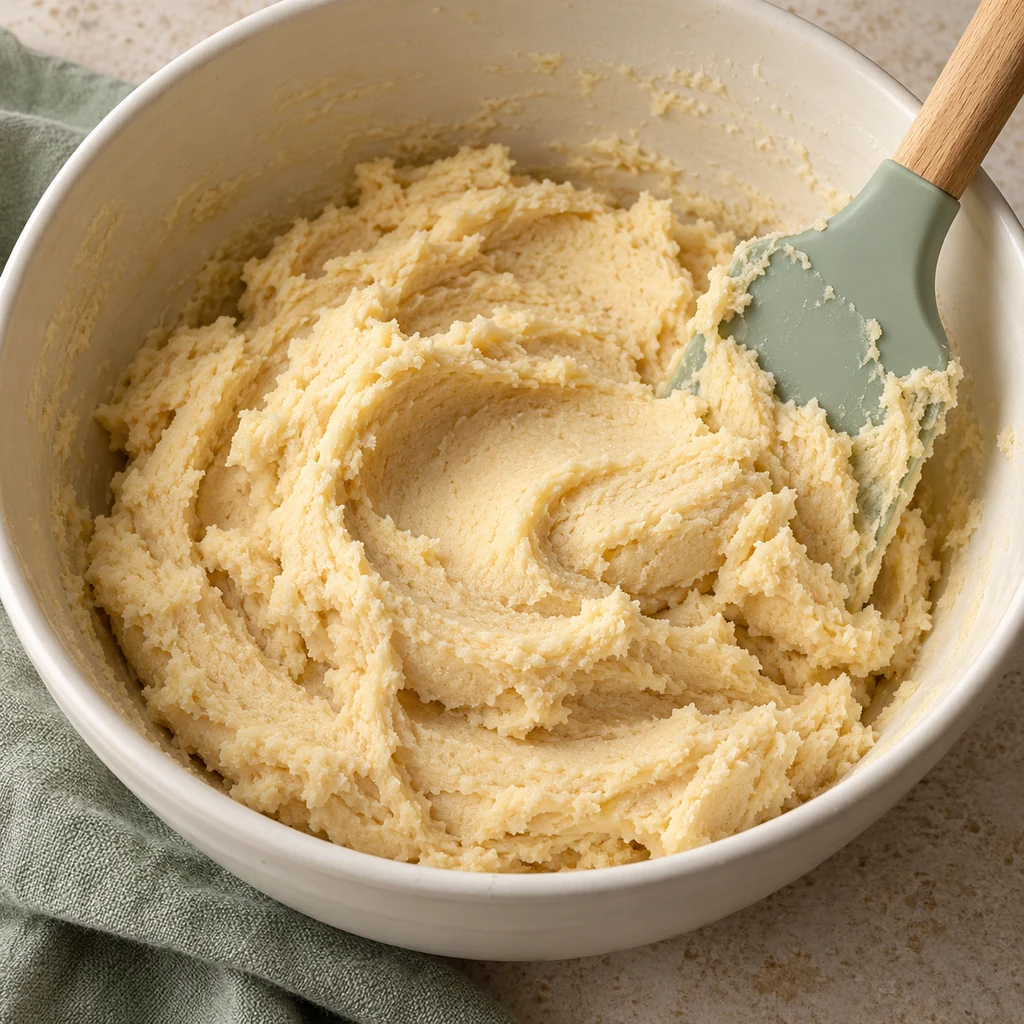
Add the dry ingredients to the wet mixture in two additions. Mix on low speed or fold with a sturdy spatula just until the last flour streak disappears. The dough should be thick, pale and scoopable; do not keep beating after it comes together, or the cookies can become tough.
Step 5: Chill the dough for 30 minutes
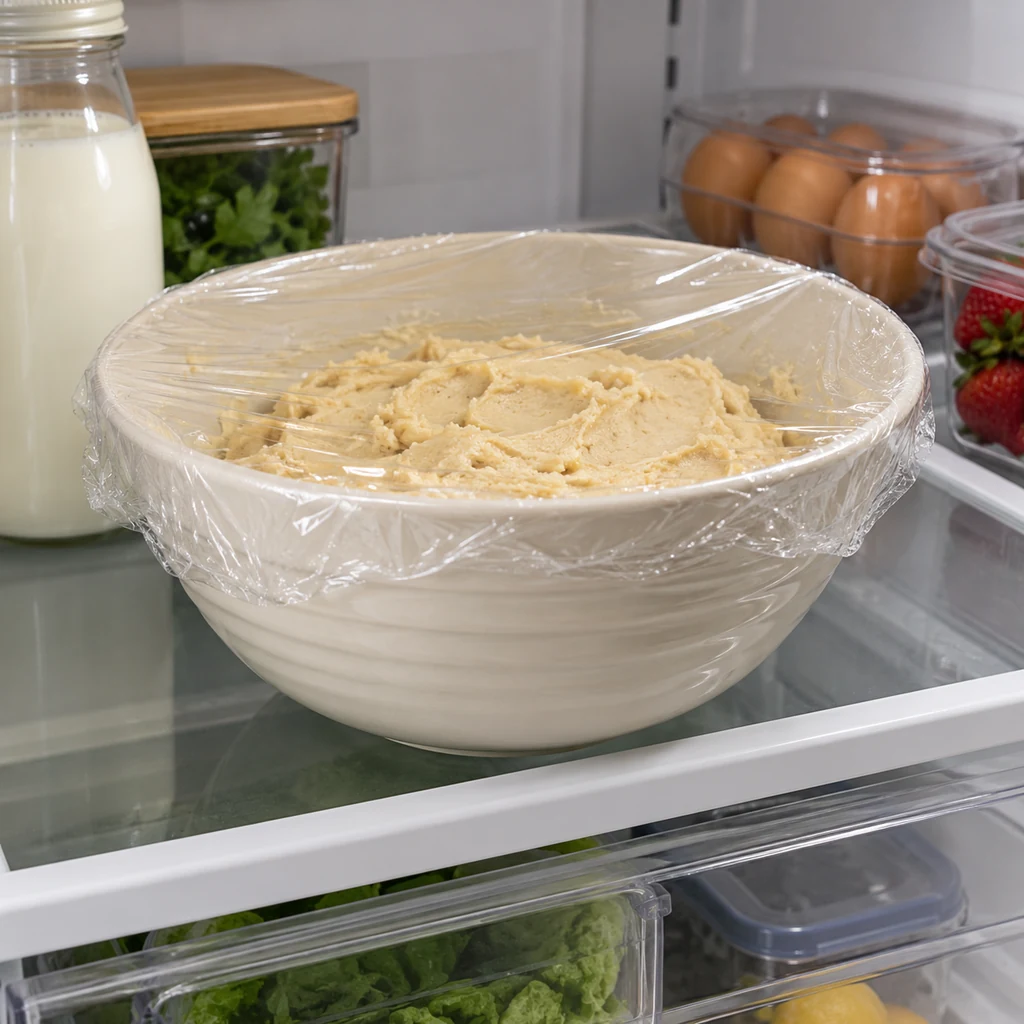
Cover the bowl and refrigerate the dough for 30 minutes. It should feel firmer and less sticky but remain easy to scoop. During the last 15 minutes of chilling, heat the oven to 350°F (175°C) and line two 18-by-13-inch light-colored rimmed baking sheets with parchment. Chilling is included in the total recipe time.
Step 6: Mix the cinnamon-sugar coating
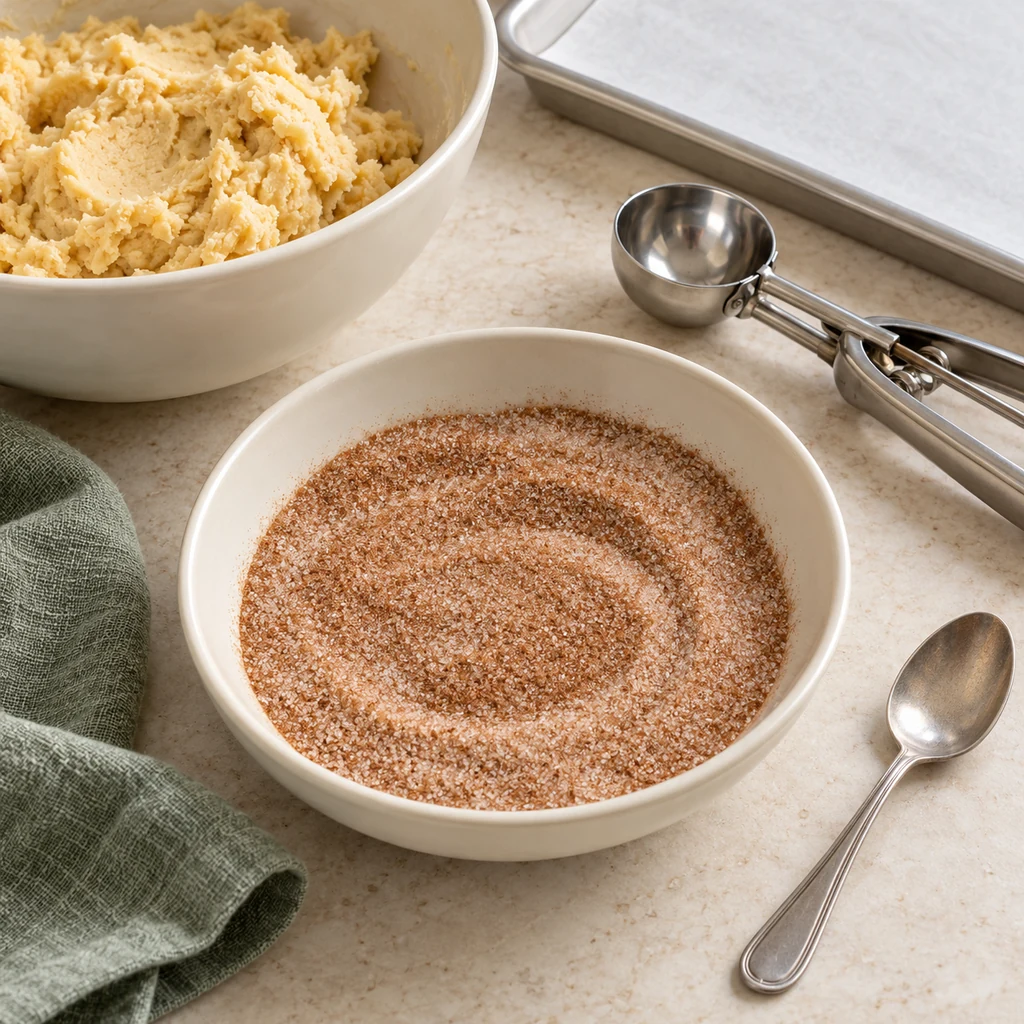
In a shallow bowl, stir together 1/4 cup (50 g) granulated sugar and 2 teaspoons ground cinnamon until the color is even. Set a 1 1/2-tablespoon cookie scoop beside the chilled dough. Keeping the coating separate gives each cookie a clear cinnamon-sugar surface rather than darkening the dough itself.
Step 7: Scoop, coat and space the dough
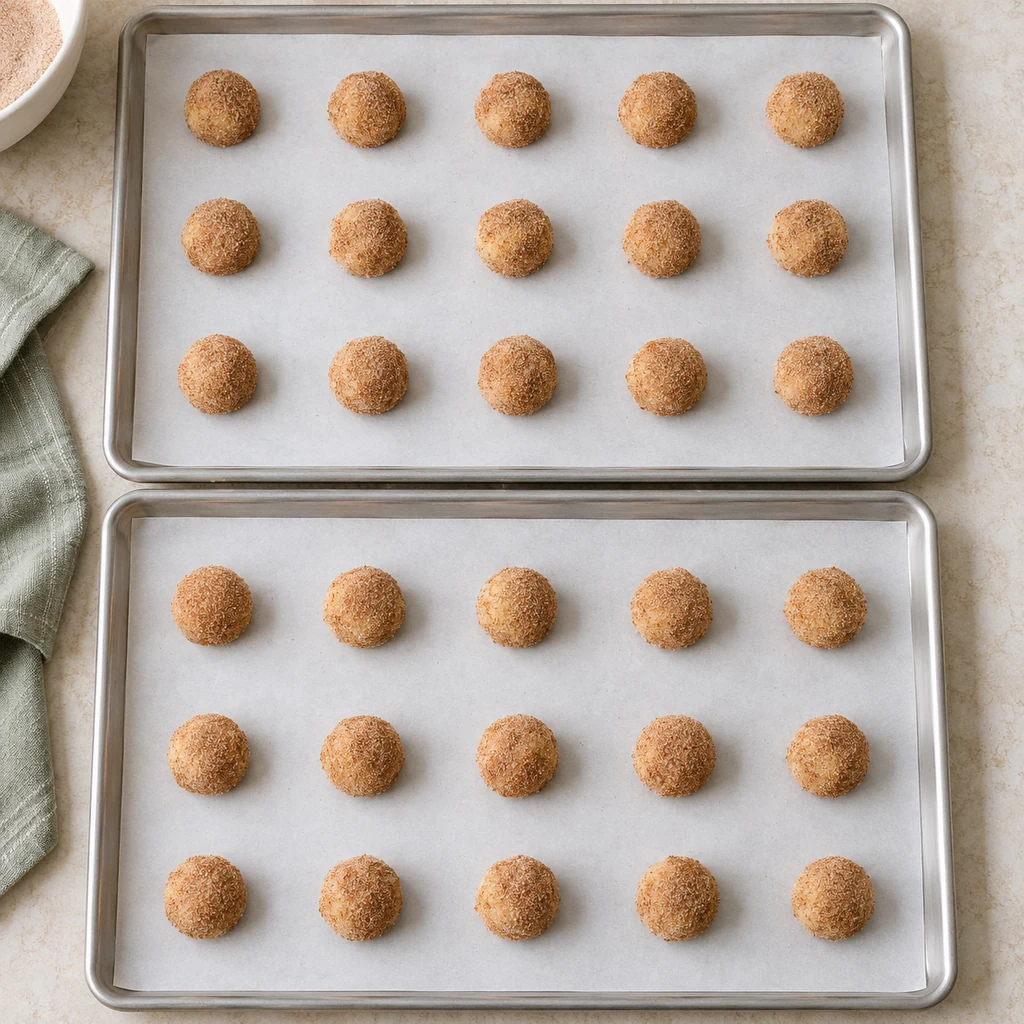
Scoop the chilled dough into about 30 equal portions, roughly 1 1/2 tablespoons each. Roll each portion into a ball, then roll it thoroughly in cinnamon sugar. Arrange 15 balls on each prepared 18-by-13-inch sheet in three rows of five, leaving at least 2 1/2 inches between centers. Keep the second sheet cool while the first bakes.
Step 8: Bake one sheet at a time
Bake the first sheet on the center oven rack at 350°F (175°C) for 10 to 12 minutes, about 11 minutes on average. The cookies should look puffed with gently crackled tops, set pale-golden edges and centers that no longer look wet. Do not wait for deep brown tops; they firm as they cool. Bake the second sheet the same way, for about 22 minutes of oven time across both sheets.
Step 9: Cool before moving and serving
Leave each baked sheet undisturbed for 5 minutes so the soft cookies set, then transfer them to a wire rack with a thin spatula. Let them cool further before stacking. A broken cookie should show a soft but fully baked interior rather than shiny raw dough. Serve on a cookie tray or store once completely cool.
Make-ahead tips
For a holiday cookie tray, mix the dough up to 24 hours ahead and keep it covered in the refrigerator. A longer chill makes it firmer; let it stand for 5 to 10 minutes only if it is too hard to scoop, then coat and bake. You can also portion uncoated dough balls, freeze them on a tray until firm, then transfer to a sealed freezer container for up to 2 months for best quality. Thaw in the refrigerator, roll in fresh cinnamon sugar and bake as directed. Do not taste raw dough because it contains uncooked flour and eggs.
Storage
When fully cool, keep baked cookies in an airtight container at room temperature for up to 4 days. Place parchment between layers if the coating is delicate. For longer keeping, freeze fully cooled baked cookies in a sealed container for up to 2 months for best quality; thaw covered at room temperature. Do not stack them while warm or trapped steam can soften the cinnamon-sugar surface.
Common mistakes and fixes
- Cookies spread flat: Butter was likely too warm, dough skipped the chill, or balls were placed on a hot sheet. Use cool softened butter and a cooled pan.
- Dry, cakey centers: Too much packed flour or extra baking time can dry them out. Weigh flour if possible and remove the sheet when edges are just set.
- Uneven coating: Stir the cinnamon and sugar thoroughly, then roll each ball until all sides are covered.
- Cookies break when moved: Give them the full 5 minutes on the pan before using a thin spatula.
More seasonal baking
For a fall variation, see our pumpkin snickerdoodle cookies. If you want bars for a larger dessert table, try the gingerbread cheesecake bars.
Frequently asked questions
Can I skip the 30-minute chill?
The chill is part of this recipe. It makes the dough easier to portion and helps the cookies keep their rounded shape, especially if your kitchen is warm.
Why do my snickerdoodles look underdone at the center?
At the correct pull point, the center is soft but no longer shiny or wet, while the edges are set. Let them rest on the hot sheet for 5 minutes before moving. If the center is still wet, bake another minute.
Can I bake both sheets at once?
For the most even result described here, bake one sheet at a time on the center rack. If using two racks, rotate and swap pans halfway and expect the timing to vary; watch the set edges rather than only the clock.