
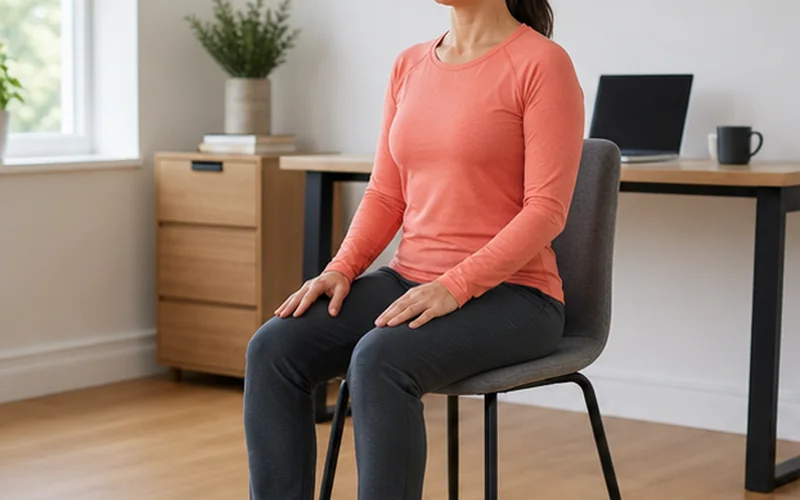
This gentle sequence uses slow, comfortable shoulder movements and attention to sensation. It may provide a useful desk break, but it does not diagnose or treat an injury.
Somatic Shoulder Release at Your Desk
- Total time: 5 minutes
- Equipment: Stable chair
- Effort: Easy and pain-free
- Breathing: Natural, never held
Before You Begin
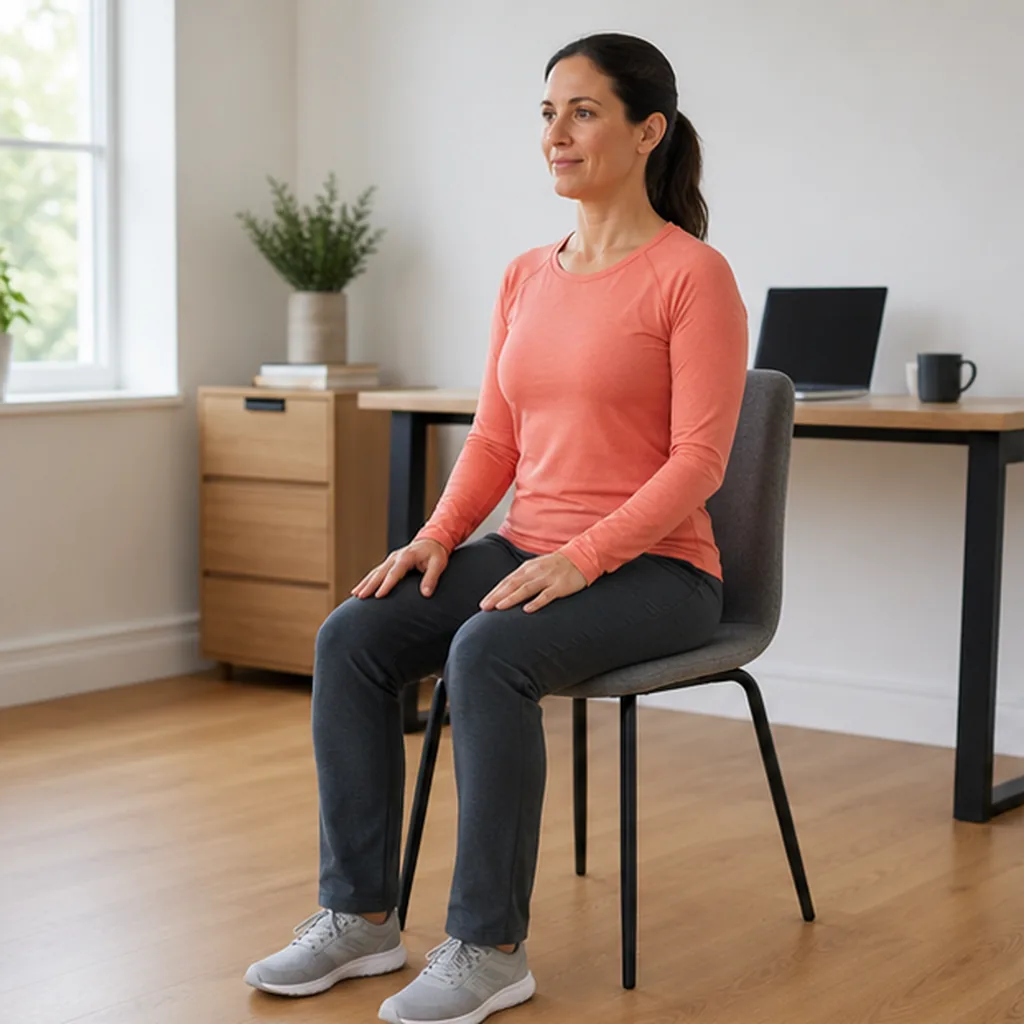
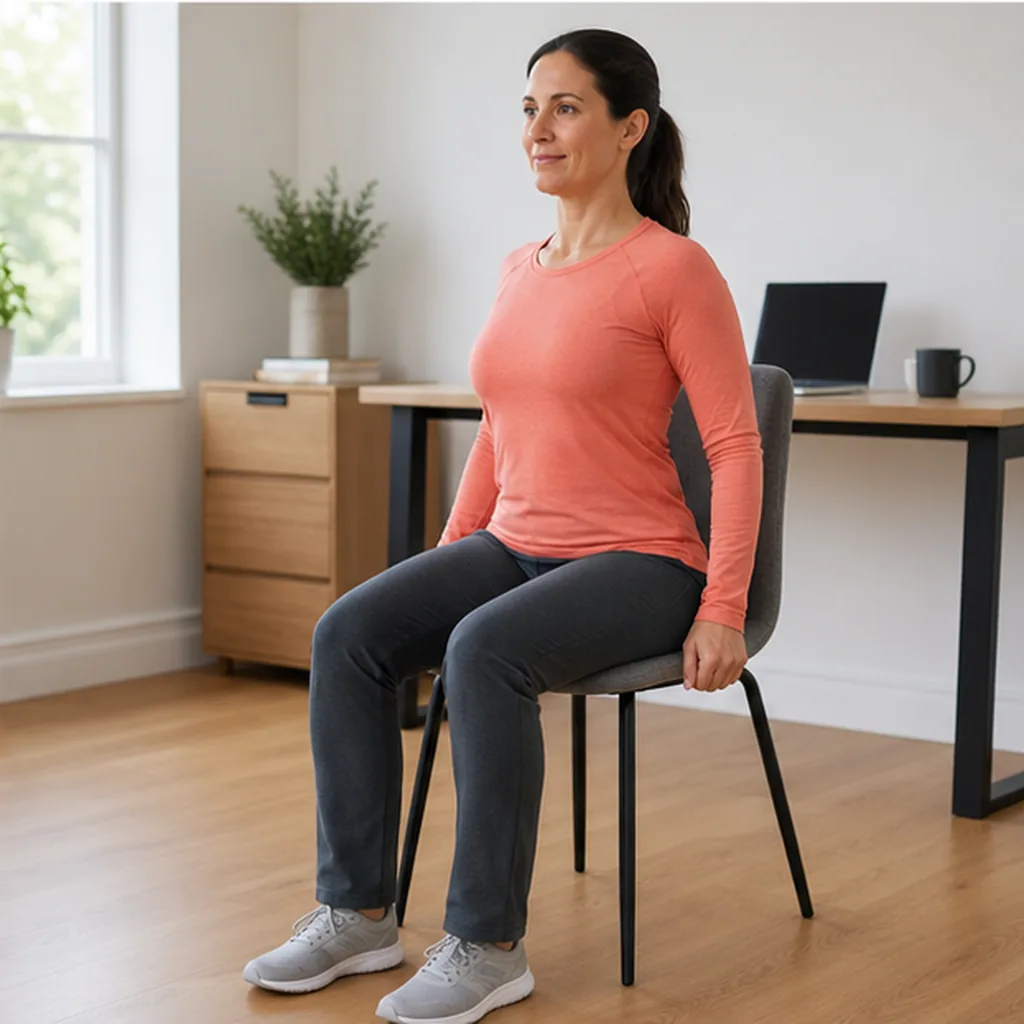
- Place both feet on the floor.
- Move away from the desk edge.
- Let hands rest on thighs.
- Keep the jaw and grip relaxed.
- Use a small comfortable range.
Stop for pain, numbness, tingling, dizziness, new weakness, or symptoms traveling down an arm. Seek urgent help after major trauma, with chest pain, or with sudden one-sided weakness.
The 5-Minute Shoulder Sequence
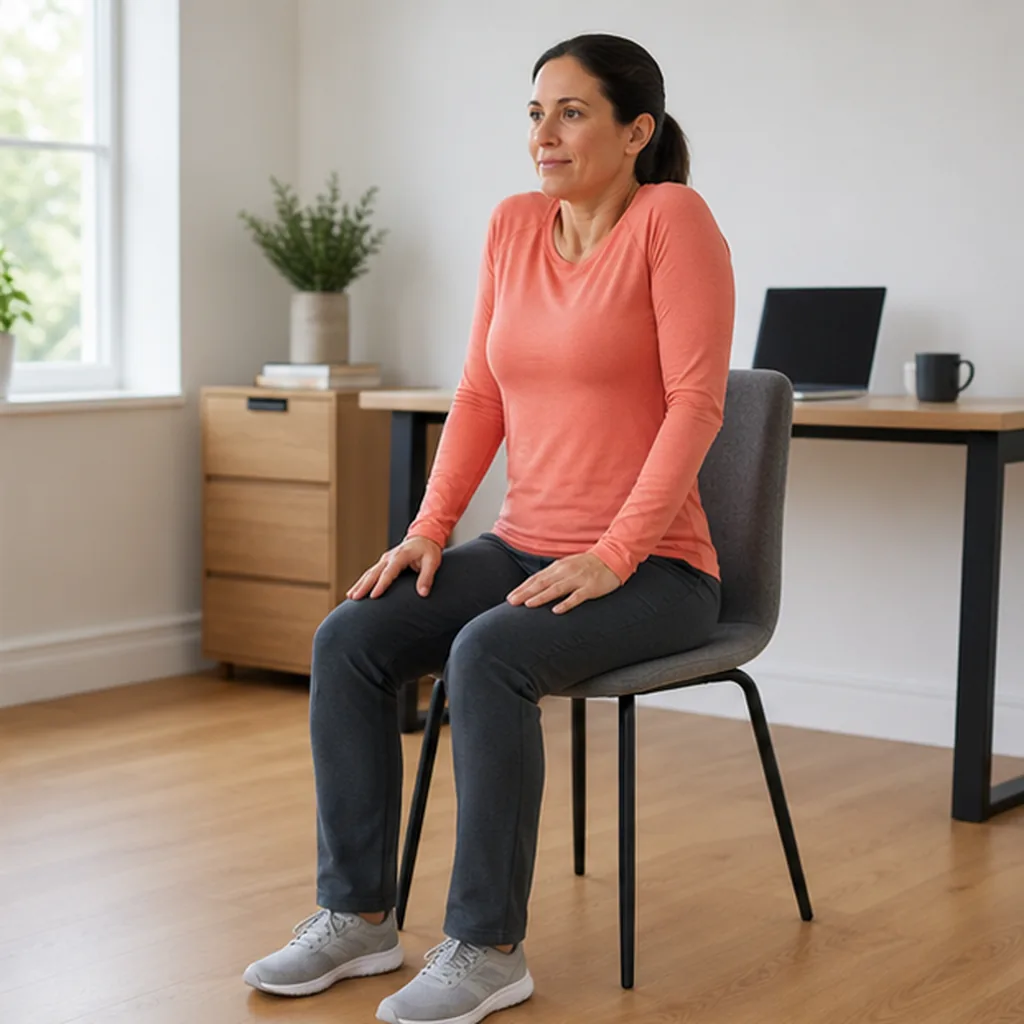
- Notice — 45 seconds: Sit without correcting your posture. Notice contact under both feet, hips, and hands. Take three easy breaths.
- Slow shrug — 60 seconds: Lift both shoulders gently on an inhale. Pause for 1 second, then lower for 4 seconds. Repeat six times.
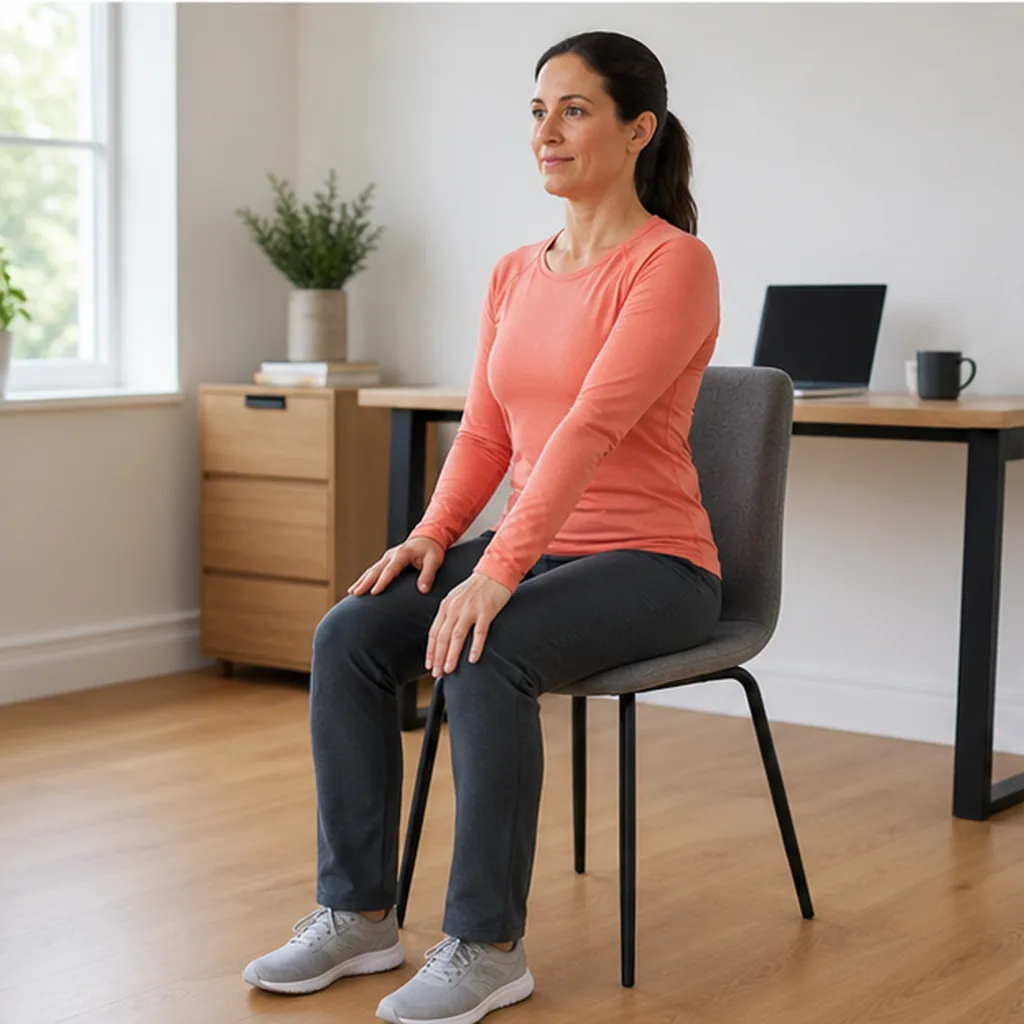
- Single-shoulder glide — 75 seconds: Move the right shoulder slightly forward, return, then slightly back. Repeat five times and switch sides.
- Small circles — 75 seconds: Draw five slow backward circles with both shoulders, then five forward circles. Make each circle smaller if the neck tightens.
- Compare — 45 seconds: Rest your arms. Notice any difference in ease, warmth, or position without forcing a change.
Comfort Checklist
- Breathing remains easy.
- The jaw stays relaxed.
- Movements remain slow.
- No symptom travels down the arm.
- Range becomes smaller when needed.
Continue with our wall stretches for rounded shoulders, resistance-band posture reset, or seated chin tucks.
Safety and Evidence Context
The NHS shoulder guidance supports gentle, symptom-limited movement and advises against pushing into pain. “Somatic” here describes paying attention to sensation during slow movement, not a medical treatment.
Persistent shoulder pain, night pain, weakness, restricted motion, or repeated tingling deserves assessment by a qualified clinician. Follow individualized rehabilitation advice when you have a diagnosed condition.
Make the Break More Useful
Move at about half your available range during the first repetition. A smaller motion makes it easier to notice unnecessary jaw, hand, or trunk tension.
Keep the head facing forward during shoulder glides. Turning the head can hide whether motion is coming from the shoulder or the upper trunk.
Set a quiet reminder after long computer sessions. Frequent comfortable breaks are more practical than forcing one intense stretch after hours of stillness.
Repeat the sequence once or twice during the workday only when every repetition remains comfortable and symptoms do not increase afterward.
Frequently Asked Questions
Should I feel a strong stretch? No. The goal is easy, controlled movement rather than maximum range.
Can I do this standing? Yes, if you feel steady and keep the same small, pain-free motions.