
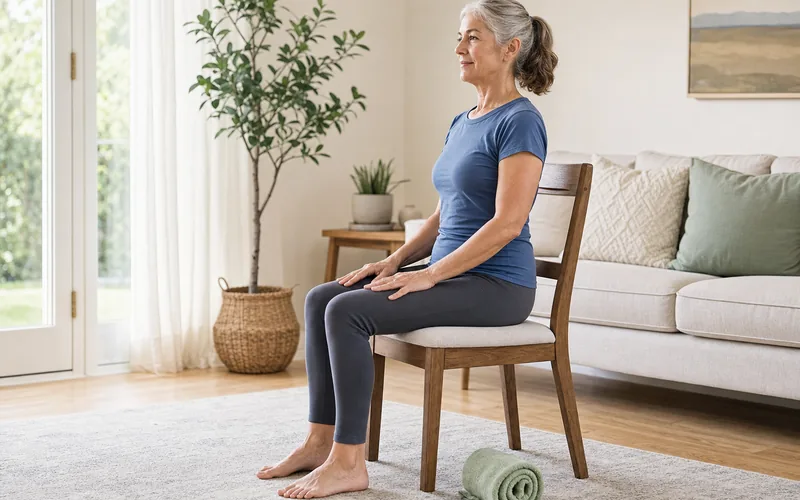
These seated thoracic extension exercises give seniors ten minutes of supported upper-back mobility. Every movement stays small, slow, and anchored by a stable chair.
10-Minute Seated Thoracic Extension Seniors Routine
- Total time: 10 minutes
- Position: Seated
- Equipment: Stable chair and rolled towel
- Intensity: Gentle
- Range: Comfortable and controlled
This routine is general information, not treatment for osteoporosis, spinal fracture, arthritis, or unexplained back pain. Always follow personal precautions from a clinician.
Set Up Safely
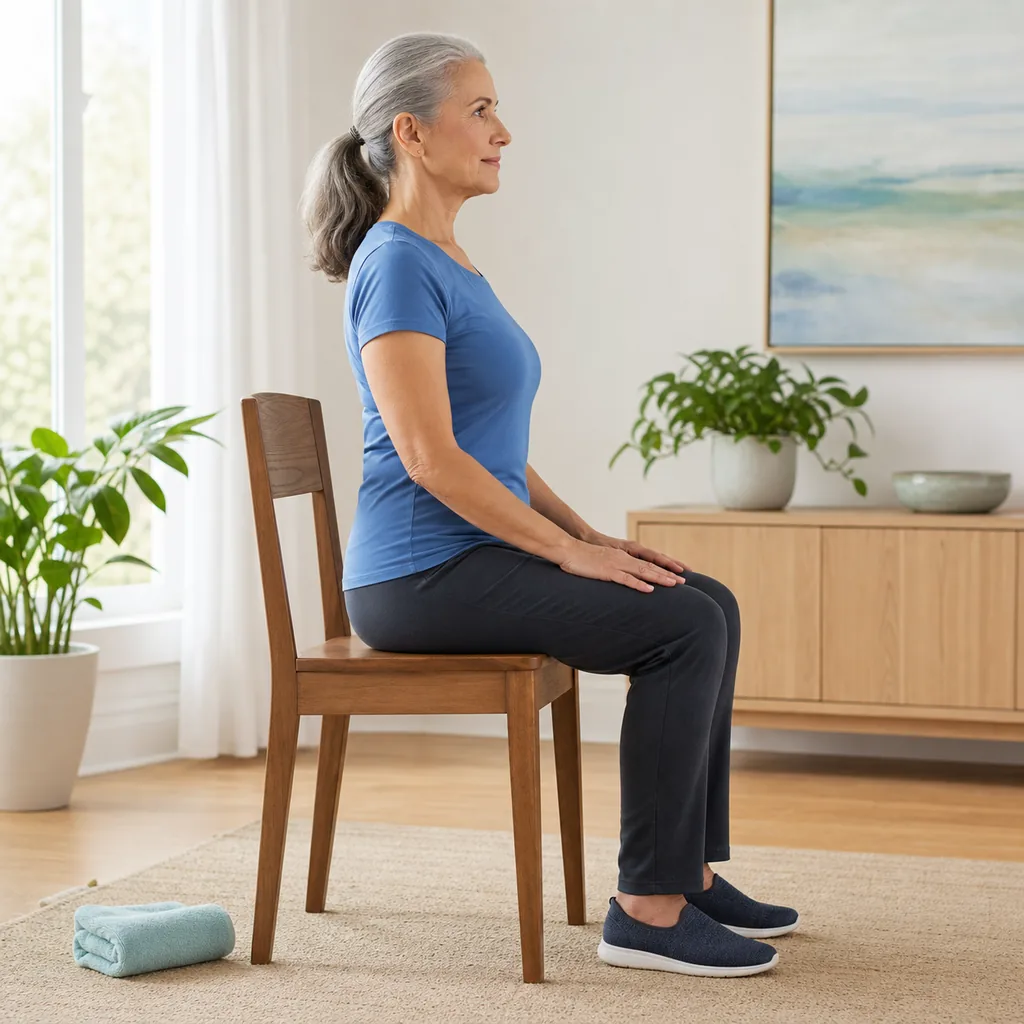
- Use a chair without wheels.
- Place both feet flat.
- Keep hips and knees near 90 degrees.
- Support the head if needed.
- Avoid a chair with a sharp back edge.
The 10-Minute Thoracic Routine
- Posture reset, 2 minutes: Sit tall, hands on thighs, and complete five slow breaths while gently widening the collarbones.
- Shoulder-blade glide, 2 minutes: Draw shoulder blades slightly back and down, pause 2 seconds, then relax for eight repetitions.
- Towel-supported extension, 2 minutes: Place a rolled towel behind the mid-back. Cross arms and lean back slightly for 3 seconds, then return.
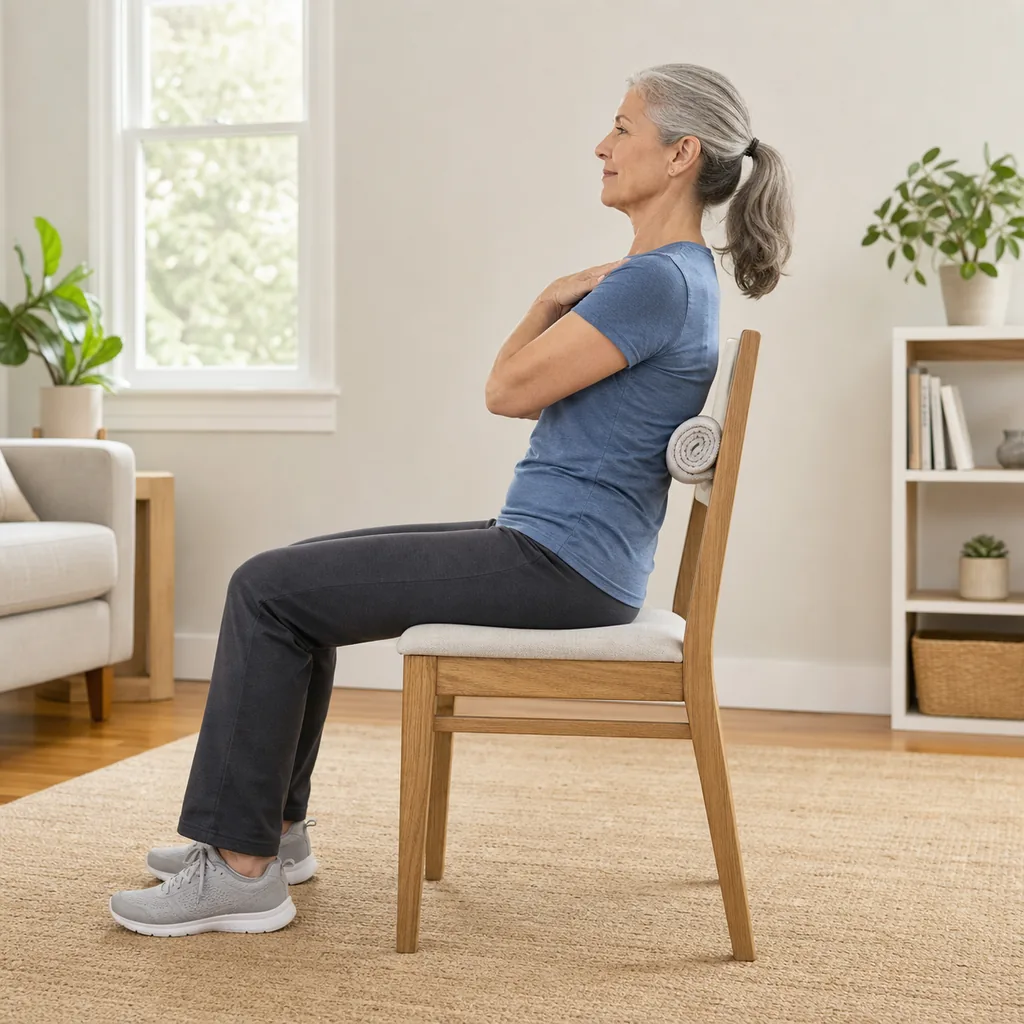
Small towel-supported thoracic extension - Overhead reach, 2 minutes: Raise one arm only as high as comfortable while keeping ribs quiet. Alternate five reaches per side.
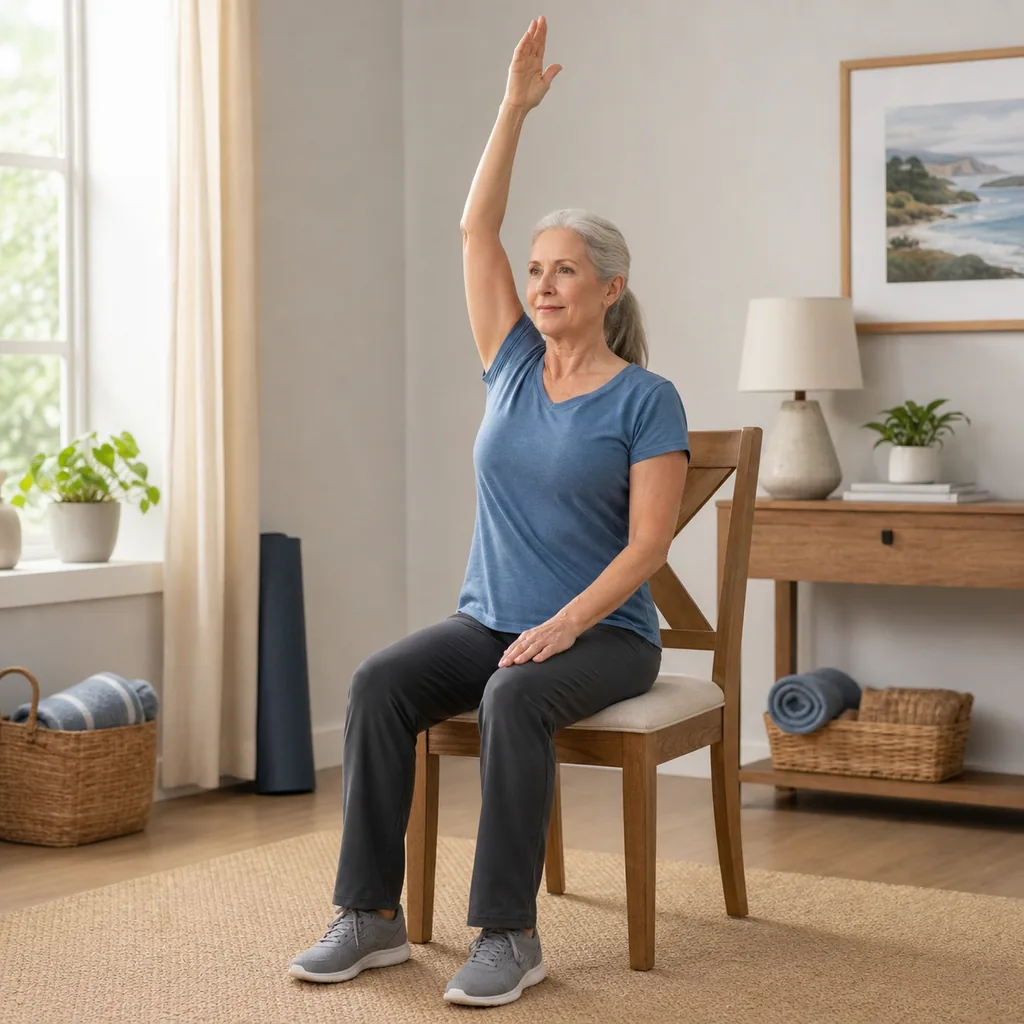
Comfortable single-arm overhead reach - Open-and-return, 2 minutes: Place hands behind the head or on shoulders, open elbows gently, then return for six repetitions.

Gentle seated open-and-return position
Form Checklist
- Movement comes from the upper back.
- The lower back does not arch strongly.
- The chin stays gently tucked.
- Breathing remains easy.
- No movement causes sharp pain.
Combine this with our upper-back exercises, seated core twists, or seated core routine.
Modifications and Progression
Use a thinner towel or reduce the backward lean when the chair edge feels strong. Keep hands on thighs if reaching overhead strains the shoulders.
NHS sitting-exercise guidance recommends a solid chair, both feet flat, gradual progression, and professional advice when suitability remains uncertain.
Safety Guidance
- Stop for sharp or radiating pain.
- Stop for dizziness or shortness of breath.
- Avoid forceful extension with known osteoporosis.
- Use prescribed spinal precautions.
- Seek advice after a recent fall.
New severe back pain, chest pain, unexplained weakness, or pain after a recent fall needs prompt medical assessment. Do not use this routine to test a painful spine.
Chair and Towel Placement
Choose a backrest that reaches the lower shoulder-blade area. Place the rolled towel across the mid-back, never directly behind the neck or low back.
If the towel slips, remove it and practice a smaller unsupported movement. Do not secure it with straps that restrict breathing or make leaving the chair difficult.
- Begin with a hand-towel roll.
- Keep the chair against a wall if needed.
- Move slowly back to upright.
- Rest whenever breathing changes.
Progress Without Forcing
Progress by smoothing the movement or adding one comfortable repetition. A larger backward lean is unnecessary and may shift motion into the lower back.
Frequently Asked Questions
Should I look at the ceiling?
No. Keep the neck comfortable and let the upper back make the small extension movement.
Can I use a soft chair?
A firm stable chair gives clearer support. Avoid rolling or unstable seating.