
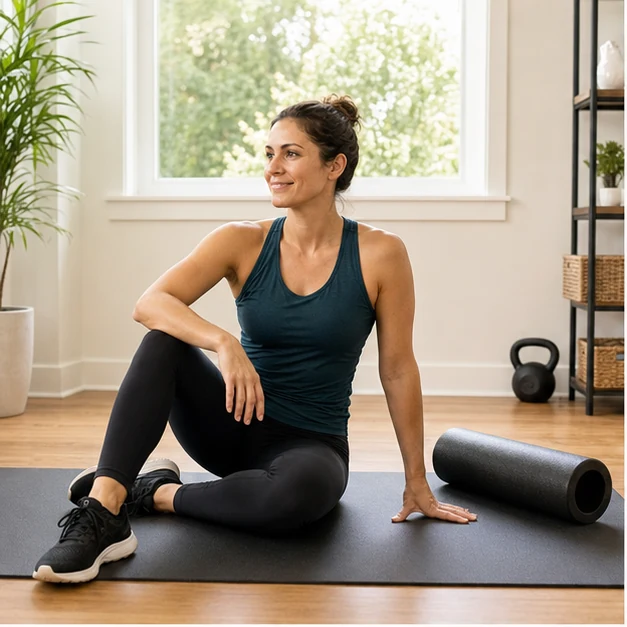
This 10-minute foam roller routine uses slow passes on the upper back, thighs, glutes, calves, and lats after training.
Foam Roller Routine: 10-Minute Full Body Plan
Foam rolling may temporarily reduce muscle soreness or stiffness for some people. It does not repair an injury or replace medical assessment.
- Total time: 10 minutes.
- Equipment: Smooth medium-density roller and mat.
- Pace: About 1 inch per second.
- Pressure: Mild to moderate, never sharp.
- Safety: Stop for numbness, tingling, bruising, sharp pain, or dizziness.
The 10-Minute Full Body Sequence
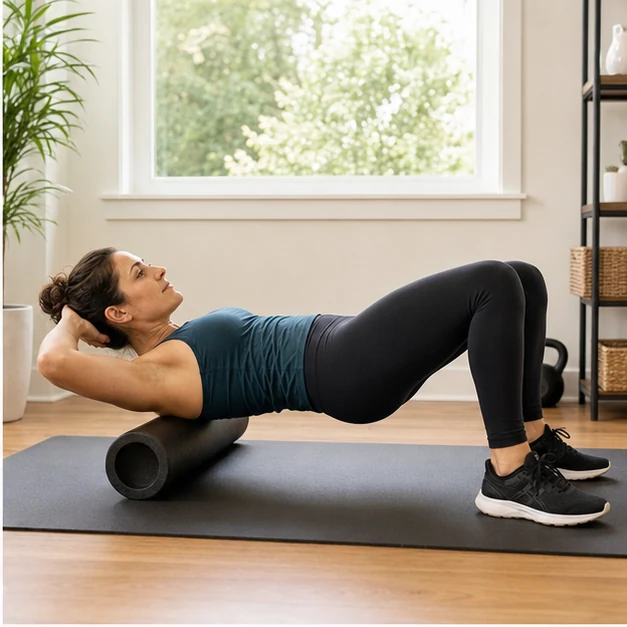
1. Upper back, 2 minutes
- Place the roller below the shoulder blades.
- Support the head without pulling the neck.
- Roll from mid-back to the top of the shoulder blades for 60 seconds.
- Pause on one tender muscular area for 20 seconds, then continue slowly.
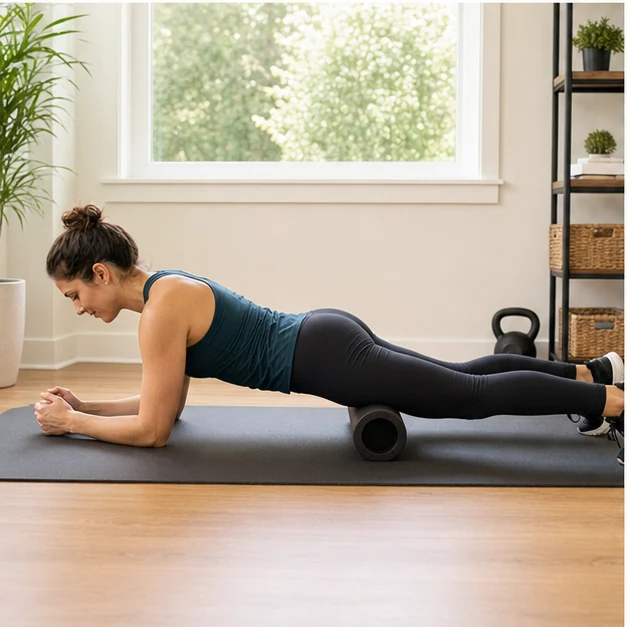
2. Quadriceps, 2 minutes
- Lie on forearms with the roller under mid-thighs.
- Roll from 2 inches above the knees to below the hip crease.
- Spend 60 seconds centered, then 30 seconds angled slightly each side.
3. Glutes, 2 minutes
- Sit on the roller and place the right ankle over the left knee.
- Lean slightly right and make short passes for 60 seconds.
- Switch sides for 60 seconds.
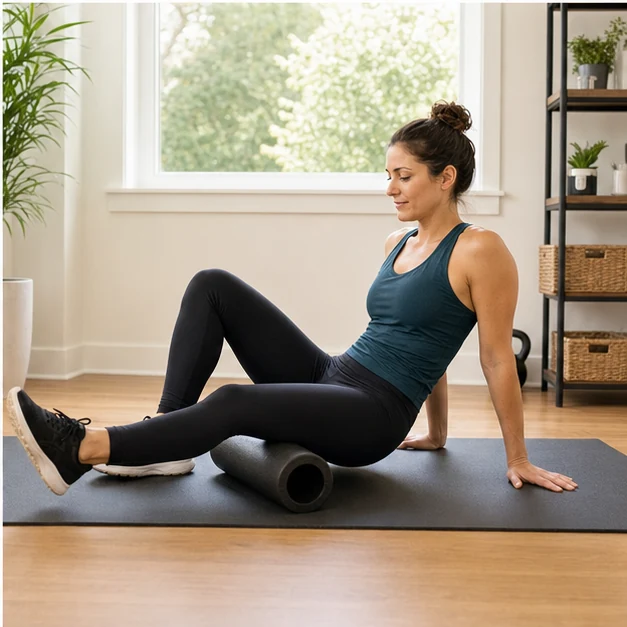
4. Calves, 2 minutes
- Sit with the roller under the right mid-calf.
- Keep the left foot planted to control pressure.
- Roll between the ankle and 2 inches below the knee for 60 seconds.
- Switch sides.
5. Lats, 2 minutes
- Lie partly on the right side with the roller below the armpit.
- Make short passes along the outer upper-back muscle for 60 seconds.
- Keep pressure away from ribs and the armpit itself.
- Switch sides.
Areas to Avoid
- Do not roll directly over the neck, lower back, abdomen, bones, or joints.
- Avoid fresh injuries, open wounds, severe bruising, and known blood clots.
- Ask a clinician first for osteoporosis, bleeding disorders, anticoagulant use, recent surgery, pregnancy restrictions, or unexplained swelling.
- This routine is general fitness information, not personalized treatment.
Pair recovery work with Hip Mobility Stretches, Morning Stretching, or Evening Yoga.
Foam Roller Routine FAQ
Should foam rolling be painful?
No. Reduce pressure or stop if discomfort is sharp, burning, numbing, or strong enough to change your breathing.
When is the best time?
Use slow recovery rolling after training or later the same day. Before exercise, keep passes brief and follow with active movement.