
Container gardening is one of the easiest ways to add color to a patio, balcony, porch, or small backyard. You do not need a large garden bed to grow flowers, herbs, vegetables, and pollinator plants. You just need the right pot size, good drainage, and combinations that match your light.
These colorful container garden ideas are designed for summer 2026 and work especially well for renters, small-space gardeners, and anyone who wants a garden that looks good fast.
Bold Summer Patio Pots

Group three to five pots in different heights and fill them with bright flowers like zinnias, petunias, marigolds, and trailing greenery. Repeating one color across the group keeps the arrangement from looking chaotic.
Pollinator-Friendly Containers
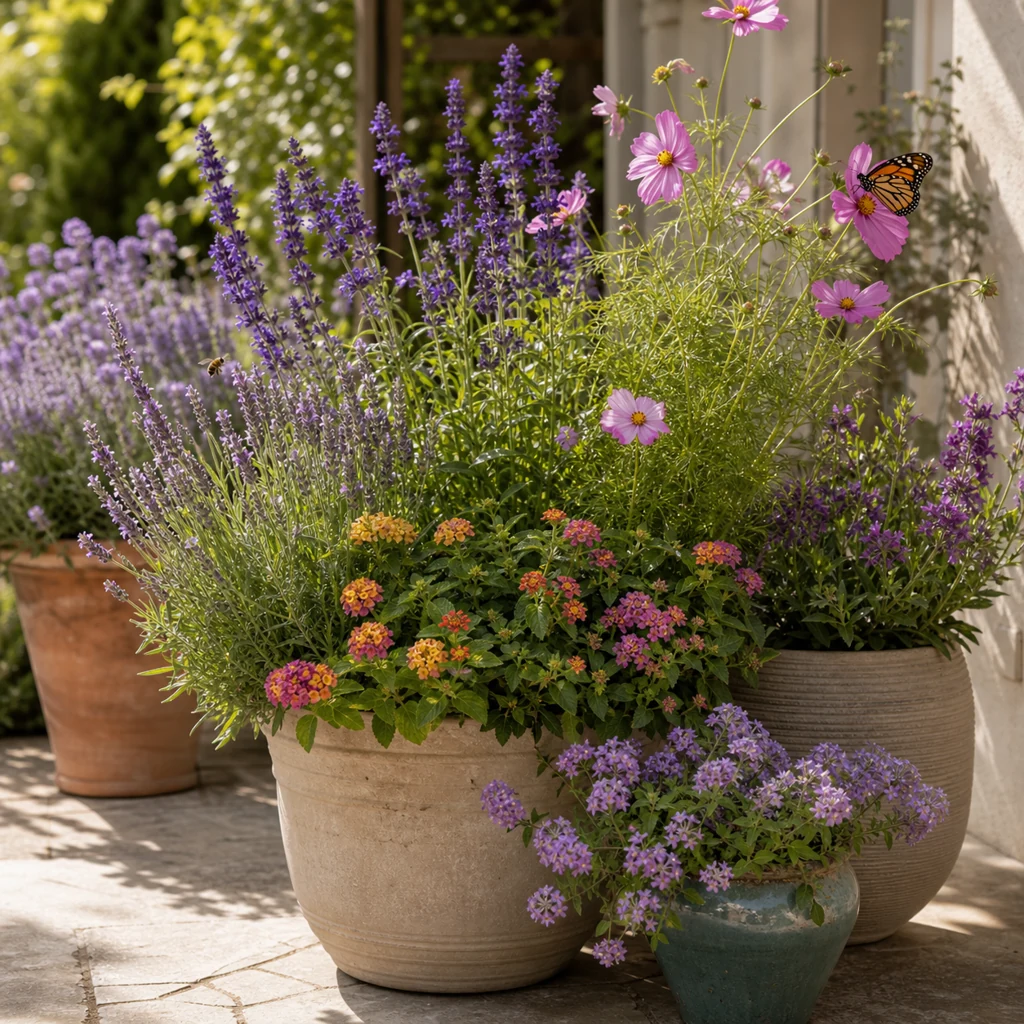
Pollinator pots are both pretty and useful. Lavender, salvia, lantana, cosmos, verbena, and zinnias are strong choices for sunny containers. Avoid pesticides if you want bees and butterflies to visit safely.
Edible Herb and Flower Pots
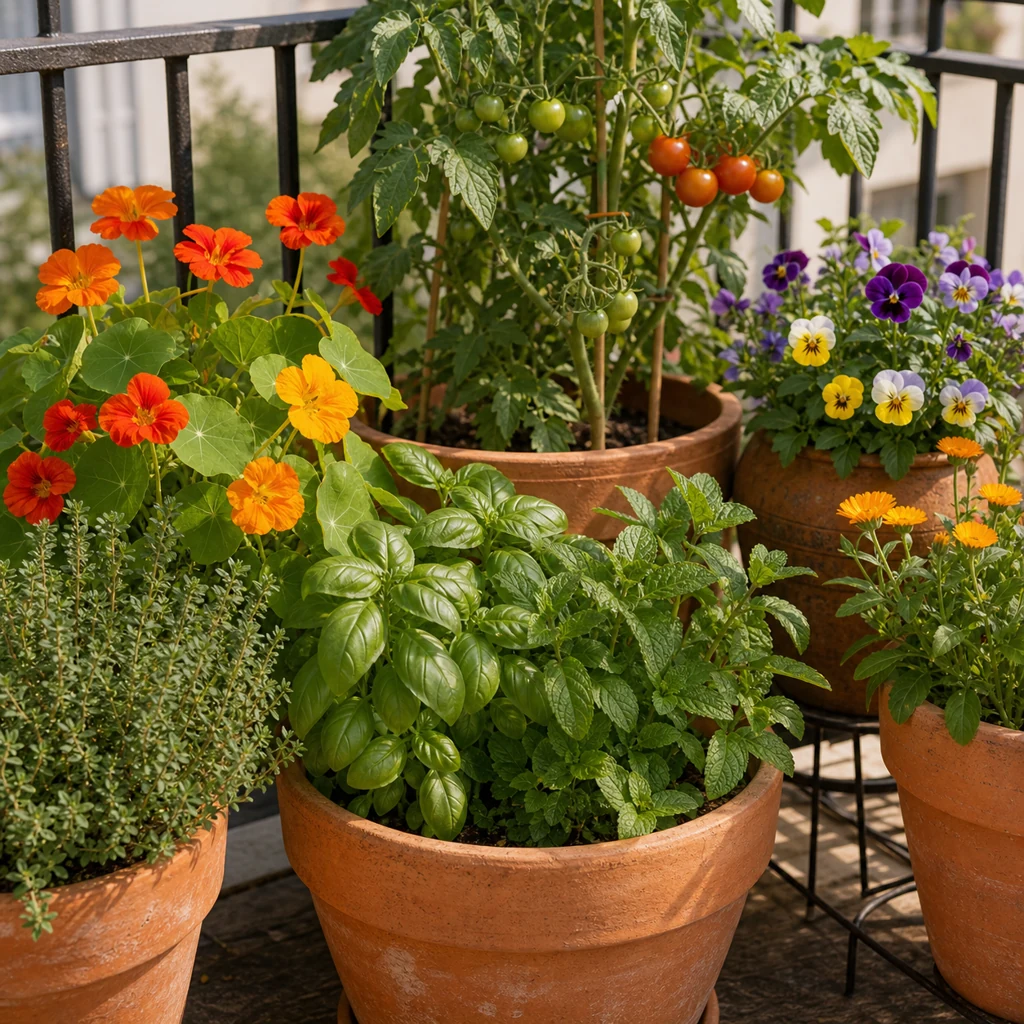
Mix basil, mint, thyme, cherry tomatoes, nasturtiums, and edible flowers for a container garden you can actually use in meals. Keep mint in its own pot because it spreads quickly.
Shade Container Gardens
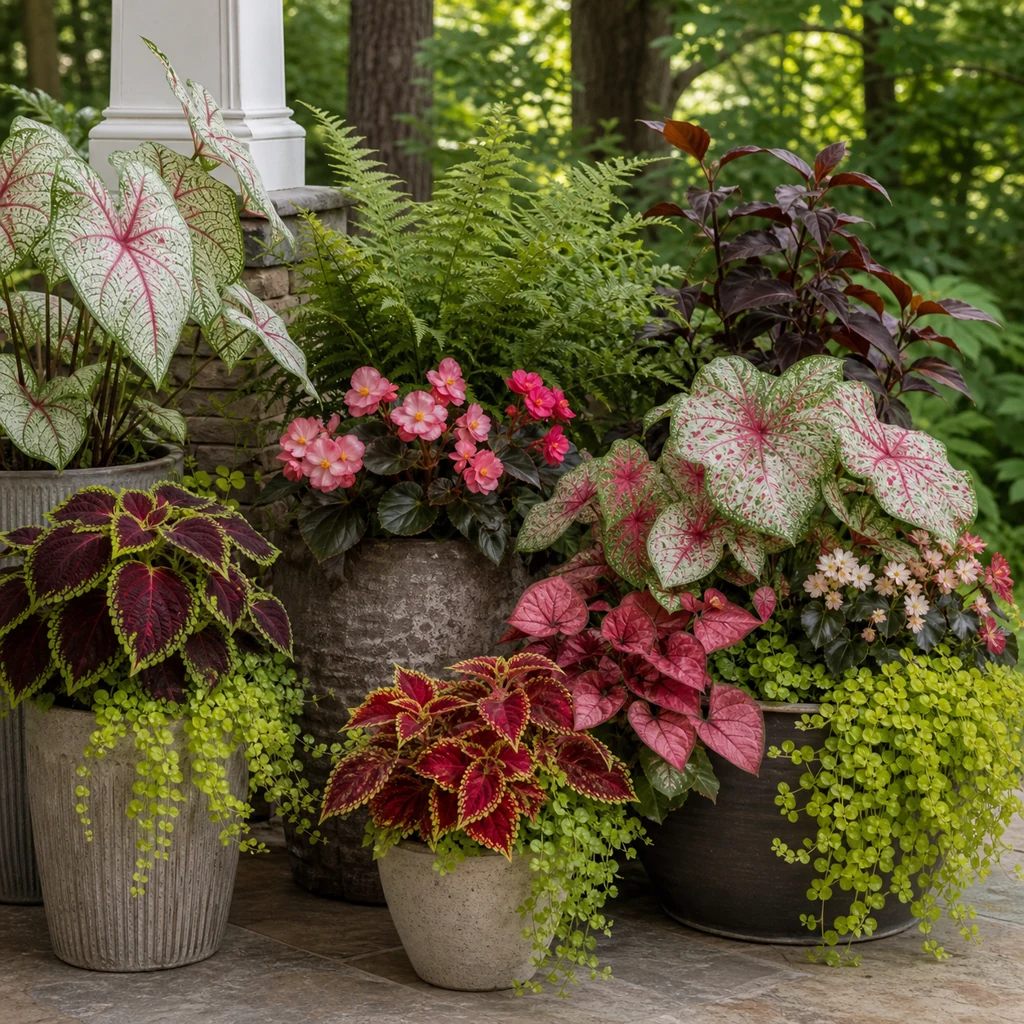
Shade containers do not have to be boring. Coleus, caladium, begonias, ferns, and creeping Jenny add color through foliage and texture. Use lighter pots to brighten darker corners.
Small Patio Container Layout
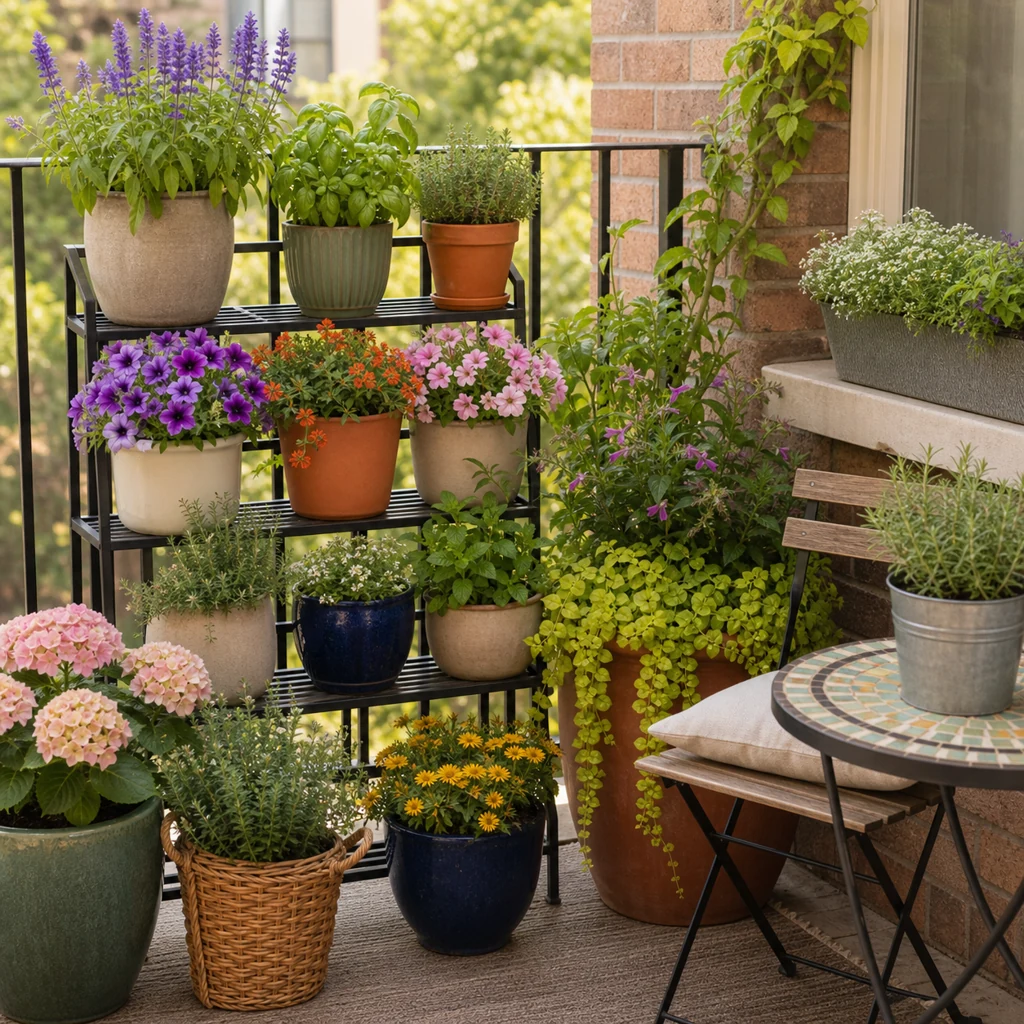
On a small patio, think vertically. A tiered stand, railing planter, or corner grouping can hold more plants while leaving room for a chair or small table.
Watering and Summer Care
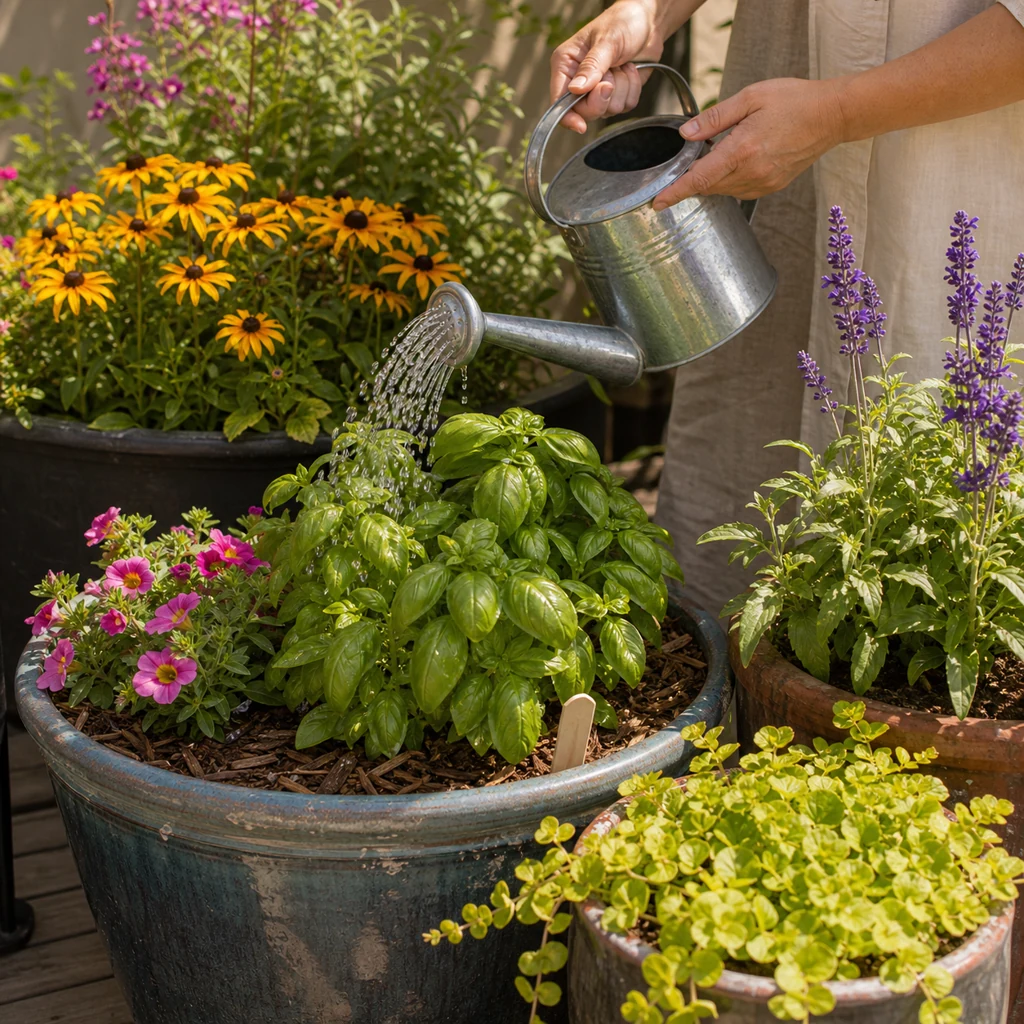
Containers dry out faster than garden beds. Check soil with your finger, water deeply when the top inch feels dry, and add mulch to reduce evaporation. In very hot weather, small pots may need water daily.
How to Choose Plants That Work Together
A strong container uses a simple formula: one tall plant, one full plant, and one trailing plant. Gardeners often call this thriller, filler, and spiller. For example, pair a tall salvia with petunias and trailing sweet potato vine, or combine caladium with begonias and creeping Jenny for shade.
Do not mix plants with very different water needs in the same pot. Lavender and succulents prefer drier soil, while many tropical foliage plants need more consistent moisture. Matching plant needs makes the container easier to maintain.
Common Container Garden Mistakes
- Using pots without drainage holes.
- Putting sun-loving flowers in deep shade.
- Planting too many starts in a small pot.
- Watering lightly every day instead of watering deeply when needed.
- Forgetting that dark pots heat up faster in direct sun.
Container Garden Checklist
- Choose pots with drainage holes.
- Match plants to sun or shade conditions.
- Use fresh potting mix, not heavy garden soil.
- Group pots in odd numbers for a natural look.
- Water deeply instead of misting the surface.
- Fertilize flowering containers lightly through summer.
Best Pot Sizes for Summer Containers
Bigger pots are usually easier in summer because they hold moisture longer. For flowers, choose containers at least 12 inches wide when possible. For tomatoes or larger herbs, use deeper pots so the roots have room to grow.
If you are gardening on a balcony, check weight limits and use lightweight potting mix. Add saucers only where water will not stain or damage the surface, and empty standing water after rain.
FAQ
What are the easiest flowers for summer containers?
Zinnias, petunias, marigolds, lantana, geraniums, and verbena are reliable choices for sunny summer pots.
How often should I water container plants?
It depends on pot size, heat, and plant type. In summer, check daily and water when the top inch of soil feels dry.
Can I grow vegetables in containers?
Yes. Cherry tomatoes, peppers, herbs, lettuce, and compact cucumbers can grow well in containers with enough sun and water.
Final Thoughts
A colorful container garden can turn a small outdoor space into a real summer garden. Start with a few pots, repeat colors, choose plants for your light, and keep watering consistent.