
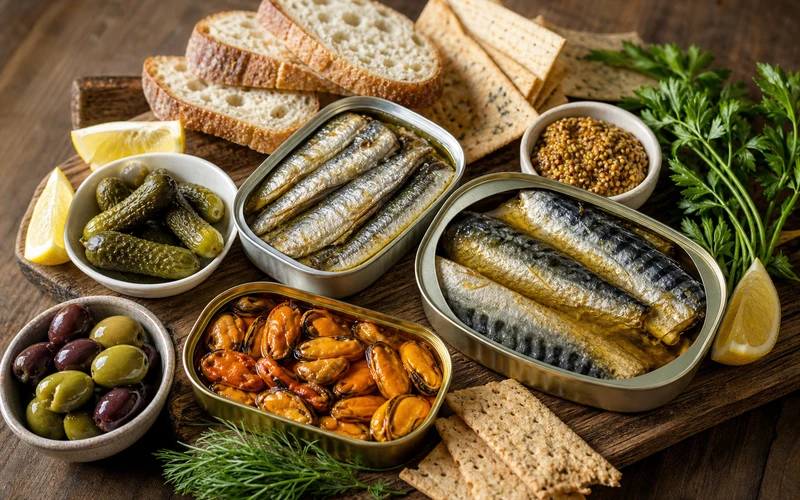
Tinned fish charcuterie boards have moved from niche food blogs to the centerpiece of casual dinner parties—and for good reason. A well-built board delivers restaurant-quality flavor without turning on the stove, costs a fraction of a traditional meat-and-cheese spread, and looks stunning on any table. Whether you are hosting friends on a weeknight or assembling a low-effort appetizer before a larger meal, learning how to build a tinned fish charcuterie board gives you a repeatable entertaining move that always impresses.
The concept is simple: arrange high-quality canned seafood with bread, crackers, pickles, and bright accents so guests can build their own bites. What makes it special is contrast—briny fish against creamy butter, crunchy crackers against silky olive oil, sharp mustard against mild potato chips. This guide walks through every decision from fish selection to final garnish so your board tastes as good as it photographs.
What You Need to Build a Tinned Fish Board
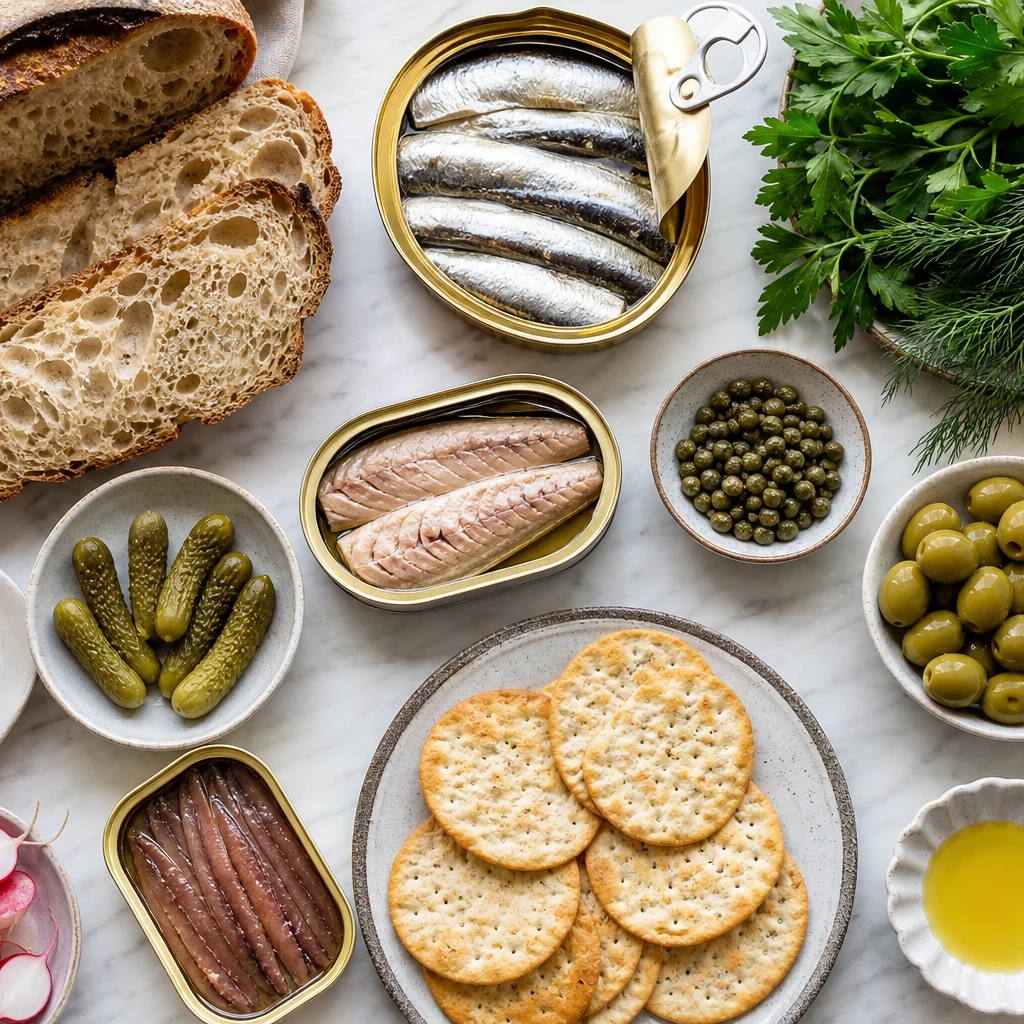
Start by gathering your foundation items before you open a single tin. You need a large wooden board or platter with enough surface area for at least four open tins plus all the accompaniments. A 16-by-12-inch board works for four to six guests; scale up for larger groups.
Essential hardware includes a small fork for flaking fish, a butter knife, and a spoon for mustard or tapenade. Keep a small bowl nearby for empty tins and oil drips so the board stays tidy throughout the evening. If you are serving outdoors, place the board on a rimmed baking sheet to catch any oil that runs off the edge.
Plan roughly two tins of fish per three guests, plus one loaf of crusty bread or two sleeves of crackers. Add one pickle element, one creamy element, and one fresh herb or citrus accent. That ratio keeps the board balanced without overwhelming your shopping list or your counter space.
How to Choose the Best Tinned Fish
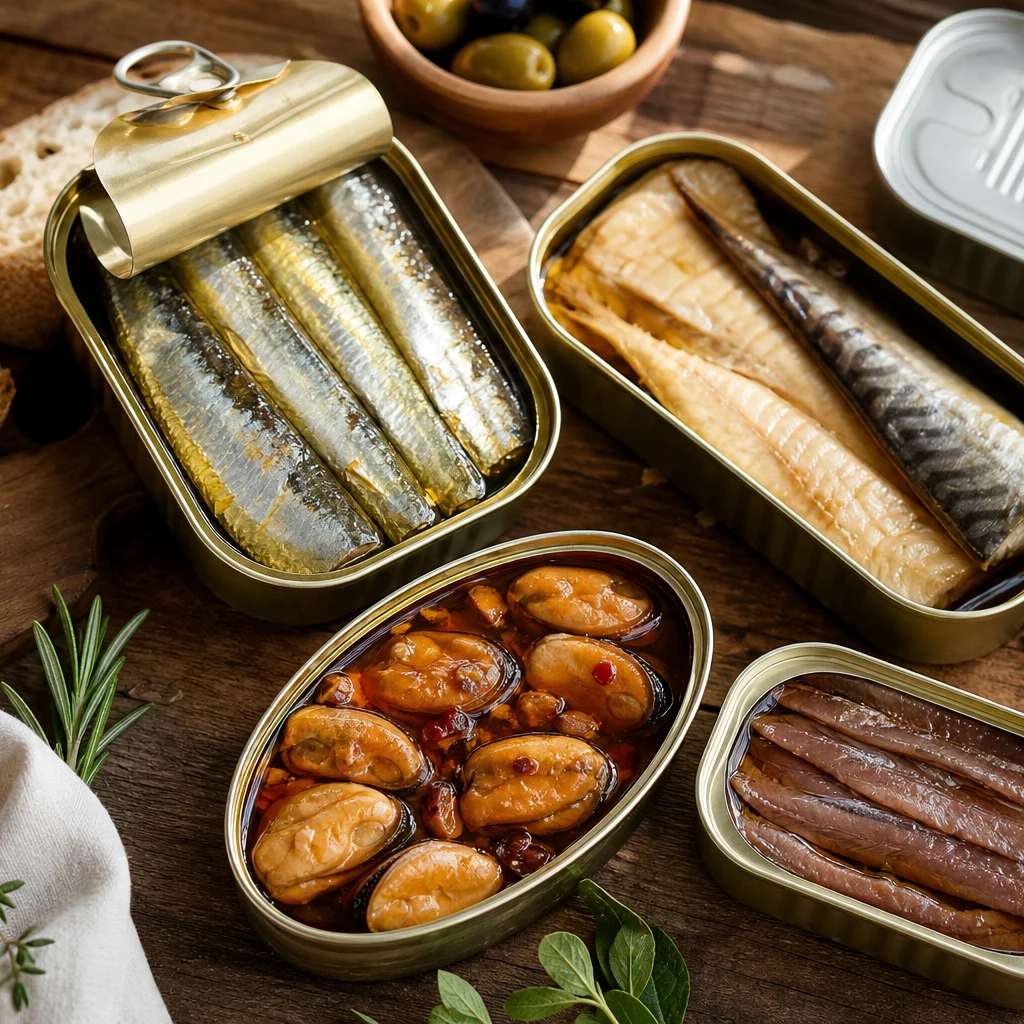
Not all canned fish belongs on a charcuterie board. Look for fish packed in olive oil rather than water—the oil becomes part of the flavor and gives you something to drizzle over bread. Sardines, mackerel, smoked trout, spiced mussels, and high-quality anchovies are reliable starting points. Mix textures: one firm, flaky fish and one softer, richer option keeps every bite interesting.
Read labels carefully. Fish from Portugal, Spain, and the Pacific Northwest often indicates careful sourcing, though excellent options exist at every price point. Avoid tins with dented seams or bloated lids. If you are new to tinned fish, buy one familiar variety (sardines in olive oil) and one adventurous pick (lemon-pepper mussels or smoked mackerel) so the board has both comfort and discovery.
Arrange tins unopened on the board first, then open them just before guests arrive. Fish packed in olive oil stays glossy for about 30 minutes at room temperature; after that, cover loosely with parchment if the party runs long. Never refrigerate an assembled board mid-party—the cold dulls flavor and stiffens the oil.
Essential Accompaniments That Make Every Bite Work
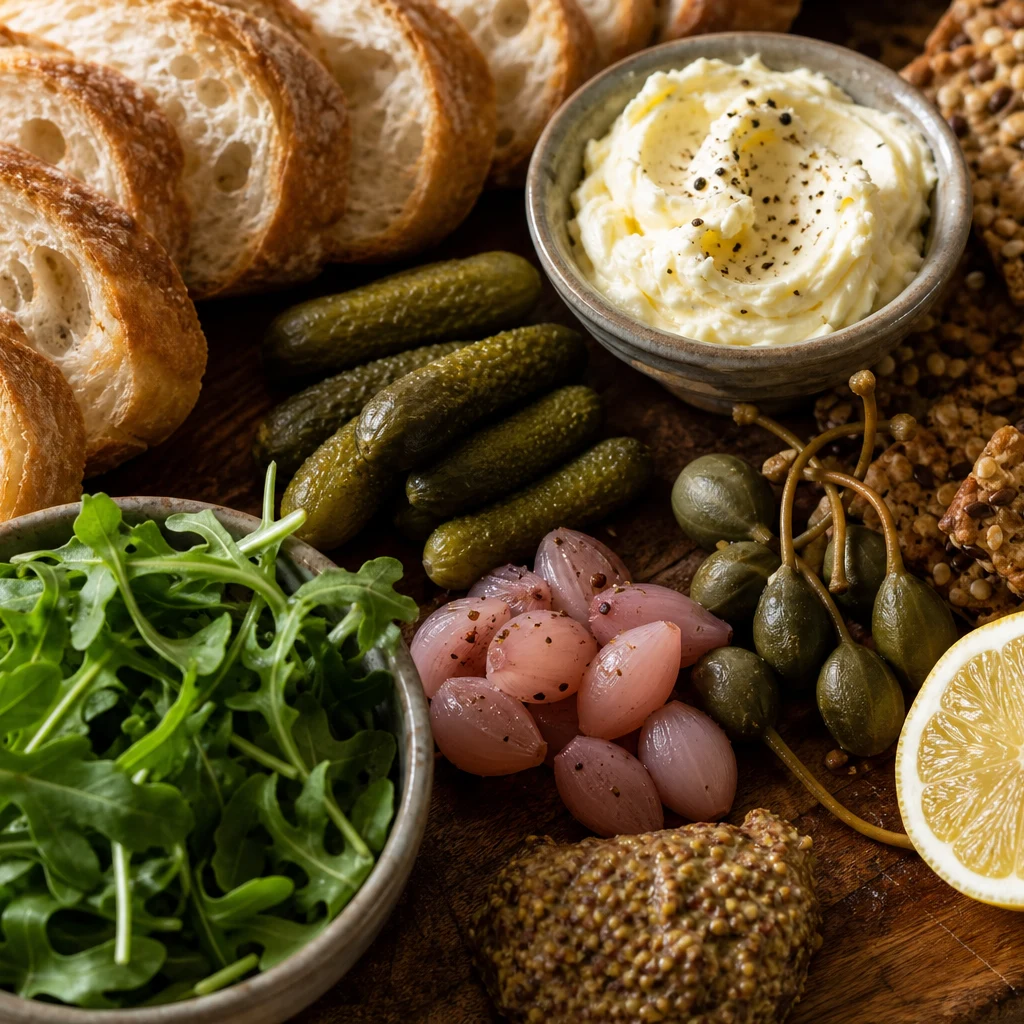
The accompaniments do as much work as the fish itself. Bread and crackers carry the seafood; pickles and acid cut through richness; herbs and citrus brighten every bite. Think in categories rather than a rigid shopping list.
Carriers: Sliced baguette, sourdough, seeded crackers, plain water crackers, and thin potato chips all work. Include at least two textures—one sturdy (bread) and one delicate (cracker)—so guests can choose their base.
Acid and crunch: Cornichons, caper berries, pickled onions, and quick-pickled vegetables add snap. If you make your own ferments, a jar of homemade fermented vegetables fits this board beautifully and adds probiotic depth most cheese boards never offer.
Richness: Unsalted butter, whipped cream cheese, or a soft goat cheese round out briny fish. Grainy Dijon mustard and aioli give guests a savory spread option beyond plain oil.
Fresh accents: Lemon wedges, fresh dill, parsley, thinly sliced radishes, and microgreens finish the board with color and brightness. A drizzle of good olive oil and a few flakes of flaky sea salt at the last moment elevate even budget-friendly tins.
Step-by-Step: Assemble Your Tinned Fish Charcuterie Board
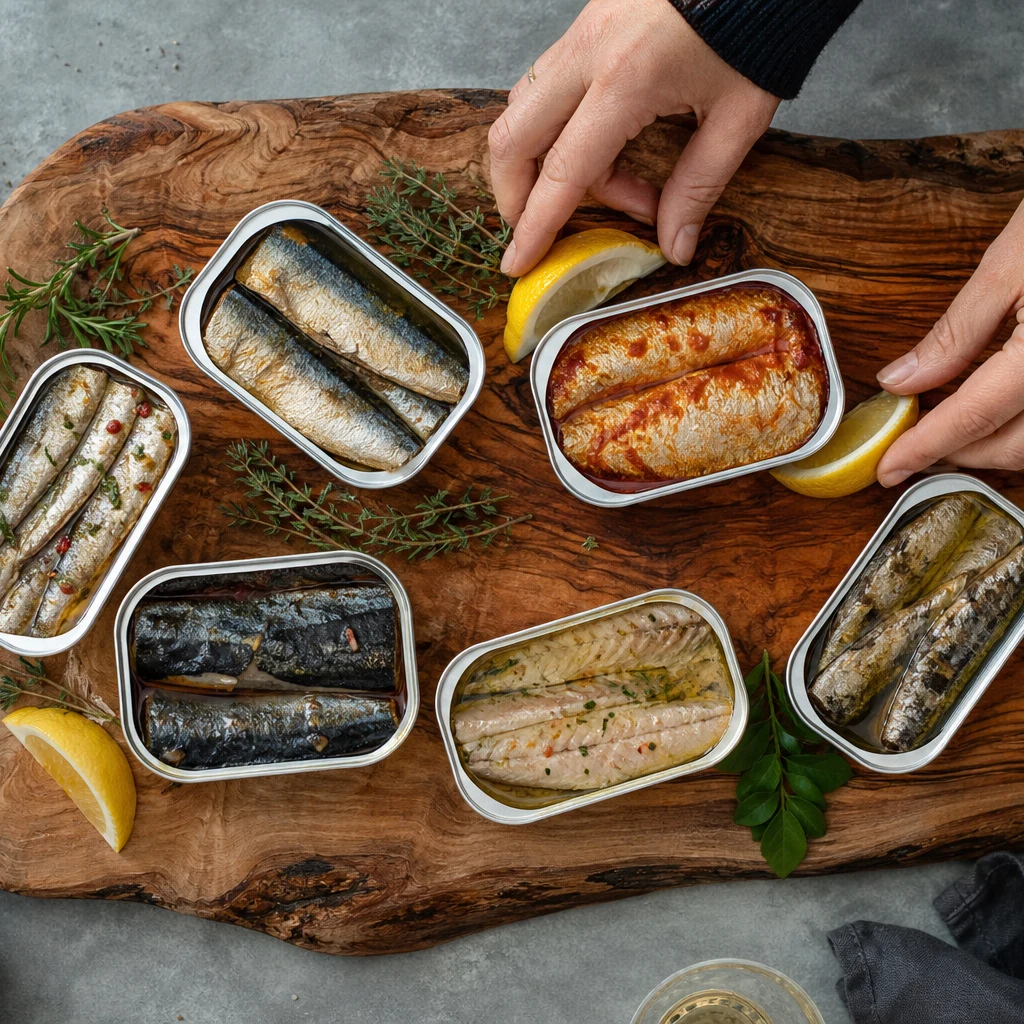
Building the board takes about 15 minutes once your ingredients are prepped. Follow this order so the layout stays clean and every element has its place.
- Anchor the board. Place your largest wooden board on a stable surface. Lay down parchment or large leaves if you want easier cleanup.
- Position the tins. Arrange unopened tins in a loose triangle or line across the center. Leave two inches between each tin for opened lids and flaked fish.
- Fill the gaps with carriers. Fan bread slices along one edge. Stack crackers in small piles between the tins. Keep butter in a ramekin with a knife.
- Add pickles and spreads. Place cornichons, olives, and capers in small bowls or directly on the board. Put mustard and any tapenade in ramekins with their own spoons.
- Open the tins. Open each tin just before serving. Gently lift fillets to show their texture, or flake large pieces with a fork. Pour a little of the packing oil over the fish if it looks dry.
- Garnish and serve. Scatter fresh herbs, add lemon wedges, and finish with flaky salt. Set out small plates and napkins, then let guests build their own bites.
For a party spread that includes both this board and hot appetizers, pair it with easy finger foods like crispy spring rolls or corn and zucchini fritters so guests have something warm alongside the room-temperature fish.
How to Plate and Serve Like a Pro
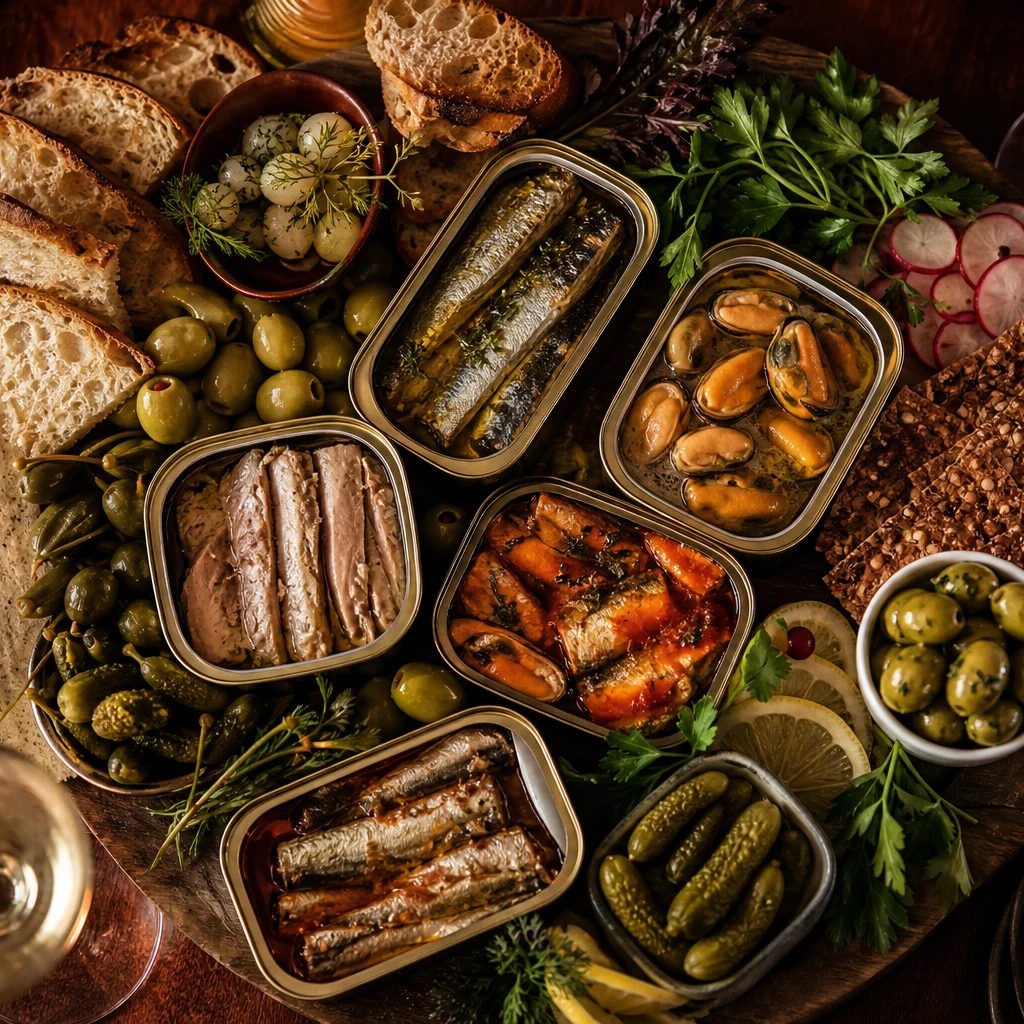
Presentation matters on a tinned fish board because the tins themselves are not always beautiful. Open lids can lean against the tin at an angle to create height. Group similar colors together—silver fish, green herbs, yellow lemon—so the board reads as intentional rather than scattered.
Serve at room temperature. Pull tins and butter from the refrigerator 20 to 30 minutes before opening. Cold fish tastes flat and the oil congeals; room-temperature fish reveals the full range of smoke, spice, and brine the tin promised.
Provide guidance for hesitant guests. A simple note card suggesting “cracker + fish + cornichon + herb” removes intimidation for people who have never eaten sardines outside of a Caesar salad. Most first-timers surprise themselves by going back for thirds.
Refill strategy: keep backup tins in the kitchen. When a variety runs low, swap in a fresh open tin rather than scraping the last flakes. A board that looks abundant late in the party keeps the energy going as long as the conversation does.
Flavor Pairings Worth Trying
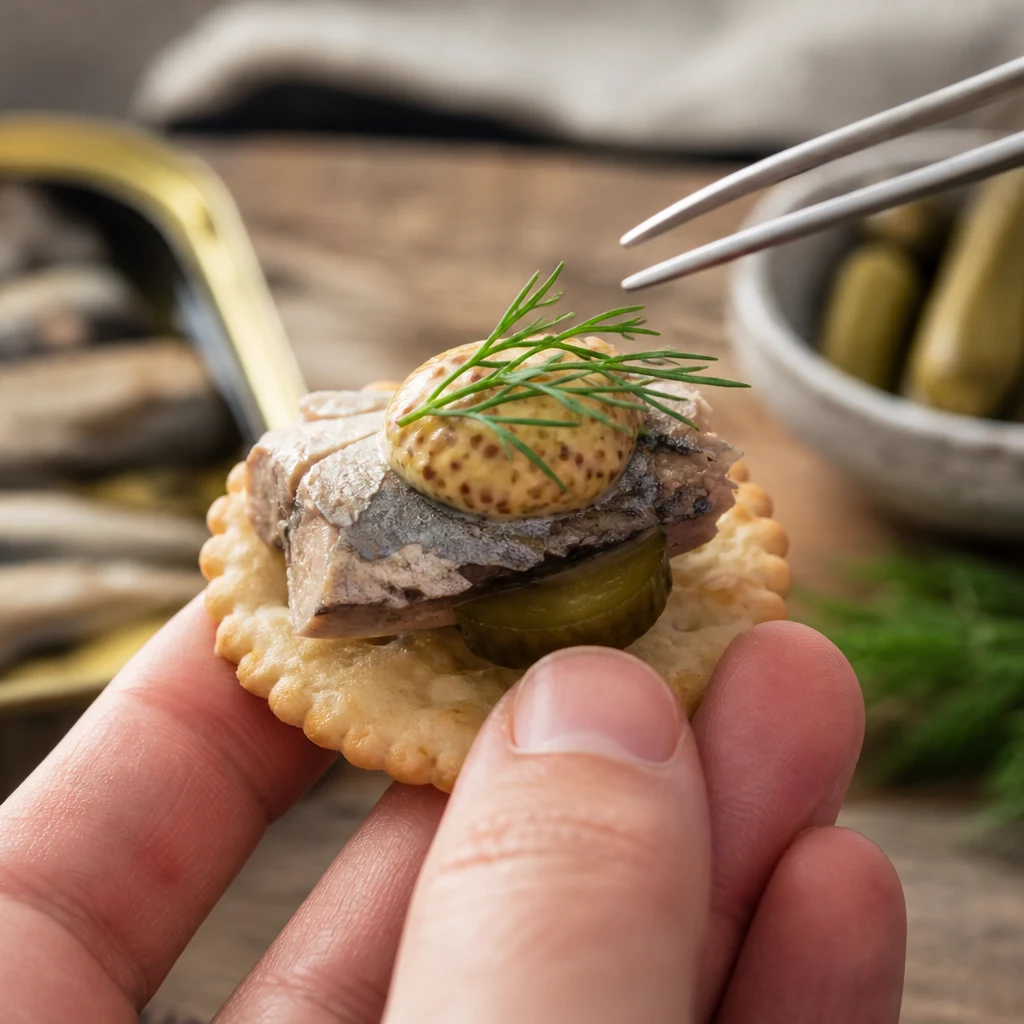
Once you master the basic board, rotate through these combinations to keep repeat guests excited.
- Mediterranean: Sardines in olive oil, anchovy fillets, grilled bread, tapenade, roasted red peppers, and basil leaves.
- Nordic-inspired: Smoked mackerel, rye crackers, pickled beets, horseradish cream, and dill.
- Spicy coastal: Spiced mussels, chili oil, lime wedges, avocado slices, and tortilla chips.
- Classic picnic: Tuna conserva, baguette, hard-boiled egg quarters, Niçoise olives, and haricots verts blanched and chilled.
Match beverages to the brine level. Dry white wine, pilsner, or a crisp cider all work. For non-alcoholic options, sparkling water with a grapefruit wedge mirrors the board’s acidity without competing with the fish.
If you are building a full party menu around shareable plates, browse more quick appetizers for guests and treat the tinned fish board as the no-cook anchor that frees you to focus on one hot dish instead of four.
Tinned Fish Charcuterie Board Checklist
- Choose a board large enough for four to six open tins plus accompaniments
- Buy fish packed in olive oil from reputable brands with intact tins
- Include at least two carrier options: bread and crackers
- Add one pickle, one spread, and one fresh herb or citrus element
- Pull fish and butter from the fridge 20 to 30 minutes before serving
- Open tins just before guests arrive, not hours ahead
- Provide small plates, napkins, and a fork for flaking larger fillets
- Keep backup tins in the kitchen for mid-party refills
- Pair with dry white wine, pilsner, or sparkling water with citrus
- Store leftover opened fish in the refrigerator and use within two days
Frequently Asked Questions
What is a tinned fish charcuterie board?
A tinned fish charcuterie board is an appetizer platter built around high-quality canned seafood instead of cured meats and cheese. Open tins of sardines, mackerel, mussels, or anchovies are arranged with bread, crackers, pickles, and spreads so guests assemble their own bites.
What tinned fish should I buy for a charcuterie board?
Start with sardines in olive oil and one bolder option like smoked mackerel or spiced mussels. Add anchovies for depth. Look for fish packed in olive oil rather than water, and check that tin seams are intact before buying.
How much tinned fish do I need per person?
Plan roughly two tins for every three guests as part of a larger spread, or one tin per two guests if the board is the main appetizer. Each tin typically holds two to four fillets, and most guests eat three to five bites.
Can I make a tinned fish board ahead of time?
Prep accompaniments and arrange unopened tins up to a few hours ahead. Open tins and add fresh herbs within 30 minutes of serving. Do not assemble the full board the night before—opened fish loses texture and the oil dulls when refrigerated.
What do you serve with tinned fish besides crackers?
Sliced baguette, potato chips, pickled vegetables, grainy mustard, butter, lemon wedges, fresh dill, olives, and caper berries all pair well. Quick-pickled onions and fermented vegetables add crunch and acidity that balance rich, oily fish.
Is tinned fish charcuterie healthy?
Canned fish is rich in protein, omega-3 fatty acids, and calcium when you eat small bones in sardines. Olive oil-packed varieties add healthy fats. Balance the board with vegetables and whole-grain crackers, and choose lower-sodium pickles if you are watching salt intake.
Build Your Board and Keep It Simple
The best tinned fish charcuterie boards look thoughtful but never fussy. Choose fish you would eat on good bread alone, add one crunchy and one acidic element, and open the tins at the last minute. That is the entire secret. Everything else—Nordic rye crackers, spicy mussels, a swipe of homemade tapenade—is variation on a theme that already works.
Next time you need a crowd-pleasing appetizer without turning on the oven, skip the cheese plate and reach for the tinned fish aisle instead. Your guests get something memorable, you get a stress-free prep window, and the board practically styles itself for photos before the first bite disappears.