
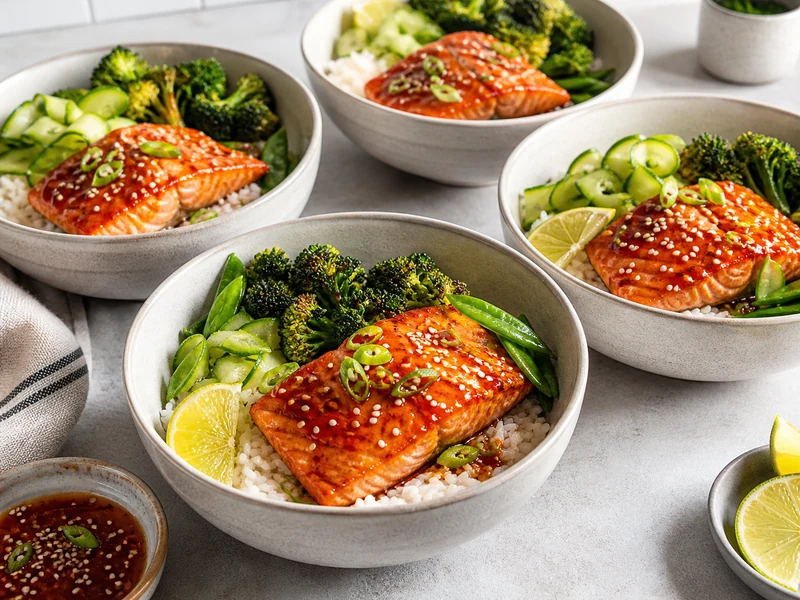
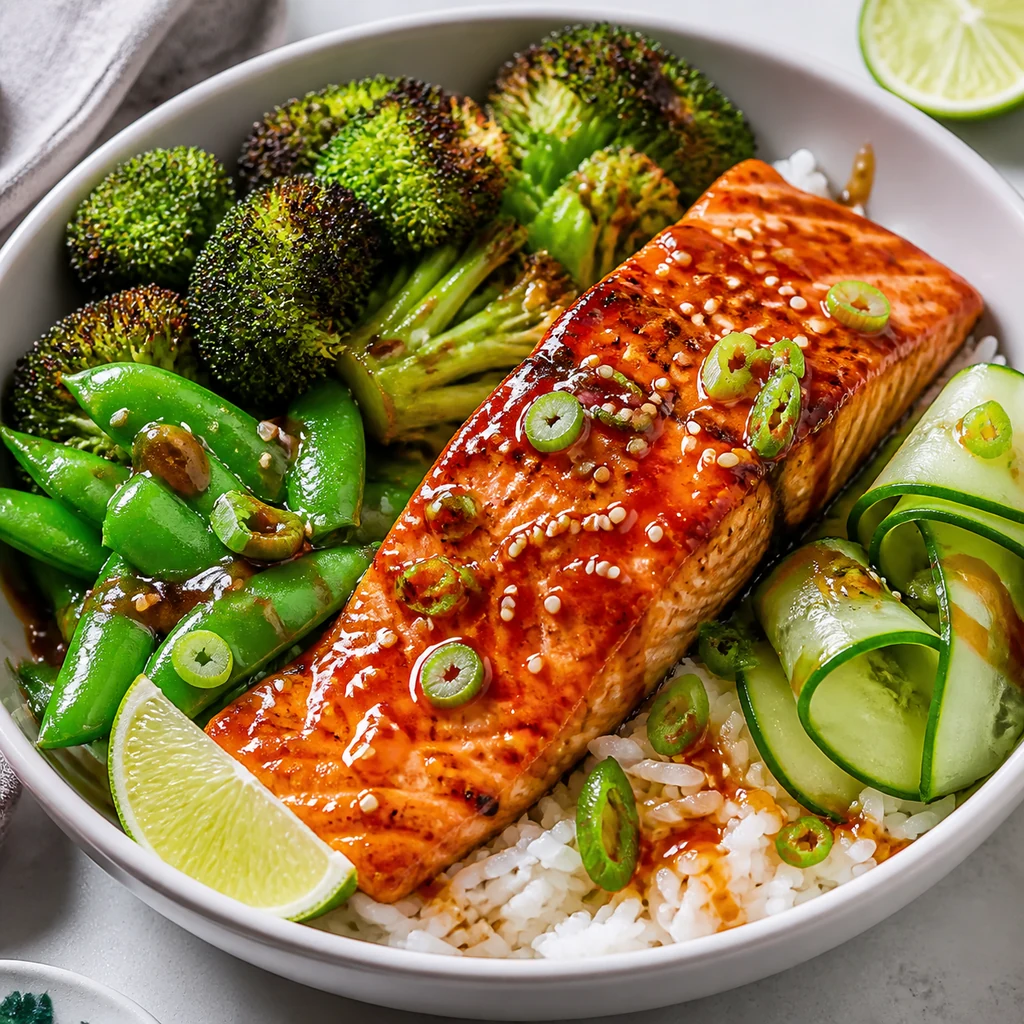
Honey sriracha glazed salmon meal prep is for the week when you want lunches that taste bold, polished, and still practical. The salmon cooks quickly, the glaze turns glossy and sticky, and the rice-and-vegetable base keeps each container filling without feeling weighed down.
RECIPE CARD
Honey Sriracha Glazed Salmon Meal Prep
Ingredients
- 4 salmon fillets, about 5 to 6 ounces each
- 2 tablespoons honey
- 1 1/2 tablespoons sriracha, plus more to taste
- 1 tablespoon low-sodium soy sauce or tamari
- 1 tablespoon lime juice
- 2 garlic cloves, finely minced
- 1 teaspoon grated fresh ginger, optional
- 1 tablespoon olive oil
- 1/2 teaspoon kosher salt
- 3 cups cooked jasmine rice, brown rice, or cauliflower rice
- 3 cups broccoli florets
- 1 1/2 cups snap peas
- 1 cup cucumber ribbons or sliced cucumber
- 2 scallions, thinly sliced
- 1 tablespoon sesame seeds
- Lime wedges for serving
- Extra glaze or chili sauce for serving
Quick Method
Condensed overview. Use Full Instructions for the complete method, timing and doneness details.
- Mix the Glaze: Stir honey, sriracha, soy sauce, lime juice, garlic, ginger, and olive oil in a small bowl. Taste it before it touches the salmon; it…
- Prep the Salmon: Pat the fillets dry and season lightly with salt. Place them on a parchment-lined sheet pan with space between each piece so the glaze…
- Add the Vegetables: Toss broccoli with a little oil and salt, then arrange it around the salmon. Keep cucumber raw and separate because it is meant to…
- Bake and Glaze: Brush the salmon with glaze and bake at 400°F for 9 to 12 minutes, depending on thickness. Brush again during the last few minutes…
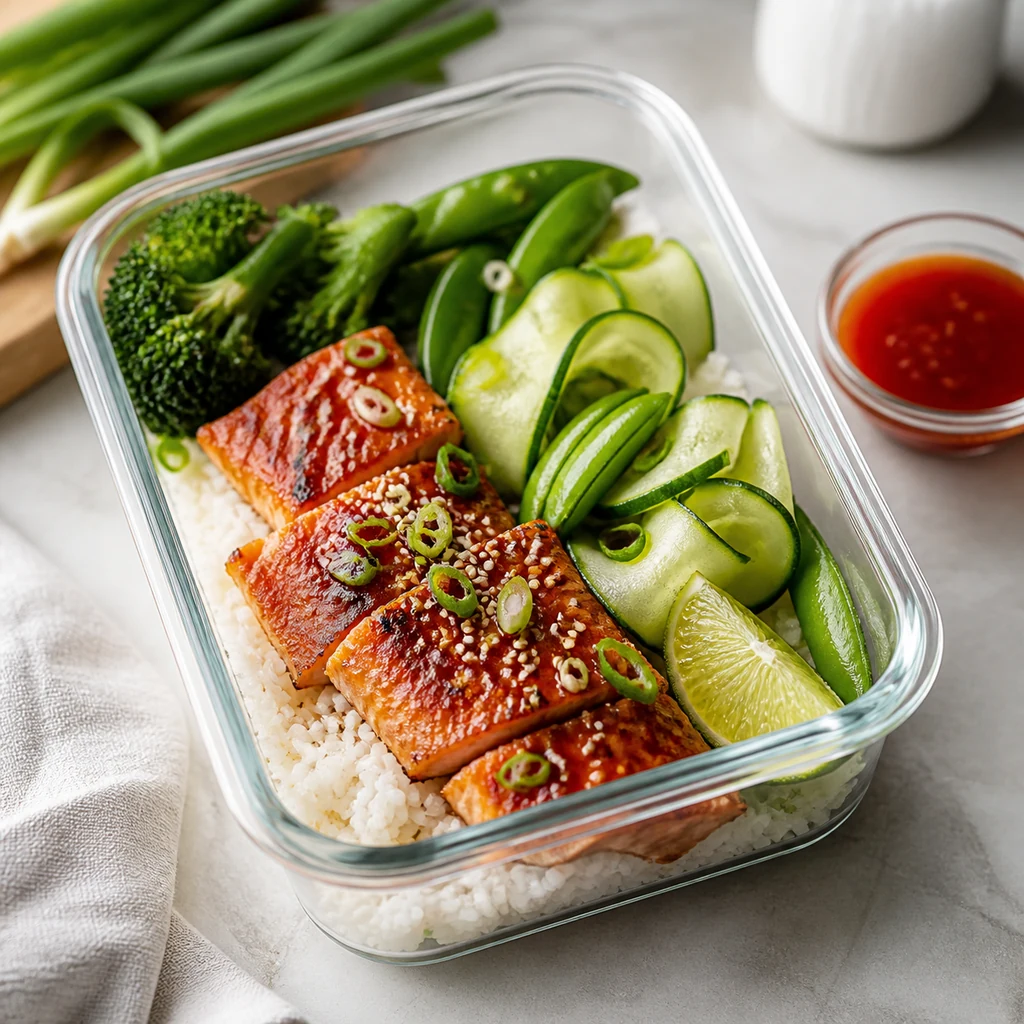
- Build the Containers: Divide rice between four containers, then add salmon, broccoli, snap peas, cucumber, scallions, sesame, and lime.
- Pack the Sauce Smartly: Keep extra glaze in small leakproof cups if you want the salmon saucier after reheating.
The biggest mistake with salmon meal prep is treating it like chicken. Salmon needs gentler cooking, smart reheating, and a glaze that adds moisture after storage. When you keep the fish juicy and pack crisp vegetables beside it, these bowls stay fresh enough for real weekday lunches.
Why You’ll Love This Honey Sriracha Glazed Salmon Meal Prep
- Fast protein: Salmon cooks in about 10 to 12 minutes, which keeps the whole prep session efficient.
- Big sweet-spicy flavor: Honey, sriracha, garlic, lime, and soy sauce create a glaze that tastes bold after chilling.
- Balanced bowls: Rice, roasted broccoli, snap peas, cucumber, sesame, and scallions add texture around the rich fish.
- Meal-prep realistic: The recipe includes storage and reheating details so the salmon does not dry out.
Ingredients
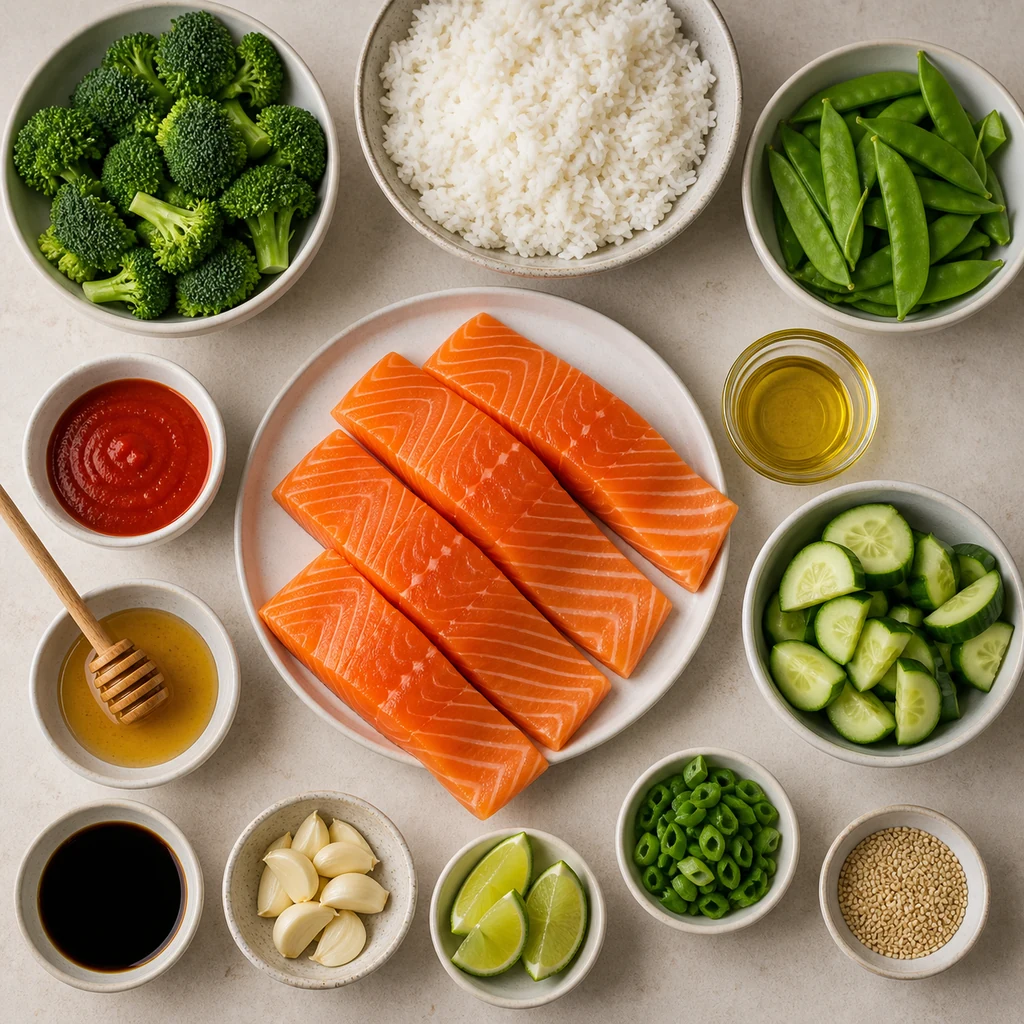
- 4 salmon fillets, about 5 to 6 ounces each
- 2 tablespoons honey
- 1 1/2 tablespoons sriracha, plus more to taste
- 1 tablespoon low-sodium soy sauce or tamari
- 1 tablespoon lime juice
- 2 garlic cloves, finely minced
- 1 teaspoon grated fresh ginger, optional
- 1 tablespoon olive oil
- 1/2 teaspoon kosher salt
- 3 cups cooked jasmine rice, brown rice, or cauliflower rice
- 3 cups broccoli florets
- 1 1/2 cups snap peas
- 1 cup cucumber ribbons or sliced cucumber
- 2 scallions, thinly sliced
- 1 tablespoon sesame seeds
- Lime wedges for serving
- Extra glaze or chili sauce for serving
Step-by-Step Instructions
1. Mix the Glaze
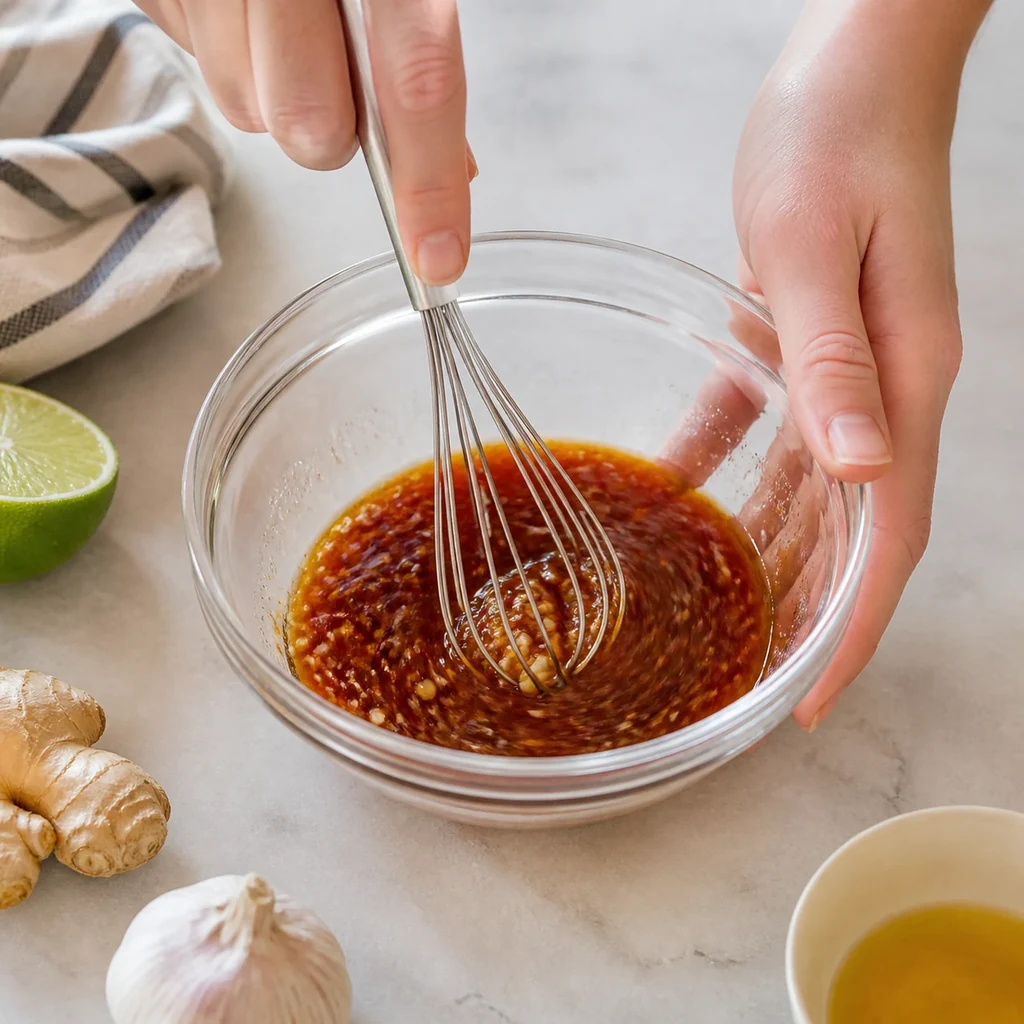
Stir honey, sriracha, soy sauce, lime juice, garlic, ginger, and olive oil in a small bowl. Taste it before it touches the salmon; it should be sweet, salty, spicy, and bright.
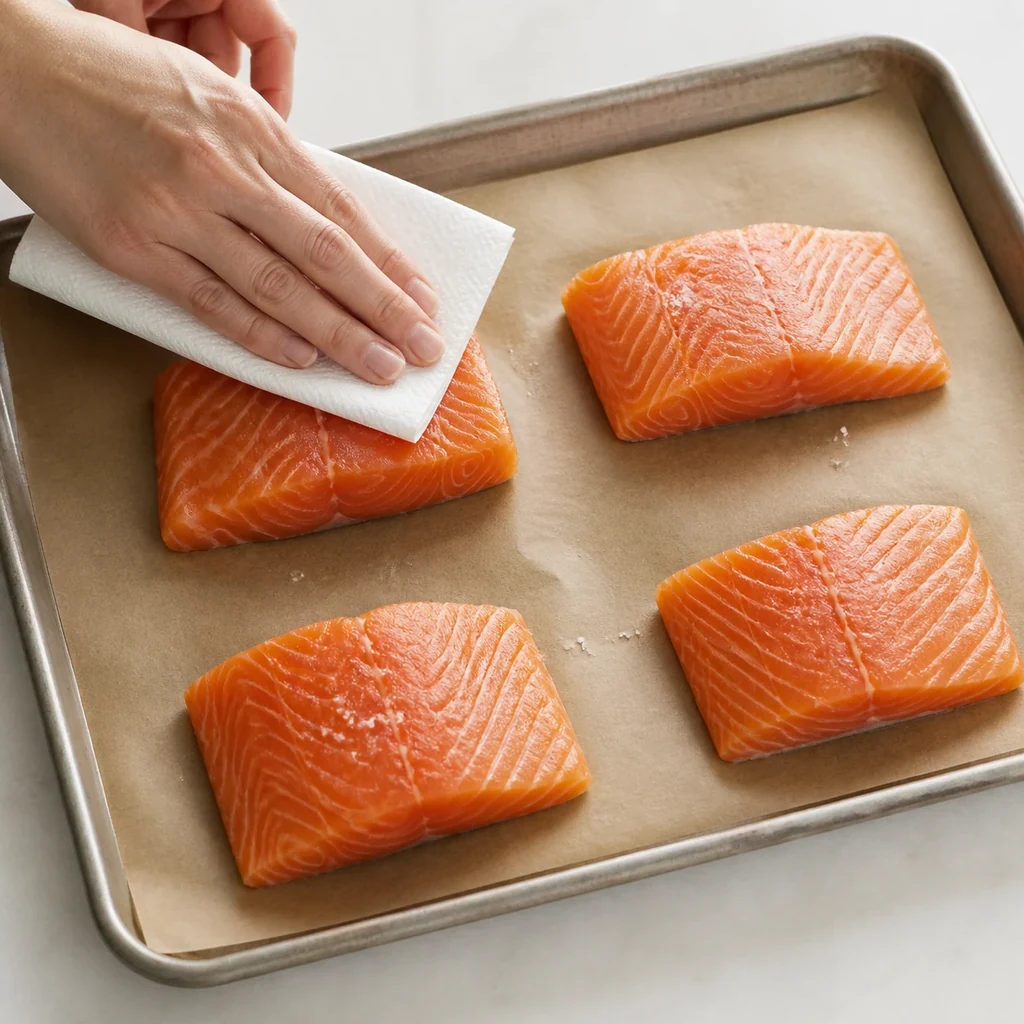
2. Prep the Salmon
Pat the fillets dry and season lightly with salt. Place them on a parchment-lined sheet pan with space between each piece so the glaze can caramelize instead of steaming.
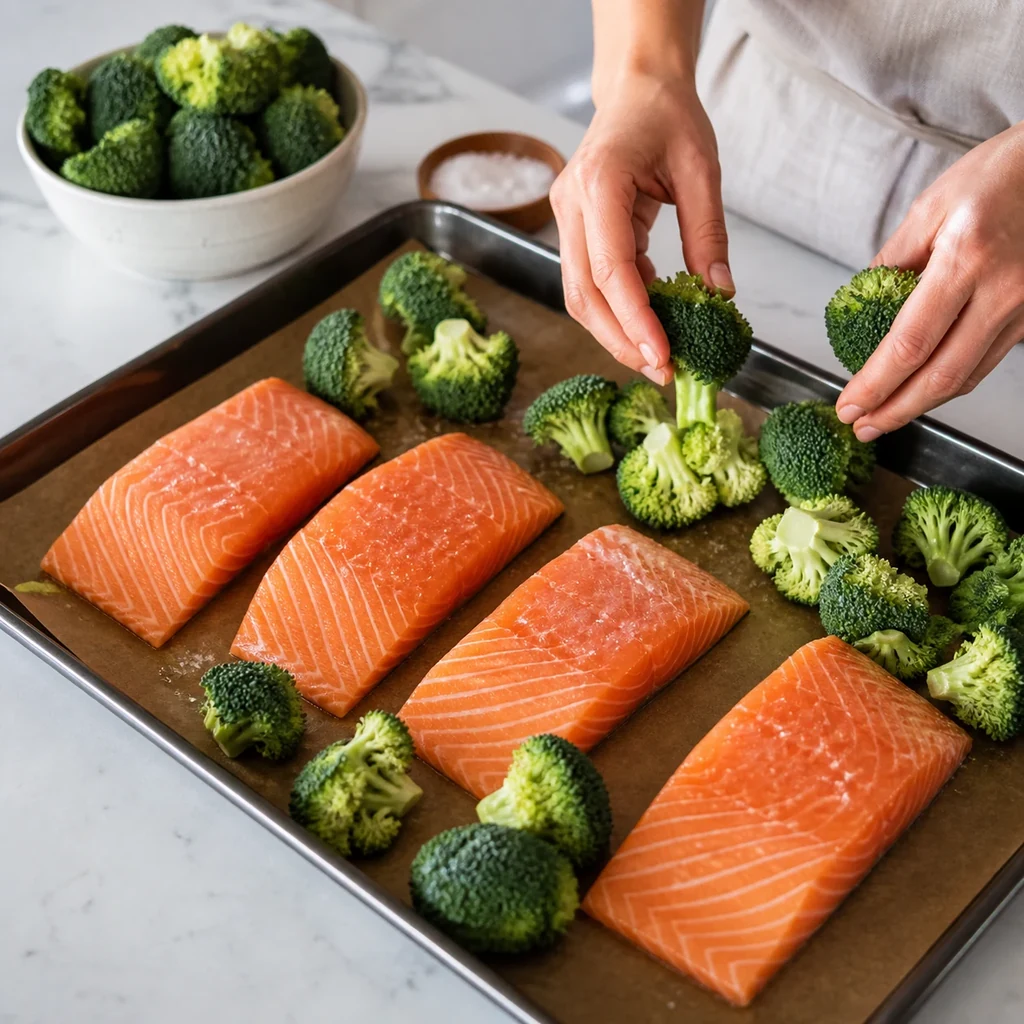
3. Add the Vegetables
Toss broccoli with a little oil and salt, then arrange it around the salmon. Keep cucumber raw and separate because it is meant to stay crisp.
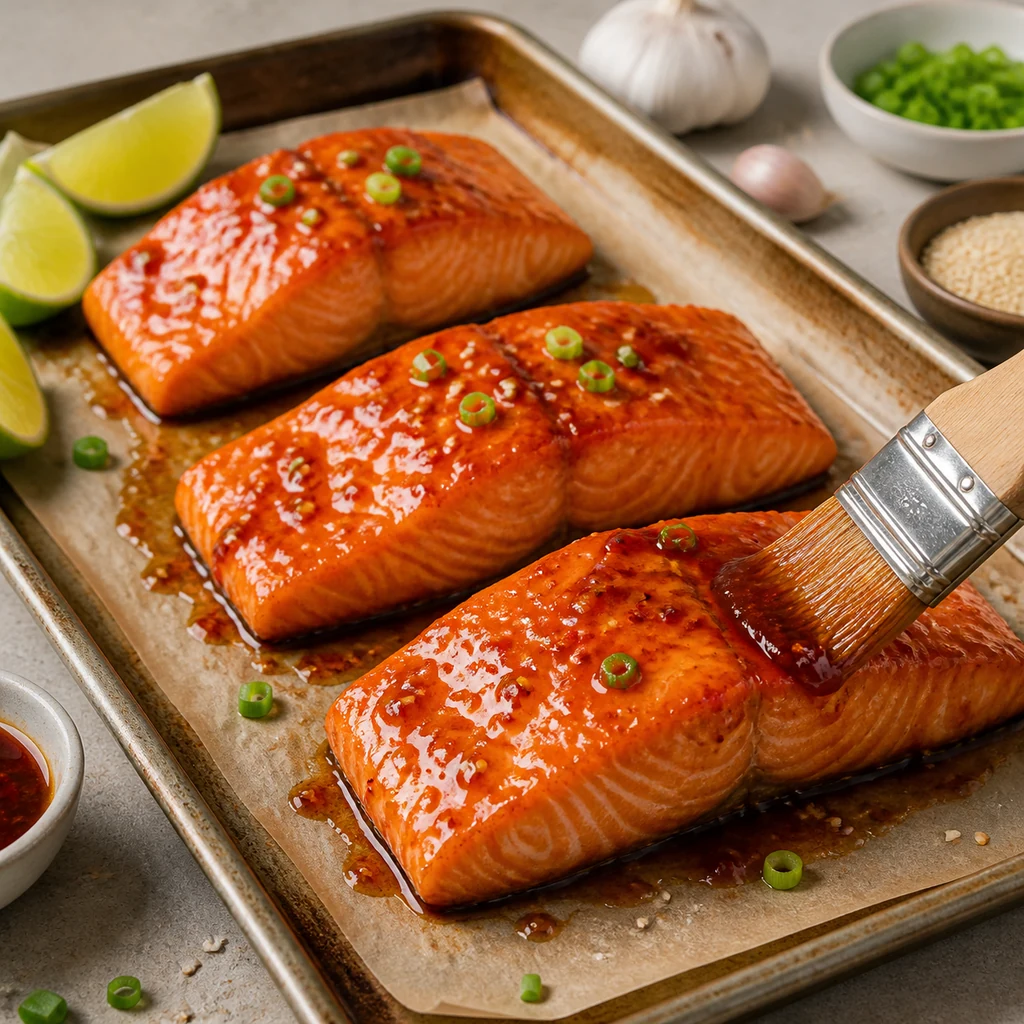
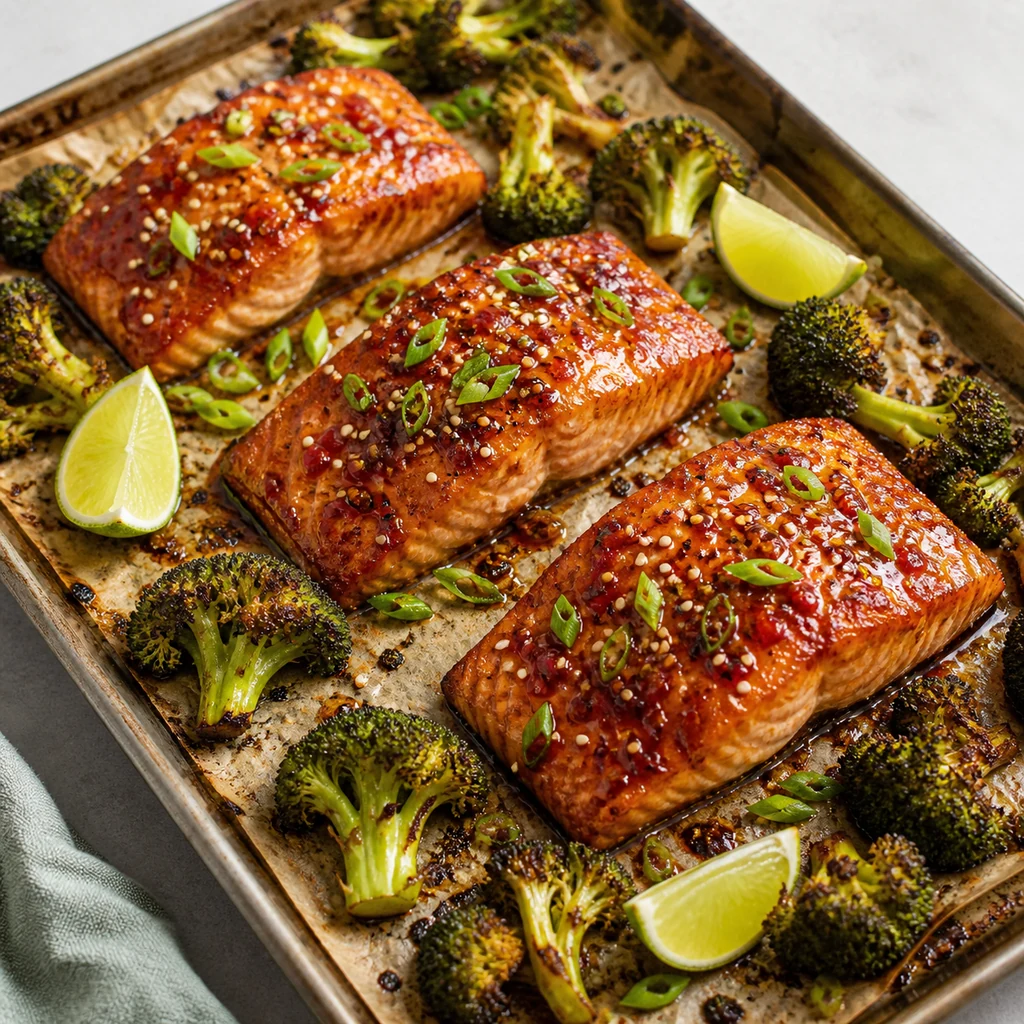
4. Bake and Glaze
Brush the salmon with glaze and bake at 400°F for 9 to 12 minutes, depending on thickness. Brush again during the last few minutes for a glossy finish.
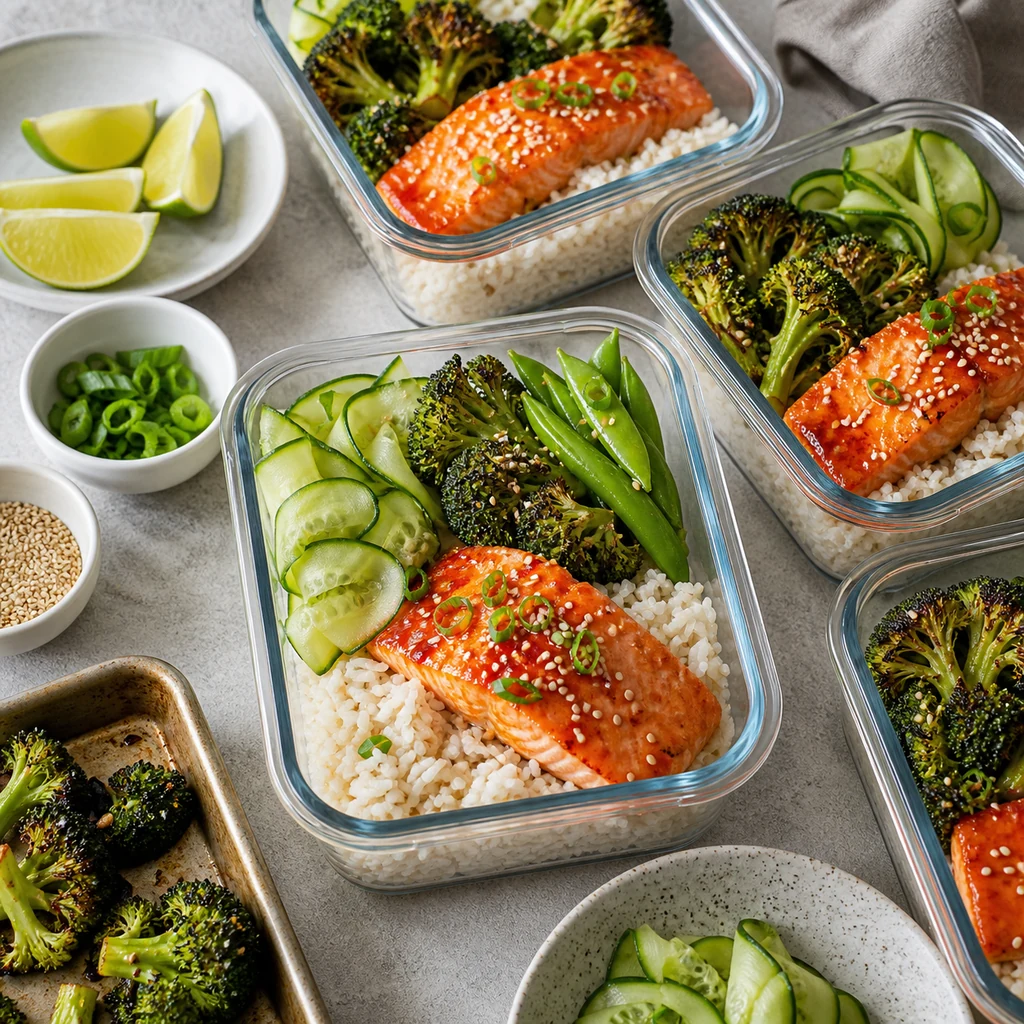
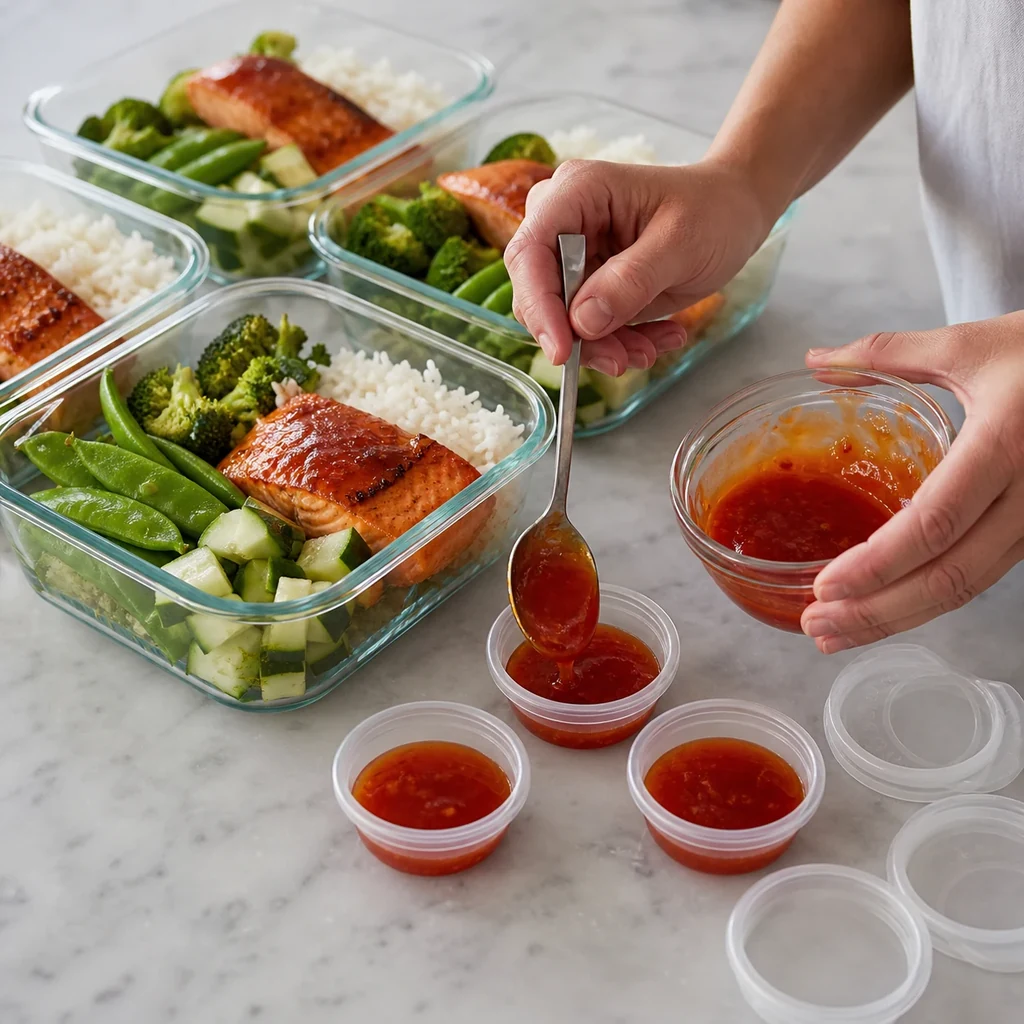
5. Build the Containers
Divide rice between four containers, then add salmon, broccoli, snap peas, cucumber, scallions, sesame, and lime.
6. Pack the Sauce Smartly
Keep extra glaze in small leakproof cups if you want the salmon saucier after reheating.
Meal Prep Assembly
Pack the bowls in layers that protect texture. Rice goes in first because it handles moisture well. Salmon and roasted broccoli can sit on top, while cucumber ribbons and extra scallions should stay to the side or in a small separate container if you want them extra crisp.
If you are using brown rice or cauliflower rice, taste before packing and add a squeeze of lime. Salmon is rich, so the bowl needs enough acidity to stay balanced after chilling. A few sesame seeds and scallions make the bowls look finished without adding another cooking step.
Expert Tips
Use an instant-read thermometer if you have one. Salmon is best around 125°F to 130°F for moist, flaky texture, and it will continue cooking slightly as it rests. If you plan to reheat the meal prep, pulling the salmon a touch early is better than overbaking it on day one.
Do not pour all the glaze onto the sheet pan at the beginning. Sugar burns faster than salmon cooks, so layered brushing gives you shine without bitterness. Save a spoonful of clean glaze for serving, or simmer a separate portion for a thicker sauce.
Substitutions & Variations
Use steelhead trout, shrimp, or chicken thighs if salmon is not available. Shrimp cooks much faster, while chicken needs a longer bake and must reach 165°F. For a lower-carb bowl, replace rice with cauliflower rice, shredded cabbage, or extra broccoli.
For a gluten-free version, use tamari instead of soy sauce. For less heat, reduce the sriracha and add extra lime. For more heat, stir chili garlic sauce or red pepper flakes into the glaze. Pineapple, mango, or quick pickled cucumbers can make the bowls brighter and more tropical.
Storage and Reheating
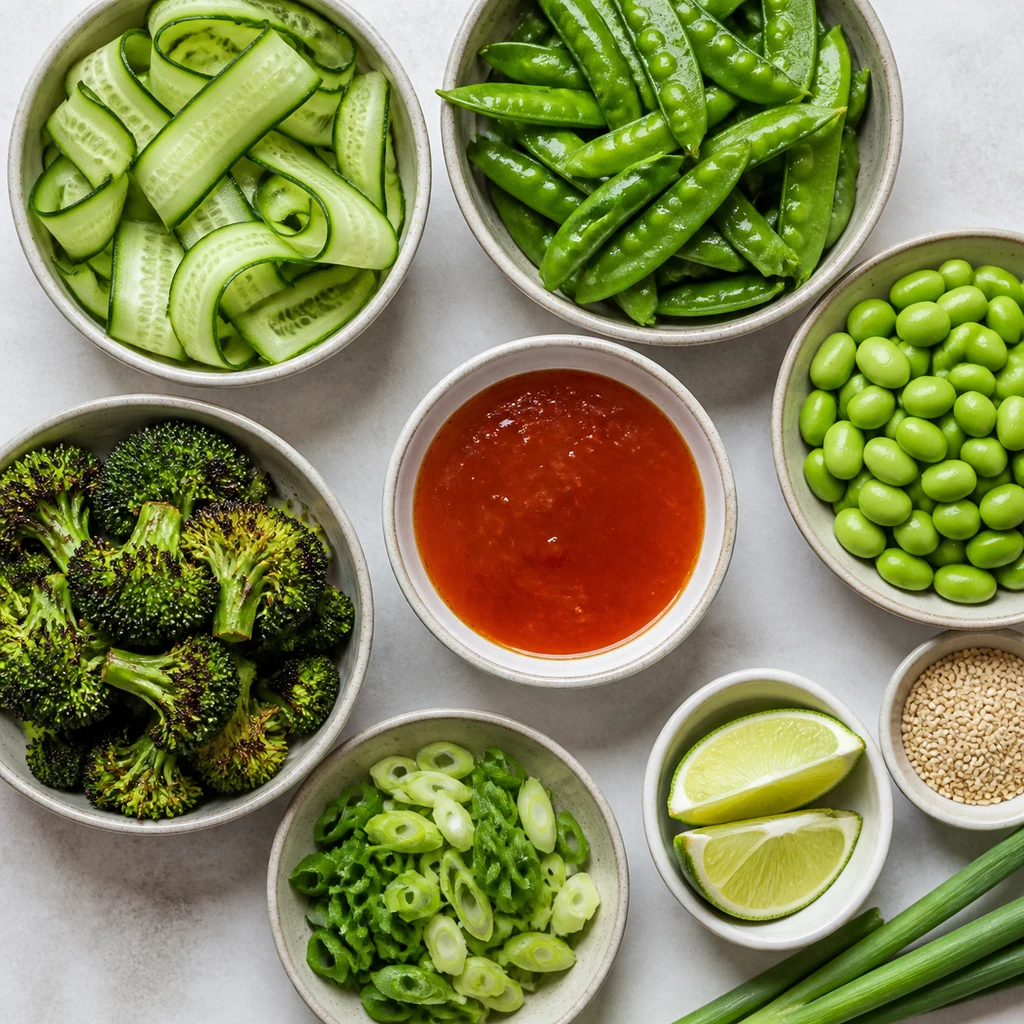
Store salmon meal prep for up to three days for the best flavor. Keep the containers cold, seal them tightly, and avoid leaving cooked salmon at room temperature. If smell is a concern, pack lime and cucumber separately and add them after reheating.
Reheat gently at 50% microwave power for 45 to 75 seconds, or eat the salmon cold over rice like a chilled bowl. High heat makes salmon dry and can intensify fish aroma. Add extra glaze after warming to bring back moisture and shine.
What to Serve With
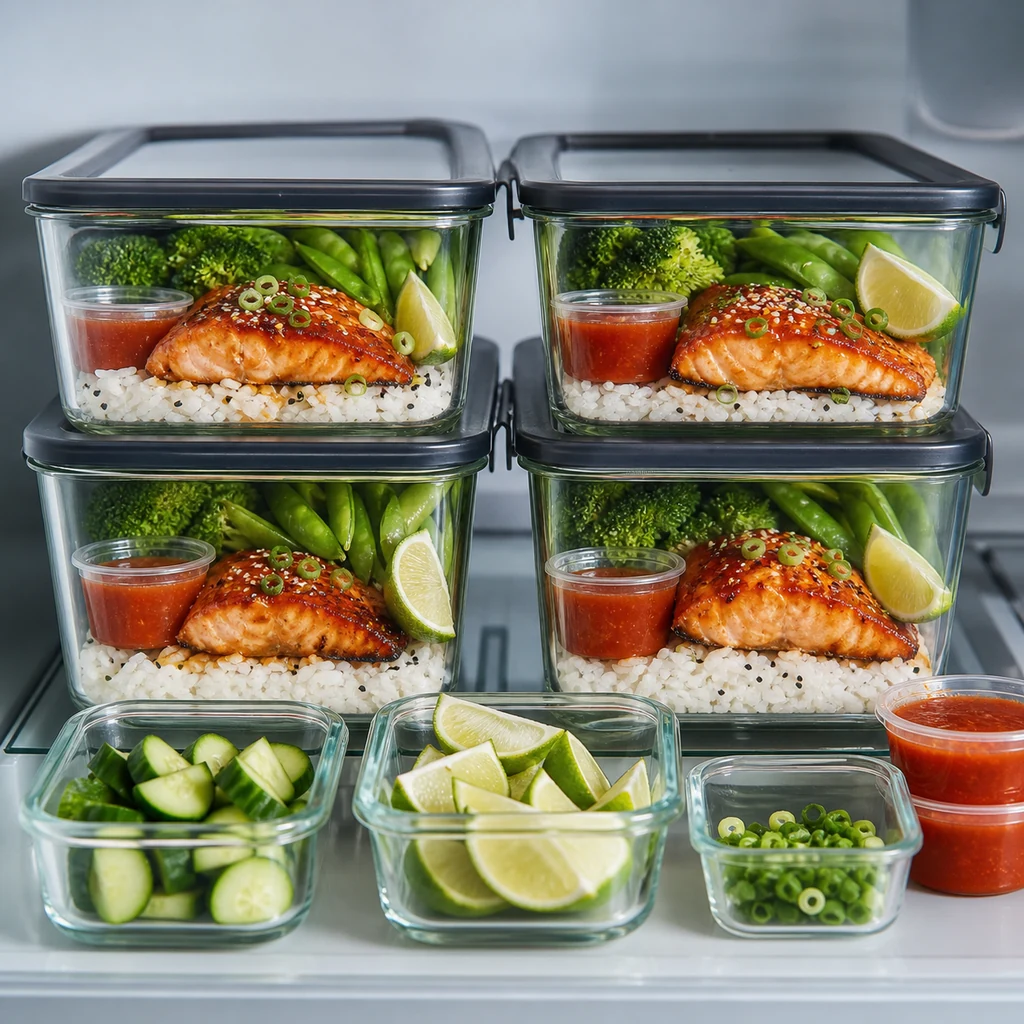
These bowls already have protein, rice, and vegetables, so the best sides are crisp or acidic. Cucumber salad, edamame, seaweed snacks, quick pickled carrots, or extra lime wedges all work well. If you want a bigger dinner, add miso soup or roasted sweet potato cubes.
For a lighter meal, serve the salmon over greens instead of rice. For a higher-calorie post-workout bowl, add avocado, extra rice, or another spoonful of glaze. The sweet-spicy salmon can handle both fresh and hearty sides.
FAQ
Can I meal prep salmon for four days?
Three days is the best quality window for cooked salmon. Four days can be acceptable if your refrigerator is very cold, but flavor and aroma are better earlier.
Can I use frozen salmon?
Yes. Thaw it fully in the refrigerator and pat it very dry before glazing so the sauce sticks and the fish cooks evenly.
Is this recipe very spicy?
It is medium spicy as written. Reduce sriracha for a milder bowl, or add extra chili sauce after reheating if you want more heat.