
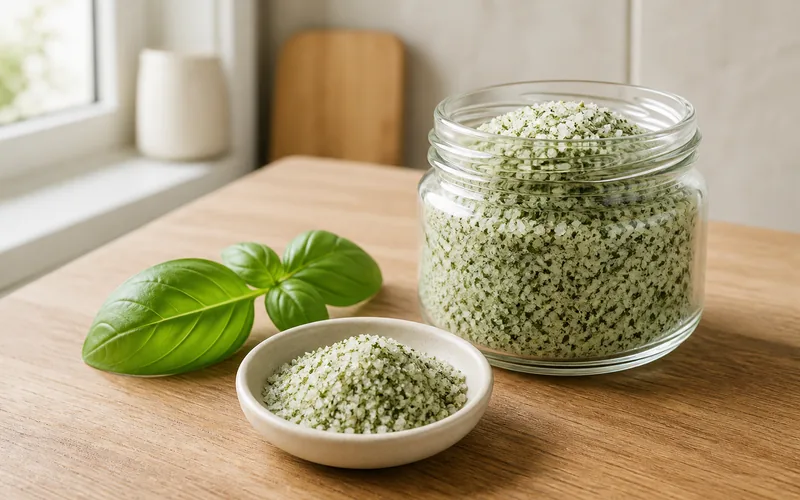
Fresh basil and kosher salt become a fragrant green seasoning after gentle oven drying. The method removes moisture slowly, preserving more herbal character while preventing damp clumps in the finished jar.
RECIPE CARD
Homemade Basil Salt with Fresh Basil
Ingredients
- 1 packed cup fresh basil leaves
- 1/2 cup coarse kosher salt
Quick Method
Condensed overview. Use Full Instructions for the complete method, timing and doneness details.
- Wash and Dry Basil: Rinse basil under cool running water and spin dry. Press between clean towels until no surface water remains.
- Process Basil and Salt: for 8 to 10 one-second pulses until evenly green but still granular.
- Spread on Pan: Spread the mixture into one thin, even layer on a parchment-lined pan without compacting it.
- Dry in the Oven: Dry at 200°F for 45 to 60 minutes, stirring every 15 minutes. The mixture must feel completely crisp and dry.
- Cool the Salt: Remove the pan and cool uncovered for exactly 30 minutes.
- Break Clumps and Store: Pulse cooled salt 3 to 5 times to break clumps, then transfer it to a clean, dry jar.
Basil Salt Recipe with Fresh Basil
- Prep: 15 minutes
- Dry: 45 to 60 minutes
- Temperature: 200°F
- Yield: About 1/2 cup
Ingredients and Equipment
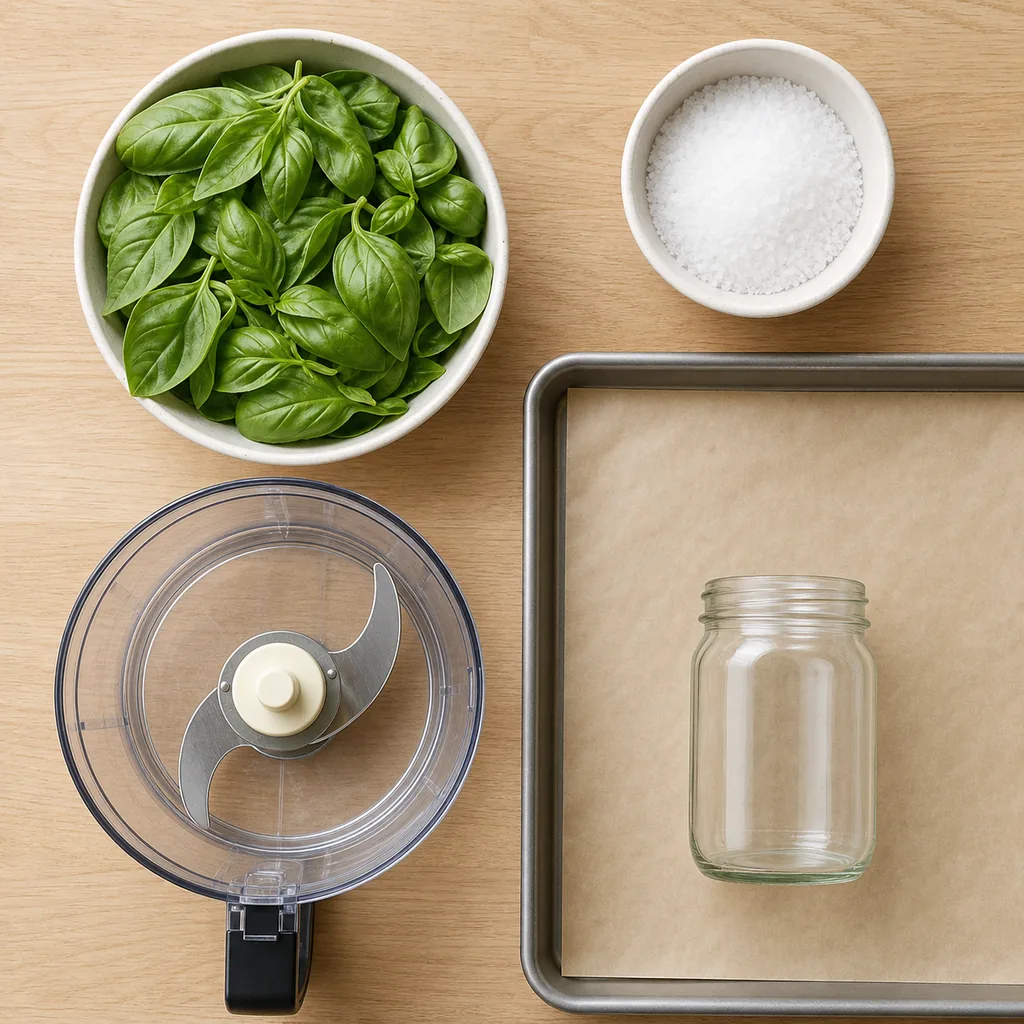
- 1 packed cup fresh basil leaves
- 1/2 cup coarse kosher salt
- Food processor
- Large rimmed sheet pan
- Parchment paper
- Clean airtight glass jar
How to Make Basil Salt
- Clean: Wash hands and equipment. Rinse basil under cool running water according to FDA produce guidance.
- Dry: Spin the leaves, then press them between clean towels until no surface water remains. Damp leaves extend drying time.
- Pulse: Process basil and salt for 8 to 10 one-second pulses. Stop when the mixture is evenly green but still granular.
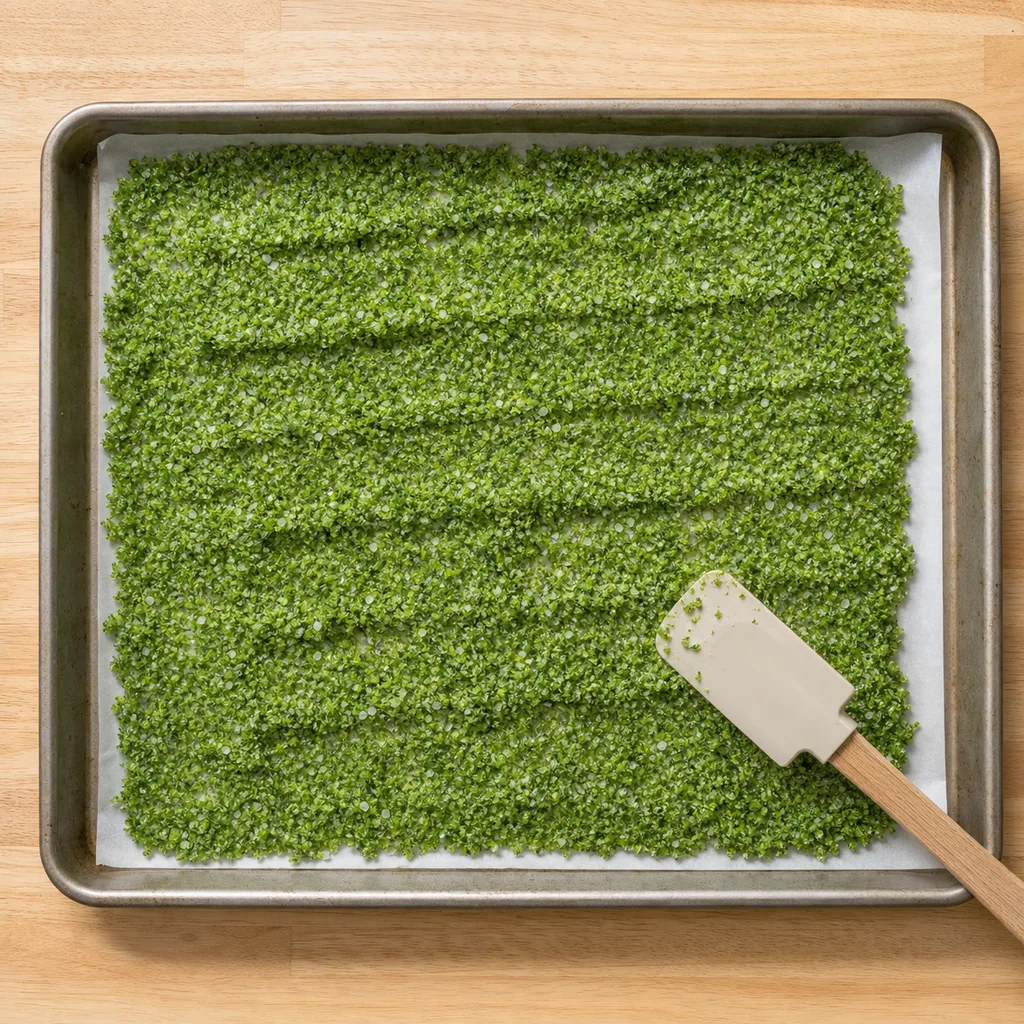
- Spread: Cover the pan with parchment. Spread the mixture into one thin, even layer without compacting it.
- Dehydrate: Dry at 200°F for 45 to 60 minutes, stirring every 15 minutes. The mixture must feel completely crisp and dry.
- Cool: Remove the pan and cool uncovered for exactly 30 minutes. Packaging warm salt traps condensation.
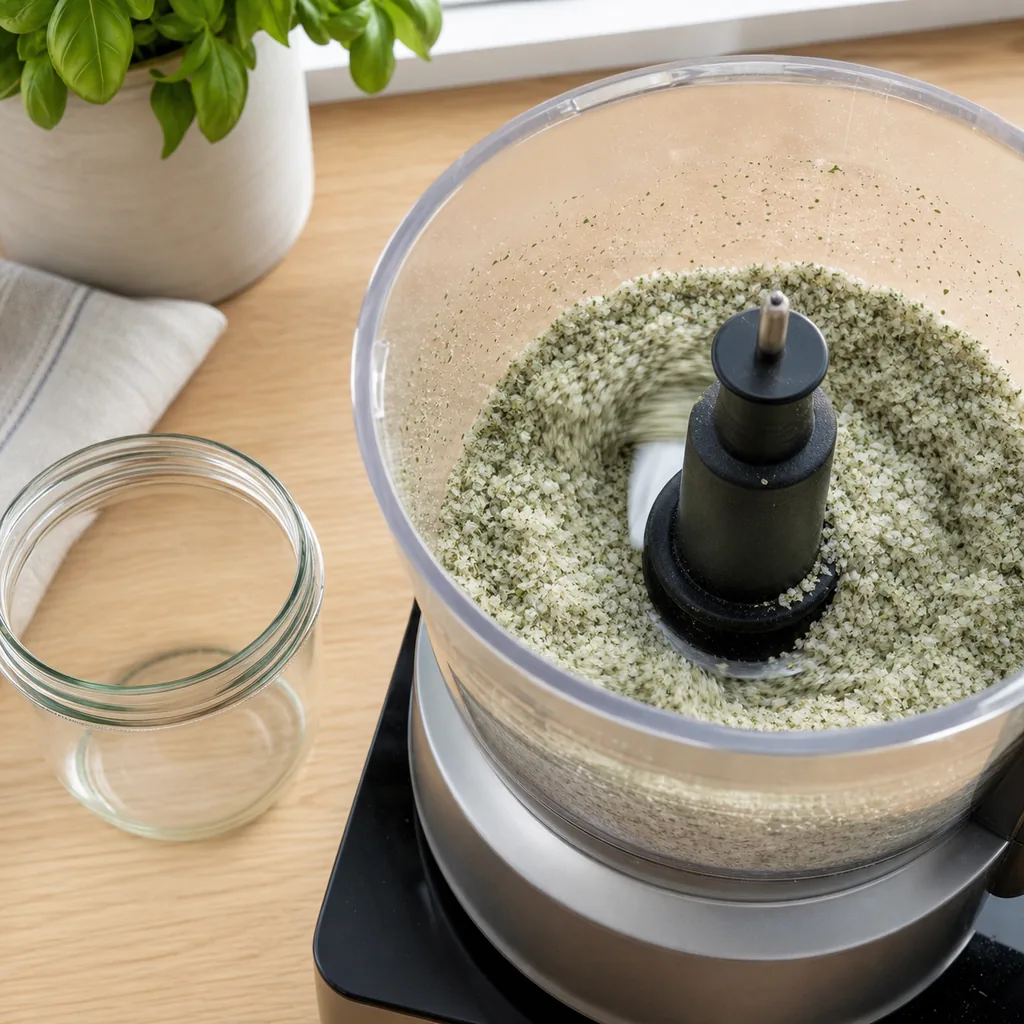
- Finish: Pulse cooled salt 3 to 5 times to break clumps, then transfer it to a clean, dry jar.
Dryness Checklist
- Washed leaves have no surface droplets.
- The layer is thin and even.
- Salt is stirred every 15 minutes.
- No soft green pieces remain.
- The mixture cools before sealing.
Sprinkle it over our tomato basil soup, air-fryer asparagus, or Greek yogurt basil dressing.
Storage and Safe Use
Moisture is the enemy of dried seasonings. Use a completely dry spoon, close the jar promptly, and keep it away from steam rising from pots.
Store in a cool, dark cupboard for up to 1 month. For longer flavor retention, refrigerate the sealed jar while following USDA cold-storage principles.
- Label the preparation date.
- Never add fresh leaves to the finished jar.
- Discard salt that becomes damp, moldy, or oddly scented.
- Use lightly because it is still primarily salt.
Flavor and Texture Tips
Remove thick basil stems before measuring. Tender upper stems are edible, but woody lower stems can leave hard fibers in the finished seasoning.
A pale sheet pan makes drying easier to monitor. Dark metal absorbs more heat and may brown the basil around the outer edge before the center dries.
Stir from the edges toward the middle at every interval. Break any damp clusters so fresh surfaces contact the warm air.
For serving, season the food after tasting. Basil salt is concentrated, and adding it gradually gives better control than measuring it like a dried herb.
Frequently Asked Questions
Can I use fine table salt? Coarse kosher salt processes more evenly and is easier to distribute. Fine salt can become pasty with wet basil.
Why did the color darken? Some darkening is normal during drying. Browning or a toasted smell means the layer became too hot or thin around the edges.