
Healthy breakfast smoothies are trending for a good reason: they are quick, flexible, colorful, and easy to adapt to whatever you have in the kitchen. A good smoothie can work as a light breakfast, a busy-morning meal, or a practical way to use fruit, greens, oats, yogurt, seeds, and milk in one glass.
The best breakfast smoothies are not just sweet drinks. They are balanced. That means they include produce for flavor and micronutrients, protein for staying power, fiber for fullness, and enough liquid to blend smoothly. This guide shows you how to build better smoothies, avoid the most common mistakes, and create easy combinations that taste fresh without becoming overly sugary.

Why Healthy Breakfast Smoothies Are Trending
Pinterest Trends shows strong growth for healthy breakfast smoothies, especially as people look for quick breakfast ideas that feel fresh, colorful, and easy to personalize. Smoothies are visually appealing, but they also fit real-life routines. They can be made in minutes, carried in a cup, prepared with frozen fruit, and adjusted for different tastes.
They are also easy to turn into many types of breakfast. A berry smoothie can feel bright and classic. A green smoothie can help you use leafy greens. A mango oat smoothie can feel creamy and satisfying. A smoothie bowl can become a slower breakfast with toppings, texture, and crunch.
The key is building them with intention. Fruit and juice alone can taste good, but the drink may not keep you full. Add protein, fiber, and healthy fats, and the same smoothie becomes a more useful breakfast.
The Balanced Smoothie Formula
Use this simple formula when you do not want to follow a strict recipe:
- 1 to 1 1/2 cups fruit: berries, banana, mango, peaches, pineapple, cherries, or apple.
- 1 handful greens: spinach, kale, or romaine, optional but useful.
- 1 protein source: Greek yogurt, milk, kefir, cottage cheese, tofu, or protein powder.
- 1 fiber booster: oats, chia seeds, flaxseed, hemp seeds, or avocado.
- 1 liquid: milk, unsweetened almond milk, soy milk, coconut water, or water.
- Flavor extras: cinnamon, vanilla, ginger, cocoa powder, lemon, mint, or nut butter.
This structure keeps smoothies flexible. You can make them dairy-free, higher-protein, lighter, thicker, sweeter, or more refreshing without losing the basic balance.
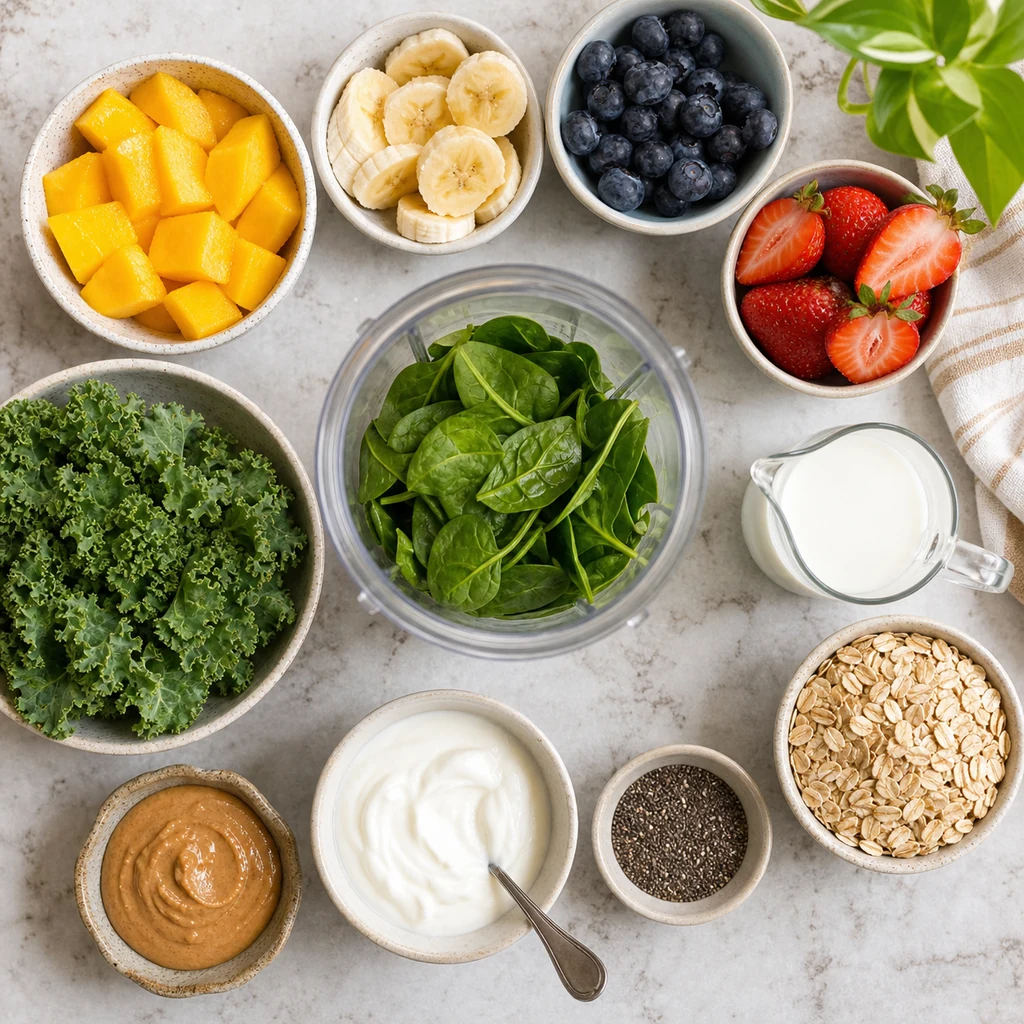
Best Ingredients For Breakfast Smoothies
Fruit
Fruit gives smoothies natural sweetness, color, and body. Frozen fruit is especially useful because it makes the smoothie cold and thick without needing much ice. Berries are a strong choice because they add bright flavor. Banana makes smoothies creamy. Mango and pineapple create a tropical flavor, while peaches and cherries make softer, sweeter blends.
Vegetables And Greens
Spinach is the easiest green to add because it blends smoothly and has a mild flavor. Kale works too, but it can taste stronger and may need a sweet fruit like banana or mango. Cucumber, carrots, cooked pumpkin, and cauliflower can also work in certain combinations.
Protein
Protein helps make a smoothie feel more like breakfast. Greek yogurt is one of the simplest options because it adds creaminess and tang. Milk, soy milk, kefir, cottage cheese, tofu, and protein powder can also work. If your smoothie leaves you hungry an hour later, it probably needs more protein or fiber.
Fiber And Healthy Fats
Oats, chia seeds, flaxseed, hemp seeds, avocado, and nut butter can make smoothies more satisfying. Use small amounts at first. Chia and oats thicken as they sit, while nut butter can quickly dominate the flavor if you add too much.
How To Make A Smoothie That Keeps You Full
A filling breakfast smoothie needs more than fruit. Try to include at least one protein source and one fiber-rich ingredient. For example, blend berries with Greek yogurt and chia seeds, or blend banana with milk, oats, peanut butter, and cinnamon.
Texture also matters. A thin smoothie can feel like a drink, while a thicker smoothie feels more like a meal. Frozen fruit, oats, yogurt, avocado, and chia seeds all help create a creamier texture. If you want a smoothie bowl, use less liquid and blend slowly, scraping down the sides as needed.
Green Breakfast Smoothie Tips
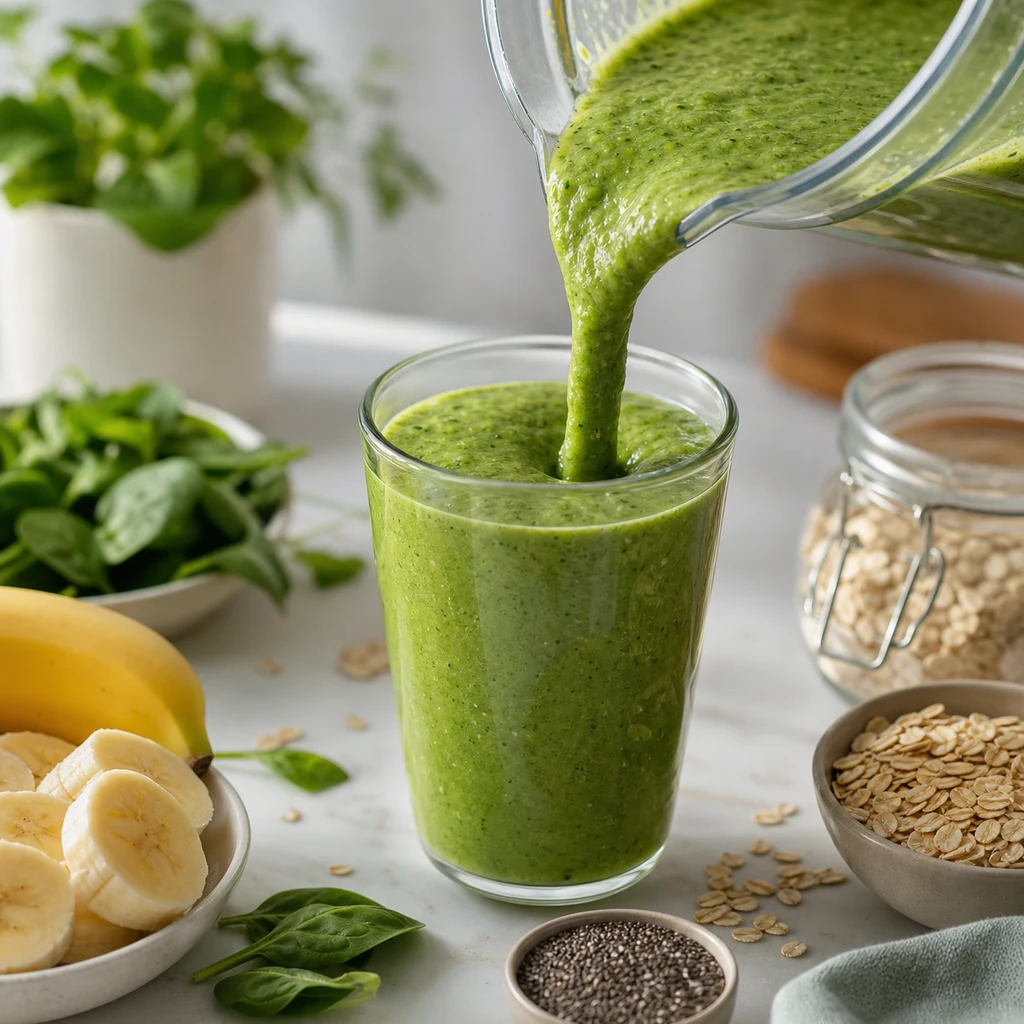
Green smoothies can taste fresh and balanced when you keep the flavor gentle. Start with spinach instead of kale if you are new to greens. Pair it with banana, mango, pineapple, or apple. Add Greek yogurt, milk, or soy milk for protein, then add oats or chia seeds for fiber.
If your green smoothie tastes grassy, add citrus, ginger, mint, or a small amount of vanilla. If it tastes too sweet, add cucumber, lemon, or more greens. If it is too thick, add liquid a little at a time.
Easy Healthy Breakfast Smoothie Ideas
Berry Oat Breakfast Smoothie
Blend frozen mixed berries, Greek yogurt, milk, rolled oats, chia seeds, and a little vanilla. This is a good everyday smoothie because it is creamy, tart, and filling.
Green Banana Protein Smoothie
Blend banana, spinach, Greek yogurt or soy milk, oats, chia seeds, cinnamon, and milk. It is mild, creamy, and beginner-friendly.
Mango Carrot Smoothie
Blend frozen mango, grated carrot, Greek yogurt, orange, ginger, and milk or coconut water. This one is bright, fresh, and naturally sweet.
Peanut Butter Banana Smoothie
Blend banana, peanut butter, milk, oats, Greek yogurt, cinnamon, and a few ice cubes. It tastes like a treat but can still be balanced if you keep the peanut butter portion moderate.
Chocolate Berry Smoothie
Blend frozen berries, banana, cocoa powder, Greek yogurt, milk, and ground flaxseed. The cocoa adds depth without needing a dessert-level amount of sweetener.
Smoothie Bowl Tips
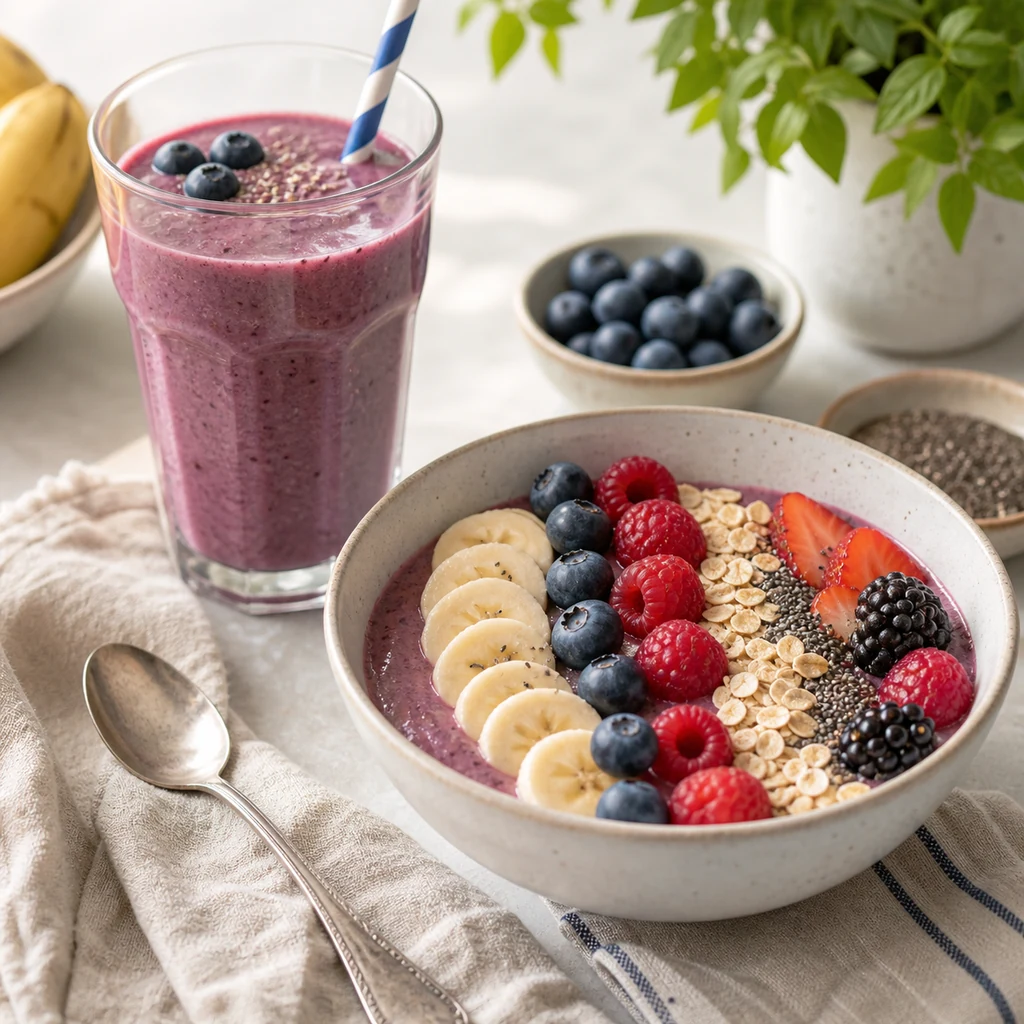
Smoothie bowls are thicker than drinkable smoothies. Use frozen fruit, less liquid, and a strong blender. Blend slowly, stop to scrape the sides, and add liquid only by the tablespoon if the mixture will not move.
Choose toppings that add texture without turning breakfast into dessert. Good options include sliced banana, berries, oats, chia seeds, pumpkin seeds, hemp seeds, chopped nuts, or a small spoonful of granola. Add toppings after blending so they stay crisp.
Common Smoothie Mistakes
- Using only fruit juice: Juice can make smoothies very sweet without adding much fullness.
- Skipping protein: A fruit-only smoothie may not keep you satisfied for long.
- Adding too many extras: Nut butter, seeds, oats, and granola are useful, but portions still matter.
- Over-blending warm ingredients: Use frozen fruit or ice if you want a cold, thick texture.
- Forgetting flavor balance: Acid, spice, and salt can help a smoothie taste more complete.
- Making it too thin: Start with less liquid and add more gradually.
Breakfast Smoothie Prep Tips
To save time, make freezer smoothie packs. Add fruit, greens, and dry add-ins to small freezer bags or containers. In the morning, pour the pack into the blender and add the liquid and protein. This keeps mornings simple without relying on bottled smoothies.
If you blend ahead, store smoothies in a sealed jar in the refrigerator and shake well before drinking. The texture is usually best the same day. Smoothies with oats or chia will thicken as they sit, so you may need to add a splash of milk before serving.
Healthy Breakfast Smoothie Checklist
- Use whole fruit instead of relying mostly on juice.
- Add a protein source such as Greek yogurt, milk, soy milk, tofu, or protein powder.
- Include fiber from oats, chia, flaxseed, berries, greens, or avocado.
- Use frozen fruit for a thicker, colder texture.
- Add liquid slowly so the smoothie does not become watery.
- Balance sweetness with citrus, ginger, cinnamon, cocoa, or greens.
- Choose toppings carefully for smoothie bowls.
- Prep freezer packs for easier mornings.
Helpful Nutrition Sources
For broader food group guidance, see the USDA MyPlate pages for fruits, vegetables, and protein foods. These resources can help you think about smoothies as part of a balanced breakfast rather than just a sweet drink.
You can also browse more ideas in the Smoothie Recipes category and related Breakfast Ideas.
Frequently Asked Questions
Are breakfast smoothies healthy?
They can be. A healthy breakfast smoothie usually includes fruit or vegetables, protein, fiber, and a balanced liquid base. A smoothie made mostly from juice and sweet add-ins may be less filling.
What should I put in a breakfast smoothie for protein?
Greek yogurt, milk, soy milk, kefir, cottage cheese, tofu, and protein powder are common options. Choose the one that fits your taste and dietary needs.
Can I make smoothies ahead of time?
Yes. Smoothies are best fresh, but you can store them in a sealed jar in the refrigerator for later the same day. Freezer smoothie packs are even better for prep because you blend them fresh in the morning.
How do I make a smoothie thicker?
Use frozen fruit, banana, Greek yogurt, avocado, oats, or chia seeds. Start with less liquid and add more only if the blender needs help.
What is the best liquid for a healthy breakfast smoothie?
Milk, unsweetened soy milk, almond milk, kefir, coconut water, and water can all work. The best choice depends on whether you want more protein, a lighter texture, or a specific flavor.
Final Thoughts
Healthy breakfast smoothies are easy to love because they are fast, colorful, and flexible. The best ones are built like a real breakfast: fruit or vegetables, protein, fiber, and enough liquid to blend well. Once you learn the formula, you can make a fresh smoothie with almost any ingredients you have on hand.
Start simple, taste as you go, and adjust one thing at a time. A balanced smoothie should feel refreshing, satisfying, and easy enough to repeat on busy mornings.