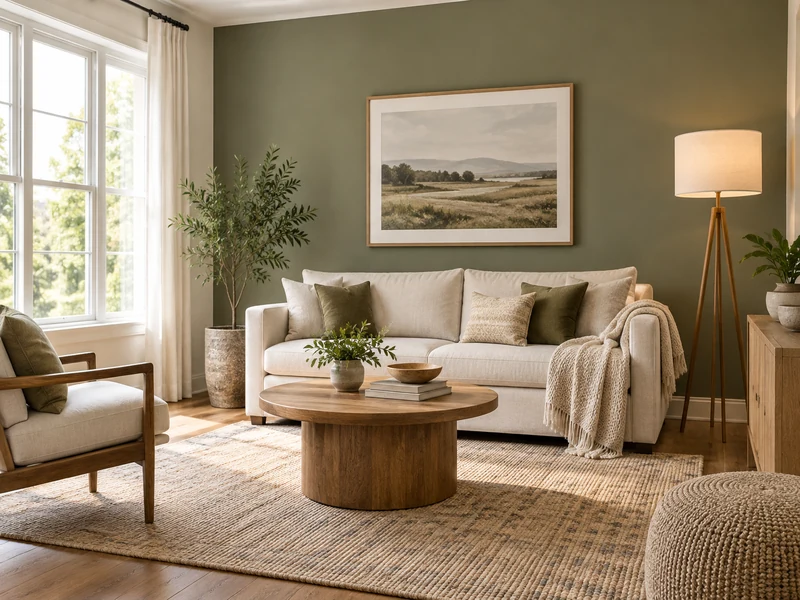
A room can feel different after a few focused changes. These ten ideas move from color and light to furniture, walls, plants and storage, so you can choose the update that solves an actual problem in your space. Start with one project, set a modest budget and finish it before adding another.
Look at the room in daylight and after dark. Decide what feels unfinished: poor lighting, exposed clutter, a blank wall or a floor that needs softness. If you live in a small home, our small-space decor guide offers more layout ideas.
Ten Easy Room-Refresh Ideas
1. Refresh One Wall with Paint

A single wall can change the room’s balance without turning a weekend into a full renovation. Hold sample colors against the wall in morning and evening light, then clean and patch the surface before painting. Protect the floor, tape edges carefully and follow the paint maker’s drying and ventilation instructions. If you may disturb paint in a home built before 1978 in the United States, check lead-safe guidance before sanding or scraping.
2. Layer Plug-In Lighting

A table lamp beside a reading chair and a floor lamp across the room can soften harsh overhead light. Choose bulbs that match each fixture’s wattage limits, and keep cords away from walkways. This update uses ordinary plug-in lamps; changing fixed wiring or switches is a separate electrical job best handled by a qualified professional under local rules. Try lighting the corners before buying more fixtures.
3. Fit a Washable Slipcover

A well-fitted cover can make a sound but tired sofa feel deliberate again. Measure the width, arms and cushions, then choose a cover designed for that shape. Tuck fabric where the manufacturer recommends and check that seat cushions still sit flat. A washable fabric is practical in a busy room. Keep the colors of nearby pillows simple so the new cover remains the visual anchor.
4. Try a Small Wallpaper Accent

Peel-and-stick wallpaper is easiest to judge on a small, smooth wall. Order a sample and test it in an unobtrusive spot, especially if you rent or have delicate paint. Mark a level starting line, align the pattern as you go and smooth from the center outward. Follow the product instructions for cleaning, removal and damp areas; a product suitable for a dry bedroom may not suit a steamy bathroom.
5. Add Properly Mounted Floating Shelves

Shelves free up floor space only when the wall and fittings can safely carry the intended load. Find out whether you are fixing into studs, masonry or another wall type, and use hardware rated for that surface and the shelf’s load. Keep heavy objects low, follow the shelf maker’s instructions and check the level before drilling. If the wall construction is uncertain, ask a qualified installer.
6. Create a Small Plant Corner

A few plants add living color and varied shapes to a bare corner. Pick species for the actual light available and use pots with drainage protection so water does not damage furniture or flooring. Keep plants that may be toxic away from children and pets, and avoid overwatering. Plants are decoration here; ordinary houseplant numbers are not a substitute for ventilation or other indoor air quality measures.
7. Make a Personal Gallery Wall

Start with two or three pieces rather than filling the whole wall at once. Frame a photo, a simple painting or a favorite piece of fabric, then lay the arrangement on the floor to test spacing. Use picture hangers suited to the wall and the frame weight. Keep the center of the arrangement at a comfortable viewing height, and leave enough empty wall for the pieces to breathe.
8. Update Curtains or Shades

Measure both the window and the space around it before buying fabric or a rod. Curtains hung a little wider than the frame can let more daylight in when open; a blackout lining can help a bedroom feel darker at night. Check that brackets suit the wall and rod weight. Where young children may be present, choose cordless window coverings and keep furniture away from windows.
9. Use a Rug to Refresh the Floor

An area rug can change the feel of a room without coating or replacing the existing floor. Choose a size that relates to the furniture, then add a pad suited to both rug and floor so the rug stays put. Check door clearance and avoid curled edges that could catch a foot. For a permanent floor treatment, confirm material compatibility and any rental restrictions before buying supplies.
10. Group Clutter in Useful Containers

Give everyday objects a place close to where they are used. A basket under a bench can hold throws, while small clear bins make craft or desk supplies easier to find. Measure shelves before buying containers and keep frequently used items within comfortable reach. Avoid stacking heavy bins high or making exits and walkways narrow. A short label on each container can help the system survive a busy week.
Choose a Project That Fits Your Room
For a fast change with little equipment, begin with a lamp, slipcover, rug or storage baskets. Paint and wallpaper require more preparation but can still be manageable when the surface is sound and the product is appropriate. Wall-mounted shelves and window hardware call for careful measuring and suitable fixings. Stop if you discover damaged surfaces, uncertain wiring or a wall that cannot support the load.
Take a photo before you start, then compare it after the room has been used for a week. This helps you judge whether the change improved daily life as well as appearance. You may find that moving a lamp or reducing clutter matters more than buying another decorative object.
Frequently Asked Questions
Which idea is most renter-friendly?
Start with movable pieces: lamps, a slipcover, a rug, plants and containers. Check your lease before painting, drilling or applying wallpaper; even products sold as removable can affect a fragile painted surface.
Do houseplants clean the air?
They can make a room pleasant to look at, but a normal number of houseplants has not been shown to remove significant indoor pollution. Address pollutant sources and ventilation separately.
When should I call a professional?
Get help for fixed electrical work, uncertain wall structure or suspected lead paint before disturbing an older painted surface. Follow the rules and product instructions that apply where you live.
Safety references: EPA lead-safe renovation guidance, EPA indoor air quality guide, and CPSC cordless window-covering advice.